English
 中文简体
中文简体
News
Home > News > Industry News > Plastic Cosmetic Cream Jars: Material Options, Refillable Types & Specs

 2026.08.27
 Industry News
Content
Picture this: you have spent months perfecting a 50g face cream formula, but the packaging you sampled last month just failed the drop test. A hairline crack appeared at the base, and the liner swelled after three weeks of stability testing. Choosing a plastic cosmetic cream jar is not simply about picking a pretty container. It is a purchase decision that affects your filling line efficiency, product shelf life, and how customers perceive your brand at first touch. In our experience, the most common errors in cream jar sourcing come from overlooking wall thickness, material compatibility with the formula, and whether the jar design can survive the decorating process you have chosen.
At its core, a plastic cosmetic cream jar consists of a body, a cap, and an optional sealing liner. The body holds the product. The cap, usually a screw-thread design with a foam or polyethylene liner, keeps moisture in and air out. Some designs add an inner cup or a gasket to improve resealability, especially for products with high oil content or active ingredients such as retinol or vitamin C.
The dimensions that matter most to a buyer are the neck finish, the outer diameter, and the wall thickness. A standard 50g acrylic cream jar, for example, might measure 68mm across and 52mm in height, with a 2.5mm to 3.0mm wall. Thinner walls became more common in the last decade as a way to cut cost, but they reduce drop-test reliability. If your product needs to go through a high-speed filling line with a vacuum pick-and-place arm, a 2.0mm wall with an 8-to-10 Nm closure torque feels very different from a 3.5mm wall with the same torque.
| Capacity | Typical product | Common diameter range |
|---|---|---|
| 15g - 20g | Eye cream, spot treatment | 45 - 50mm |
| 30g - 50g | Face cream, sleeping mask | 55 - 70mm |
| 100g - 200g | Body cream, hair mask | 75 - 90mm |
Acrylic jars are the most common choice for premium skincare. The material, polymethyl methacrylate (PMMA), gives a glass-like clarity and high gloss while remaining durable and shatter-resistant. Double-wall acrylic jars have an outer shell and an inner liner, often made from polypropylene or polystyrene. The independent liner prevents concentrated fragrance, oils, or pigments in your formula from reaching the outer shell and causing stress cracking. This construction also improves thermal insulation, which matters if your cream contains shea butter or other heat-sensitive emollients.
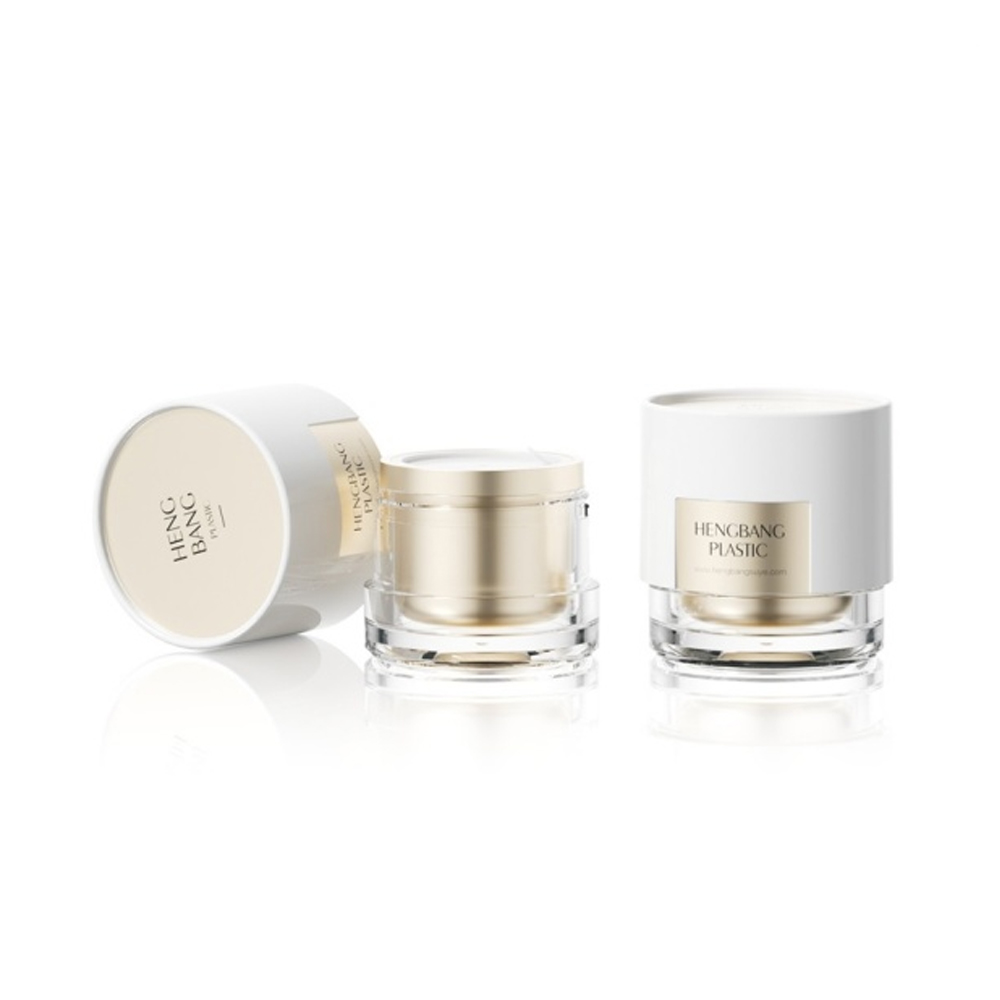
The HBG004 double-wall acrylic face cream jar from Hengbang Plastics is a representative example of this design. Its outer shell can be finished in a metallic or transparent effect, while the inner cup meets the formula contact requirements. The double-wall structure gives the jar a premium feel that makes it suitable for a retail shelf.
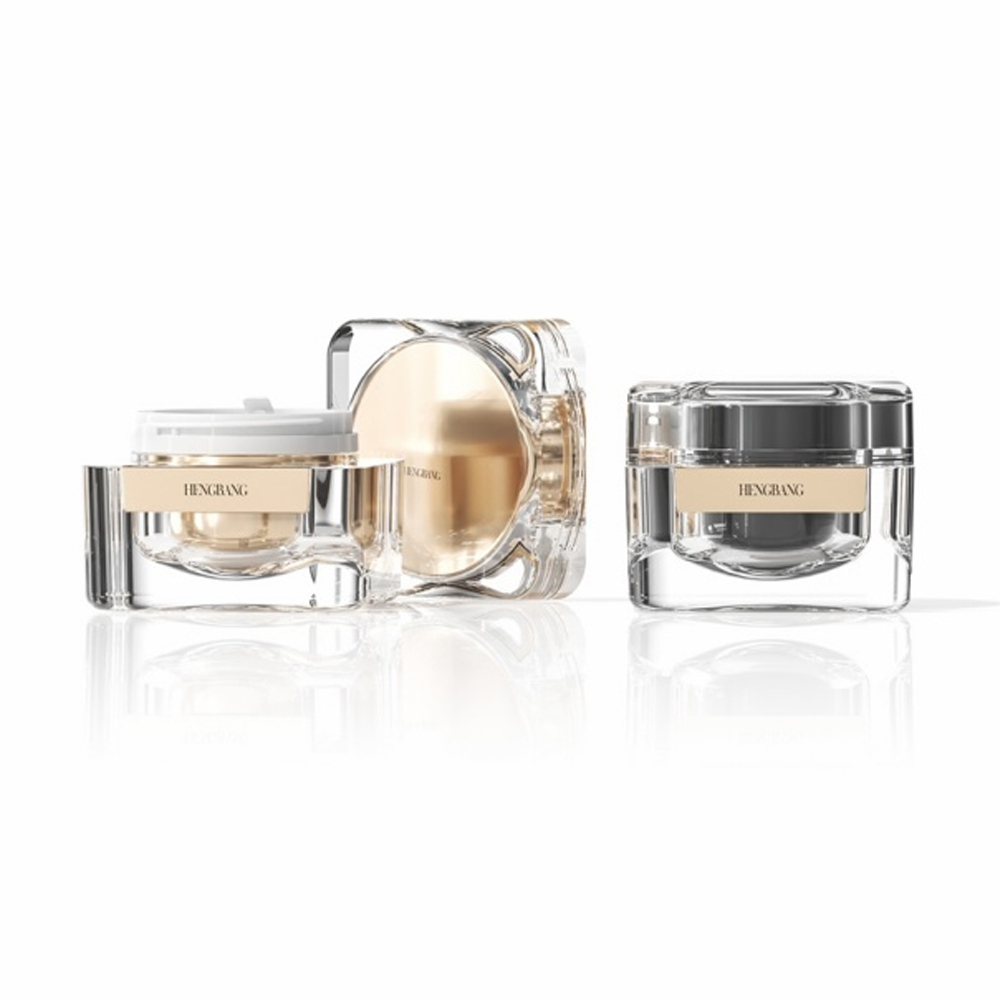 Double-Wall Acrylic Face Cream Jar with Metallic or Transparent Outer ShellThis double-wall acrylic jar offers a premium look with a metallic or clear outer shell, while the inner cup is suitable for formula contact. Its substantial feel makes it ideal for retail display of face creams.View Product →
PETG is a glycol-modified polyethylene terephthalate that is easier to handle on a filling line than acrylic. It is naturally clear, light, and recyclable. PETG jars do not require a separate inner liner, so a single-wall construction keeps the cost lower. This makes PETG a practical choice for a 30ml travel cream jar or a brand looking for a more affordable container without giving up translucency. PET is widely used for toner bottles and some cream jars. It has an excellent moisture barrier and cost efficiency, but PET is more sensitive to temperature and impact. According to our related article on plastic cream jar material options, the choice between acrylic and PETG should consider not just the appearance but also the environmental conditions your product will face in shipment and retail.
Polypropylene is the most economical option for single-wall jars. It has good chemical resistance but lower clarity. In practice, polypropylene cream jars are used for body butter, hair masks, and other products where the package receives less shelf scrutiny.
Refillable plastic cream jars have moved from a niche sustainability idea to a mainstream retail requirement. The concept is simple: the consumer keeps the outer shell and purchases a new inner cup containing the product. This reduces total plastic use and keeps the brand's packaging identity intact.
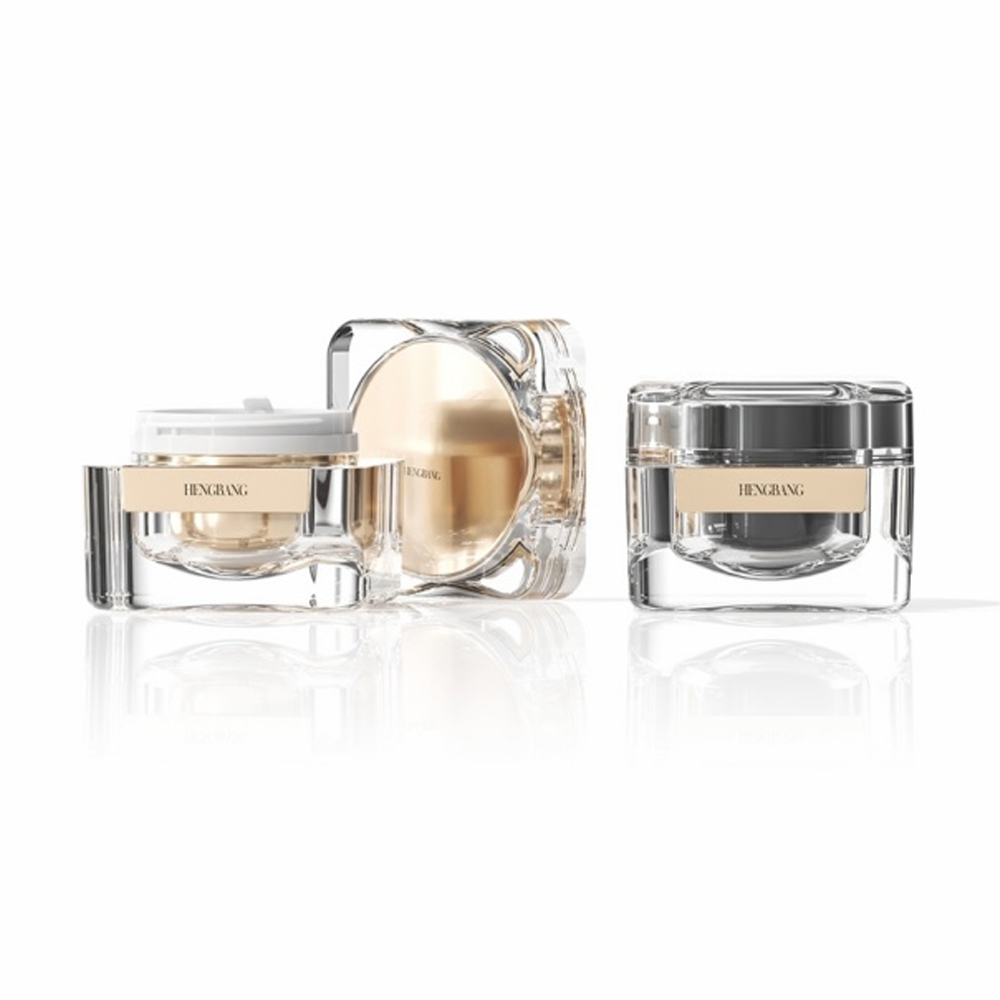
The key technical consideration for refillable jars is the closure mechanism. The inner cup must be easy to remove without spilling content, and the outer shell must still pass leak testing after reassembly. The HBG021 refillable double-wall plastic cream jar uses a threaded inner cup that the consumer rotates out with the lid, avoiding the need for a separate tool. This design keeps the refill process simple while allowing the outer shell to carry the brand's color, texture, and logo.
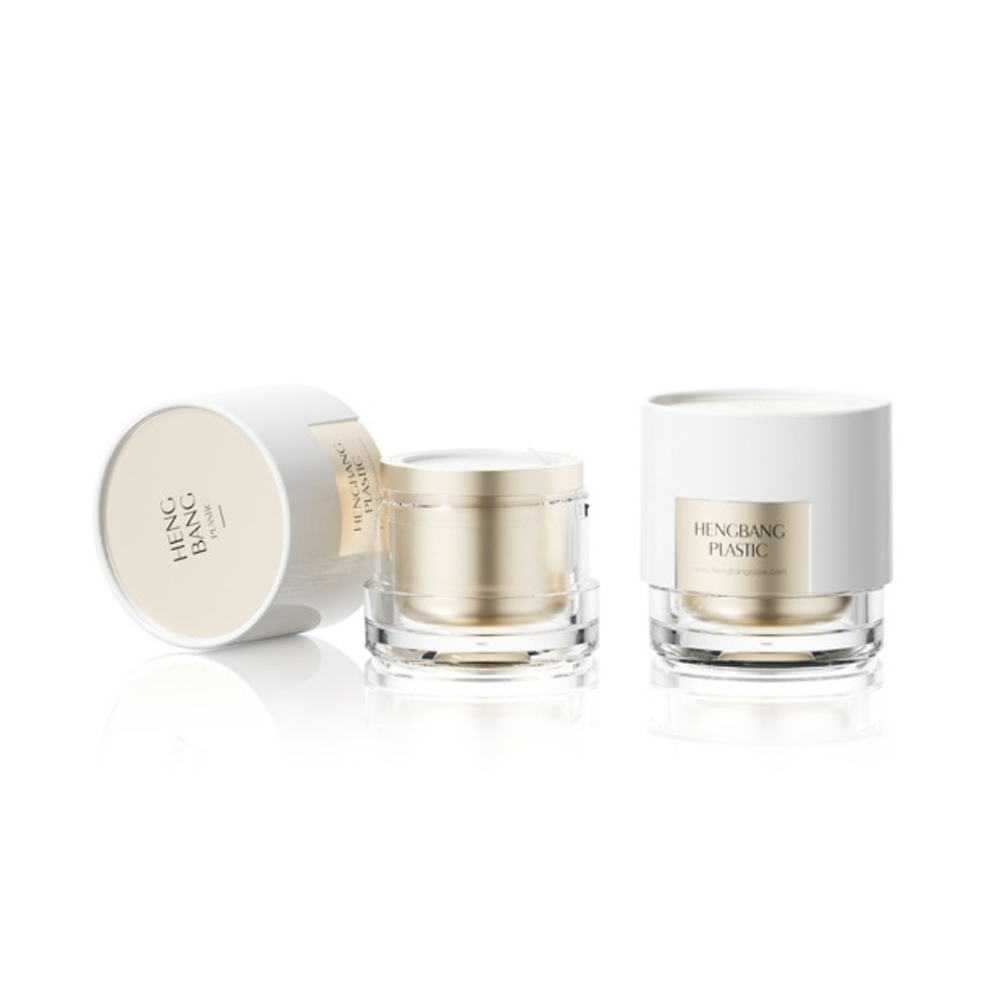 Refillable Double-Wall Plastic Cream Jar with Threaded Inner CupThis refillable jar reduces plastic waste and shipping volume. The threaded inner cup twists out easily for refills, allowing the outer shell to carry the brand design. Suitable for eco-conscious skincare brands.View Product →
Refillable systems also reduce shipping volume because the outer shells are often stored and shipped separately. For a brand launching a line of refillable face creams, this can lower freight costs by repeating the shell across multiple counts. It is not a silver bullet, though. You have to train consumers who are used to a one-piece jar, and your filling line has to accommodate the two-part assembly.
When you evaluate a cream jar supplier, the material certificate is only the beginning. A responsible supplier should list the exact polymer grade, the wall thickness tolerance, and the test method used to detect stress cracking. In practical terms, you want to see a sealing torque range, such as 7 to 9 Nm, on the technical drawing, and you want to know whether the supplier uses a 100% air leak test or a statistical sampling method.
Facility scale matters too. A manufacturer with a dedicated mold shop and an in-house decorating line can move from your design to a finished textured sample faster than a trading company that only ships stock containers. A manufacturer such as Hengbang Plastics, operating a 35,000 square meter facility with over 300 employees, is a more credible partner for large projects than a middleman. The same logic applies to looking at a company's validated quality management system before placing a bulk order.
For a new cream jar project, always order pre-production samples in the actual color and finish you plan to use. Evaluate them for drop impact, storage at 45 degrees Celsius, and compatibility with your preservative system. A resin that looks fine in a clear jar can degrade when you add a pearlescent pigment or a fragrance that is rich in limonene.
Face creams, eye creams, body butters, and overnight masks each put different demands on a cream jar. For a translucent face cream, a double-wall acrylic jar gives the visual weight that justifies a retail price. For a body cream in a large 200g size, a wide 85mm opening allows easy scooping and a thicker wall prevents cracking when a consumer presses hard at the bottom. For a travel-size eye cream, a 15g PETG jar with a tall, narrow footprint fits into a vanity case more easily than a squat 15g acrylic jar.
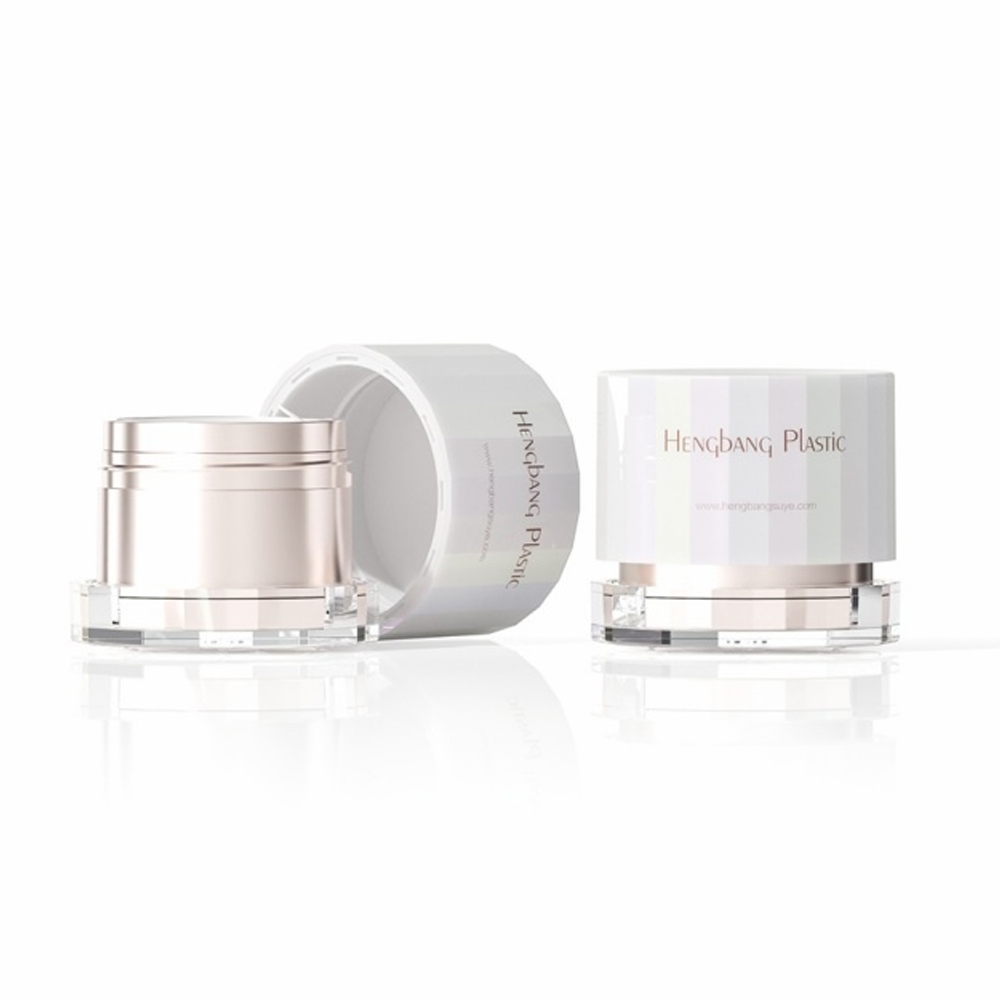
Let the product's texture decide the jar dimensions. A thick body butter needs an opening of at least 70mm for fingers to reach the bottom. A liquid emulsion with low viscosity benefits from a narrower opening that reduces spilling during use. The HBG002 double-wall acrylic body cream jar is one option that balances a wide mouth with a glass-like outer shell, making it suitable for a range of body care formulations.
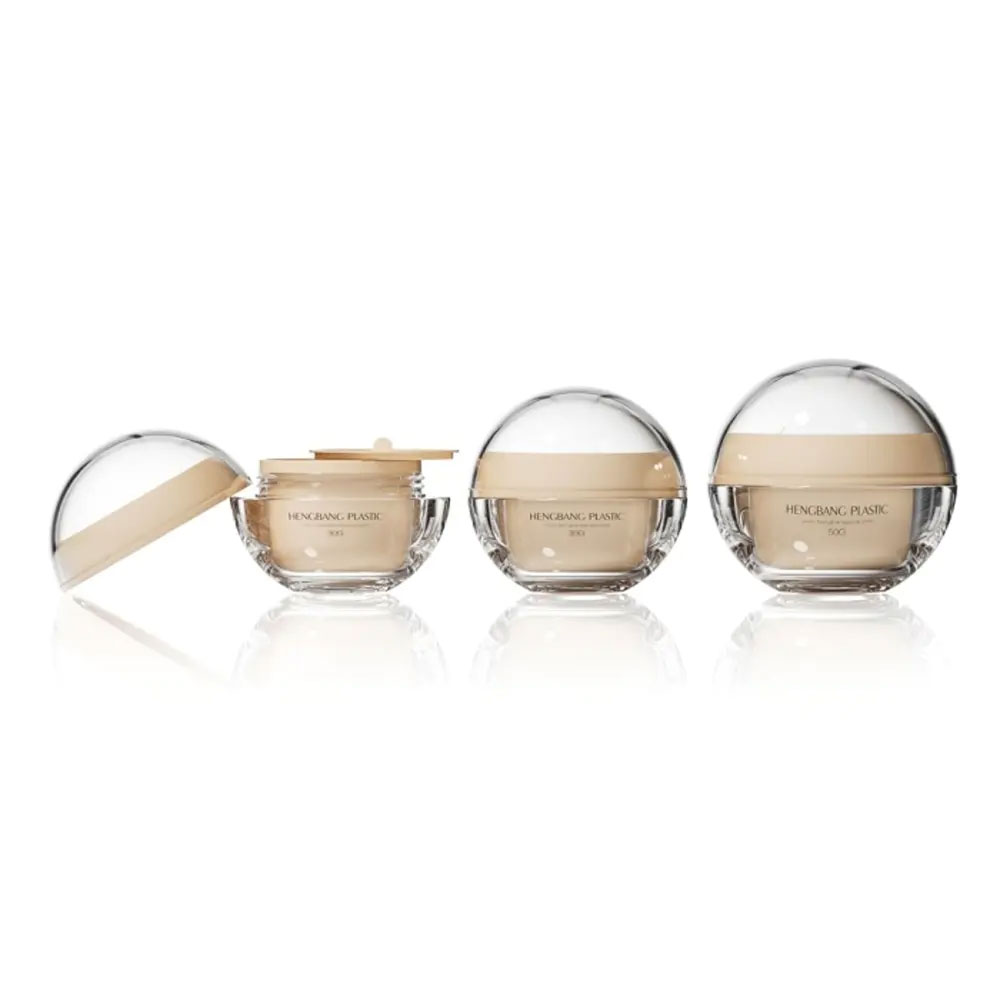 Double-Wall Acrylic Body Cream Jar with Wide Mouth and Crystal Clear FinishThis spacious double-wall acrylic jar features a wide mouth for easy access to thicker body creams. The crystal-clear outer shell showcases the product while the airtight lid preserves freshness.View Product →
The right plastic cosmetic cream jar is not the one that looks best in a rendering. It is the one that fills reliably on your line, stores your product without interaction, survives transport, and reassures a consumer who picks it up for the third time. Balance your choice on four facts: the polymer type and its compatibility with your formula, the percentage of material in the product sold, which is lower in a refillable system, the measurable drop test threshold on the technical drawing, and the supplier's ability to demonstrate a clean, documented production process. If you can verify those four, a well-designed plastic cream jar will do more than hold your formula. It will carry your brand forward.


Copyright © Yuyao Hengbang Plastic Co., Ltd.
All Rights Reserved.
 Wholesale Plastic Cosmetic Packaging Manufacturers