English
 中文简体
中文简体
News
Home > News > Industry News > How to Choose a Cosmetic Bottle Supplier That Qualifies, Customizes, and Delivers

 2026.09.03
 Industry News
Content
Picture this: you are launching a vitamin C serum that loses potency when exposed to air. A standard screw-top bottle will work for a few weeks, but it is the wrong choice for the formula. This is the moment when a cosmetic bottle supplier becomes more than a vendor. The right partner helps you match the container to the product, the brand position, and the production line — and that decision is too important to base on price alone.
In practice, the most reliable suppliers stand out in four areas: the bottle formats they can actually manufacture, the depth of their factory operations, their customization and refillable design offer, and the small procurement habits that prevent big delays. If you keep these four checks in mind, you will be better equipped to separate a genuine manufacturing partner from a company that is only moving boxes.
Before requesting quotes, define the viscosity, dosage, and preservation requirements of your formulation. A thin toner needs a different closure and neck finish than a dense cream, while a serum containing unstable actives benefits from an airless pump. Many brands choose a bottle based on shelf appeal, then discover that it is not compatible with the filling equipment or the formula stability. A competent cosmetic bottle supplier will ask about these constraints rather than simply sending a catalog.
A mature supplier should be able to offer at least these formats:
| Format | Best for | Key advantage |
|---|---|---|
| Airless bottle | Serums, foundations, active lotions | Prevents air and contamination from reaching the formula |
| PETG lotion bottle | Body lotion, sunscreen, light emulsions | Clear, lightweight, and easy to decorate |
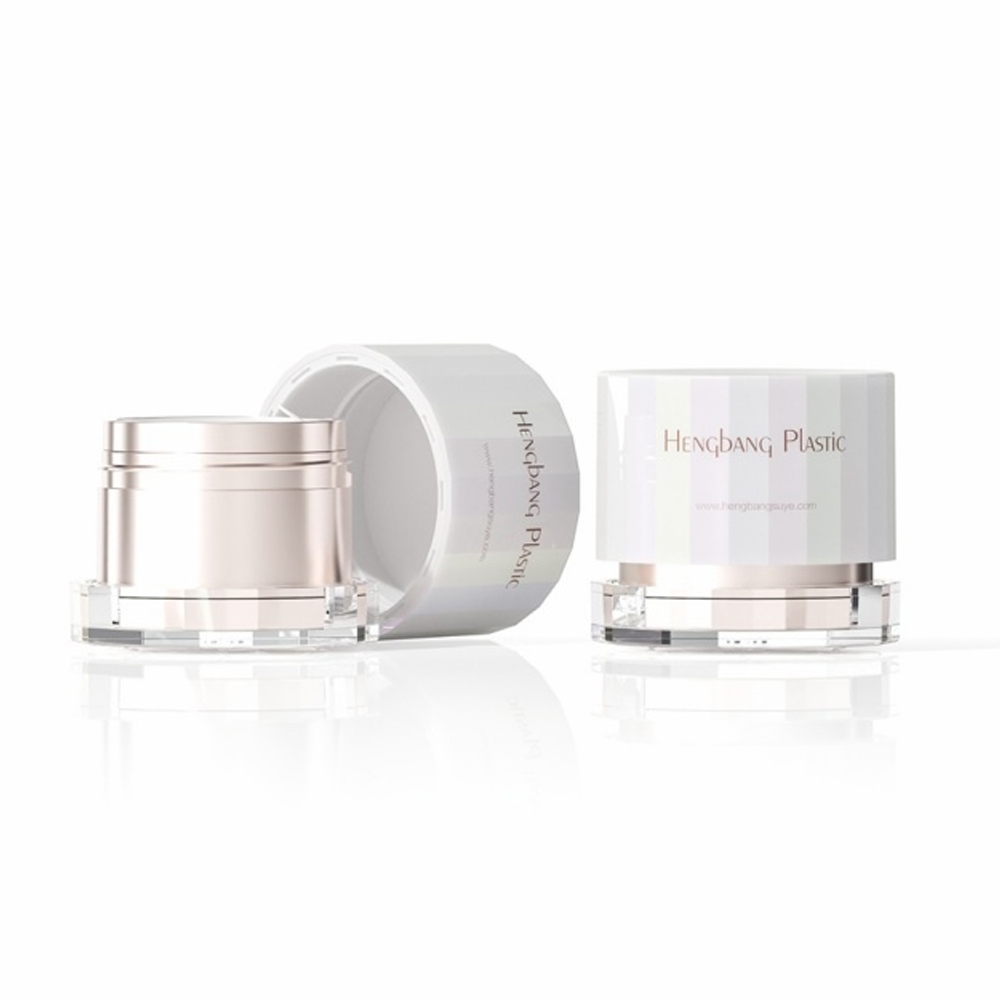
| Plastic cream jar | Face cream, body butter, balms | Wide mouth for dense formulas and convenient scooping |
| Toner bottle | Toners, micellar water, facial mist | Precise flow control and good material compatibility |
| Multi-chamber bottle | Freshly mixed formulas, separate actives | Keeps incompatible ingredients apart until dispensing |
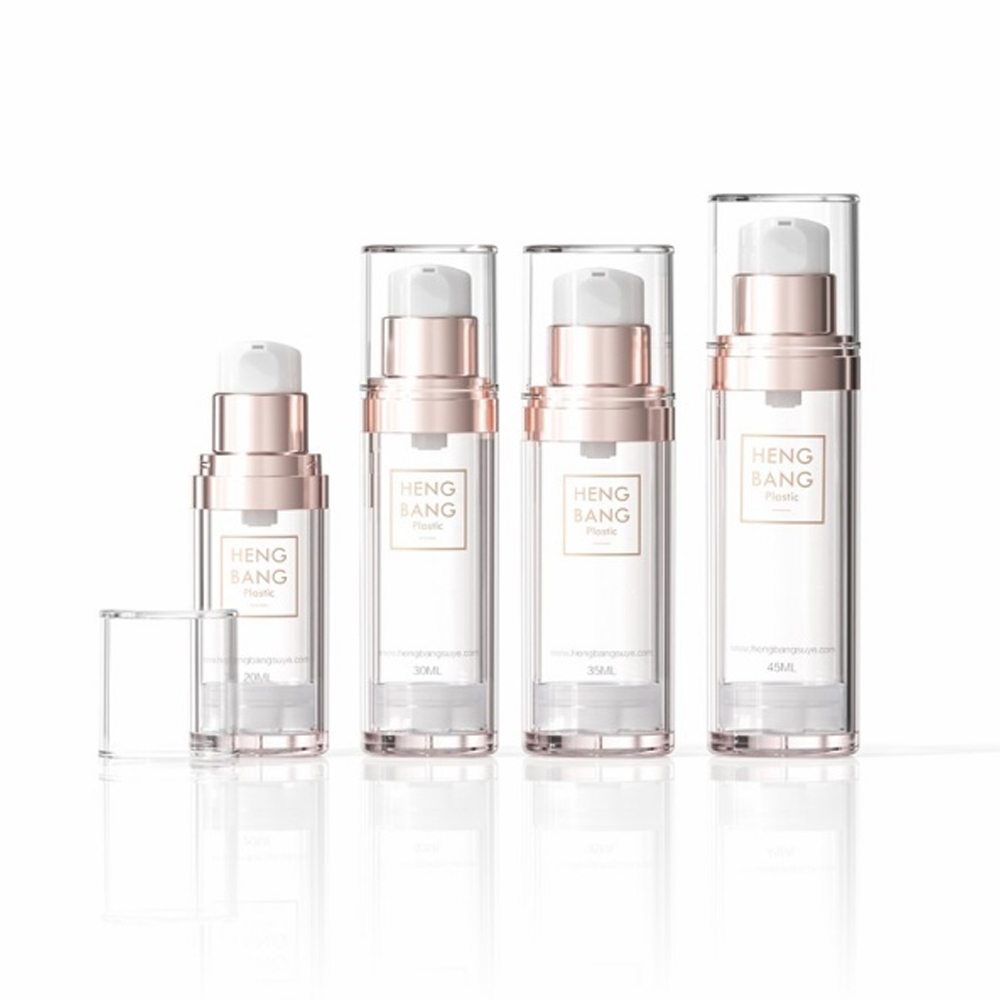
If your formula is sensitive to oxidation, an airless pump is often the safest route. This technical overview of how a plastic airless bottle works explains why the design keeps the product fresh and reduces preservative load. For many skincare launches, starting with an airless bottle is the clearest way to protect the efficacy claim.
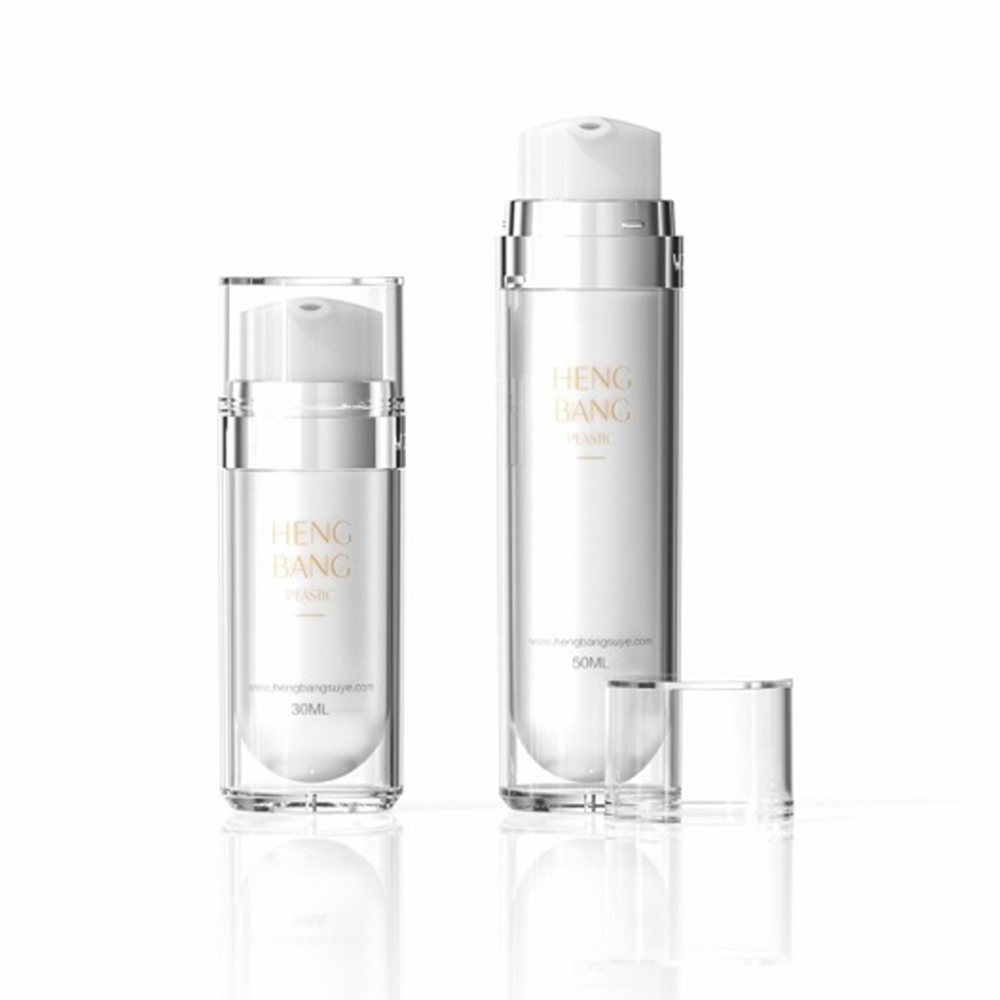
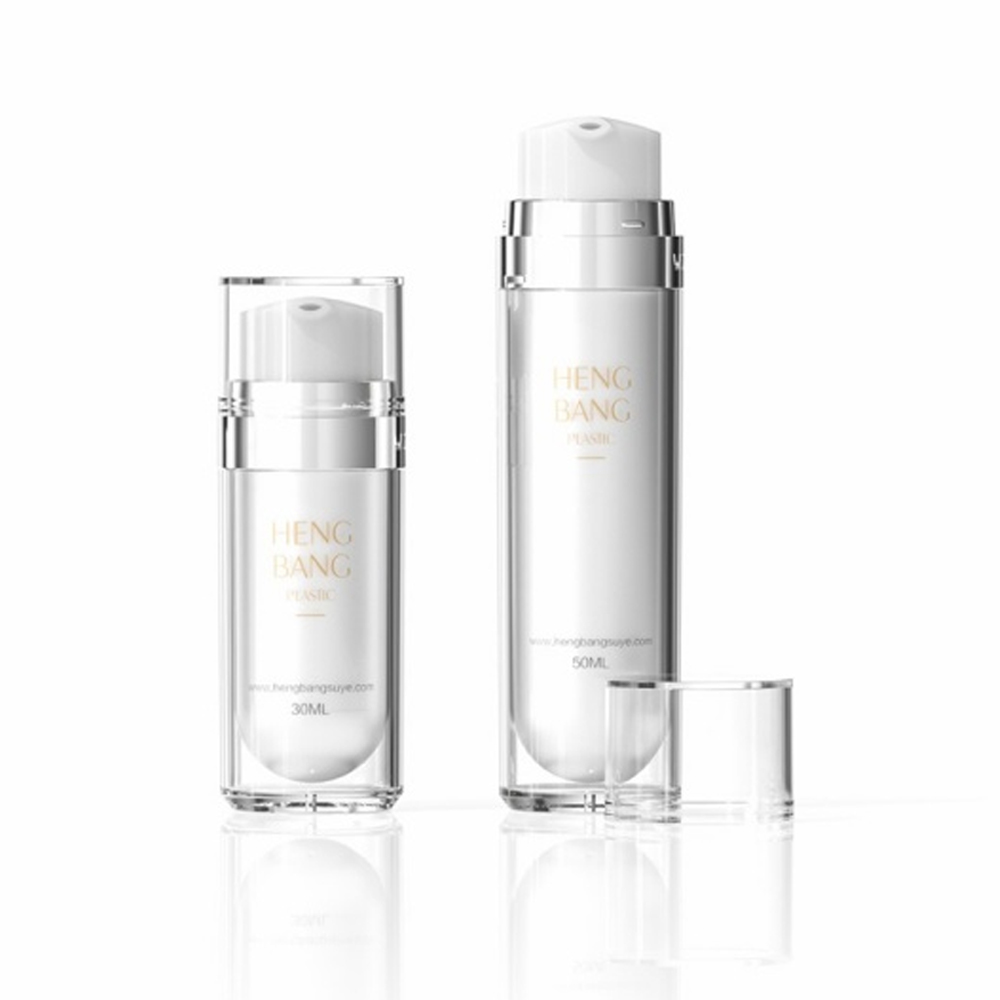 Plastic Airless Lotion Bottle in 30ml and 50ml SizesThis double-walled airless pump bottle protects oxygen-sensitive formulas with a piston-driven design. Available in 30ml and 50ml capacities with matte or transparent finishes, it suits skincare launches where preserving efficacy is critical. Evaluating in-house molding and assembly capabilities helps ensure consistent wall thickness and seal quality.View Product →
A supplier's website can make any workshop look impressive. The more practical question is whether the company runs its own injection molding, surface decoration, and assembly lines, or acts as a trading intermediary. A manufacturer with in-house production can control wall thickness, surface finish, and closure torque — all of which directly affect leak rates and the user's first impression of your product.
Certifications give you a baseline. ISO 9001 for quality management and ISO 14001 for environmental management are common among export-oriented factories. If the supplier is also recognized for R&D, such as a high-tech enterprise designation, that suggests the team can handle more than standard bottles. Ask for the certificate numbers rather than accepting a copy of a logo.
Factory scale matters too, though it should not be judged by area alone. A 35,000 square-meter plant with more than 300 employees, for example, is large enough to maintain separate injection, decoration, and packing areas, which reduces cross-contamination and improves quality control. When you evaluate a cosmetic bottle supplier, request a factory tour or a video walkthrough. Watch for clear material labels, organized tooling storage, and dust control at the assembly stage.
Customization in cosmetic packaging usually starts with color and logo. But the more interesting conversation is about structure. Refillable bottles and jars reduce material waste and encourage repeat purchases because the customer keeps the outer shell and replaces only the inner cartridge. Multi-chamber bottles let brands keep incompatible ingredients separate until the moment of use, which gives active-based skincare a clear functional advantage.
Refillable airless systems combine the oxygen protection of an airless pump with a replaceable inner cup or cartridge. This design is especially useful for expensive serums and creams where consumers appreciate a lower refill price. It also helps you meet tightening packaging regulations by cutting single-use plastic. If your brand plans a refill program, confirm that the supplier has tested the refill mechanism for alignment, pump fit, and seal integrity under real filling conditions.
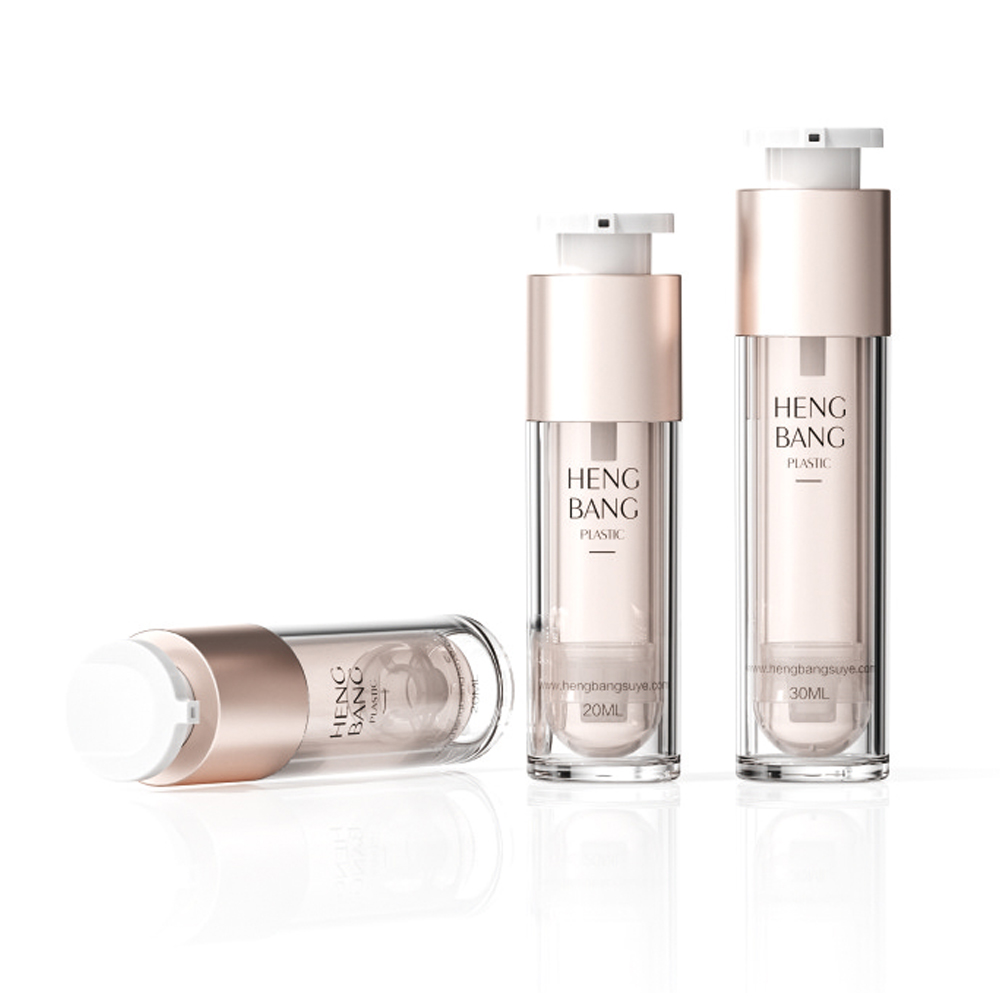 Refillable Airless Serum Bottle with Replaceable Inner CartridgeFeaturing a permanent outer shell and disposable inner bottle, this airless design cuts plastic waste while maintaining vacuum-sealed protection for serums and creams. A retaining clip on the nozzle secures the pump. It aligns with refill programs and sustainability goals, provided the refill mechanism has been tested for fit and seal integrity.View Product →
Two-in-one packaging is no longer a novelty. A double-chamber bottle can keep a water-based phase and an oil-based phase separate until they meet in the pump, while a triple-chamber bottle can dispense three doses in a fixed ratio. These formats are practical for hair care, skin care, and color cosmetics where freshness or precise mixing is part of the value promise. The engineering complexity is higher, so work with a supplier that can produce a working sample and document the dispensing output.
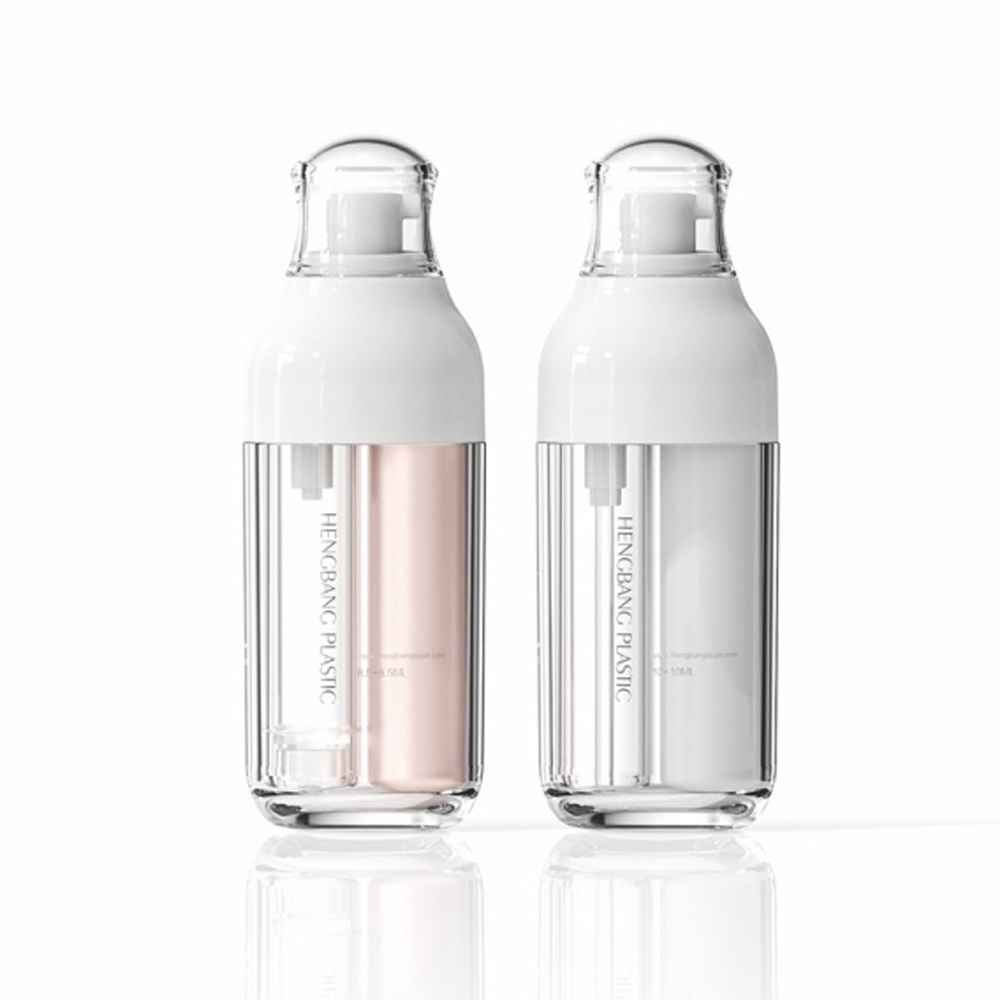 Double Chamber Airless Bottle for Two-Phase FormulasThis 17ml and 20ml dual-chamber airless bottle keeps two distinct formulations separate until dispensing. The transparent MS outer bottle and PP inner bottle visually differentiate phases, supporting fresh mixing and shelf appeal. Its complex engineering demands working samples and documented output to confirm reliable ratio dispensing.View Product →
Large catalogs matter less than what happens when an order is placed. Ask how the supplier handles sample approvals, artwork proofing, and first-article inspection. Find out the minimum order quantity for standard and custom bottles, and whether the MOQ applies to a full container or a mixed palette. A clear communication channel is essential, especially when you are working across time zones. A supplier that responds with actual data — rather than a quick “no problem” — is more likely to solve problems before they interfere with your launch date.
Use this short checklist during your first conversations:
The best cosmetic bottle supplier is not necessarily the one with the widest catalog. It is the partner that understands your formulation, asks the right questions, and has the engineering discipline to turn a drawing into a defect-free release. Use the four checks above to narrow down your list, then place a small trial order before committing to full-scale production. A good partnership will show up in your product quality long before it shows up in your spreadsheet.


Copyright © Yuyao Hengbang Plastic Co., Ltd.
All Rights Reserved.
 Wholesale Plastic Cosmetic Packaging Manufacturers