English
 中文简体
中文简体
News
Home > News > Industry News > What are plastic cream jars and what material options are available, including acrylic and refillable types

 2026.04.22
 Industry News
Content
The choice of packaging for a skincare cream or balm is one of the most consequential decisions a cosmetic brand makes, because the container communicates brand positioning to the consumer before the product is ever opened, protects the formulation throughout its shelf life, and increasingly must satisfy sustainability requirements that consumers and regulators are raising year over year. Plastic Cream Jar, Plastic Acrylic Cream Jar, and Refillable plastic Cream Jar products represent three distinct but overlapping answers to the question of how to package a cream formulation effectively, and understanding the technical, commercial, and sustainability dimensions of each category is the foundation for making the correct packaging specification decision for any cosmetic product.
The direct conclusion for any cosmetic formulator or packaging buyer is this: a Plastic Acrylic Cream Jar is the correct choice for premium and luxury skincare products that require a glass like aesthetic, high surface finish quality, and strong brand differentiation at retail; a standard Plastic Cream Jar in polypropylene (PP) or PET is the correct choice for mass market and mid range products where cost efficiency, chemical compatibility, and recyclability are the primary drivers; and a Refillable plastic Cream Jar with an inner pod and reusable outer shell is the correct choice for brands building sustainability credentials while retaining the premium package appearance that their positioning requires. This article follows the outline from material selection through to formula compatibility and brand positioning, covering all three product categories with the technical depth and practical specificity needed to make informed packaging decisions.
The performance of a Plastic Cream Jar across the dimensions of aesthetics, durability, chemical compatibility, regulatory status, and environmental profile is determined fundamentally by the polymer from which it is manufactured. The three dominant materials in the cosmetic cream jar market are acrylic (PMMA), polypropylene (PP), and polyethylene terephthalate (PET), each with a distinct combination of properties that suits different product and brand requirements.
Polymethyl methacrylate (PMMA), universally known as acrylic in the packaging industry, is the material that defines the premium end of the Plastic Cream Jar market. Its primary commercial appeal is its extraordinary optical clarity: acrylic transmits 92 percent of visible light, compared to 88 percent for standard glass, making it the clearest solid plastic material available and giving a Plastic Acrylic Cream Jar a visual appearance that is indistinguishable from glass to most consumers. This glass like quality enables cosmetic brands to position their products at a premium price point without the fragility, weight penalty, and shipping risk associated with actual glass packaging.
Beyond its optical properties, acrylic offers a surface hardness of approximately 100 on the Rockwell M scale, making it significantly more scratch resistant than polycarbonate (PC) or standard PET, and allowing the high gloss surfaces of a Plastic Acrylic Cream Jar to maintain their premium appearance through retail display and consumer use better than any alternative plastic material. Acrylic can be precisely injection molded to tight dimensional tolerances, enabling the smooth running, well fitted lid engagement that communicates quality to the consumer at the moment of opening. Its main limitations are brittleness under impact (acrylic fractures rather than deforming under sharp impact, unlike polypropylene), susceptibility to crazing in contact with certain solvents and high concentration alcohols, and a higher material cost than PP or PET that places Plastic Acrylic Cream Jar products at a 30 to 60 percent price premium over equivalent volume polypropylene alternatives.
Polypropylene is the workhorse material of the mass market Plastic Cream Jar segment, combining low material cost, excellent chemical resistance, adequate impact resistance, and a well established recyclability pathway (PP is widely collected in municipal recycling programs as resin identification code 5) into a practical and commercially dominant packaging solution. PP cream jars range from semi transparent (in natural, unpigmented form) to fully opaque (in pigmented white, black, or custom colour formulations), providing formulation specific UV protection options within the same material system.
The chemical resistance of PP is superior to acrylic across a wide range of cosmetic ingredients, including acids, alkalis, surfactants, and most of the botanical extracts and active ingredients commonly used in modern skincare formulations. PP demonstrates no significant dimensional change or surface degradation after 12 months of contact with pH 3 to 11 aqueous formulations, alcohol concentrations up to 30 percent, and most emollient and emulsifier systems, making it the safe default choice for new formulations where compatibility has not yet been fully characterized. Its flexural modulus of approximately 1,500 MPa provides adequate rigidity for standard cream jar wall thicknesses while allowing the controlled deformation needed for the snap fit lid closures common in the category.
PET brings a combination of optical clarity closer to acrylic than polypropylene, excellent tensile strength (tensile strength of 55 to 75 MPa compared to 30 to 40 MPa for PP), and the most established and highest volume plastic recycling infrastructure of any polymer. PET cream jars are produced by injection stretch blow molding or injection molding, with the clarity of blow molded PET approaching that of glass in thin wall constructions. PET is the standard material for cosmetic jars in the natural and organic beauty segment because its clear and clean aesthetic aligns with the ingredient transparency that consumers in this segment expect, and its status as the most recycled plastic polymer supports the sustainability messaging of these brands.
The main consideration in specifying PET for cream jar applications is its lower chemical resistance to certain oils, esters, and high concentration fragrance ingredients compared to PP. Fatty acid esters (common as emollients in skin cream formulations) can cause stress cracking in PET at elevated temperatures, requiring compatibility testing before final specification approval. For water based formulations without significant oil phase content, PET performs reliably and offers the premium visual aesthetic at a lower cost than acrylic.
The Plastic Acrylic Cream Jar occupies the top tier of the plastic cream jar market, and understanding the specific technical and commercial reasons for its premium positioning helps brands decide where in their range this specification is justified and where a less expensive alternative will meet the requirements at lower cost.
The dominance of acrylic in premium skincare jar packaging stems from three converging advantages that no single alternative material replicates simultaneously. First, the glass like optical clarity and surface gloss of a Plastic Acrylic Cream Jar gives it a visual weight and premium presence on the retail shelf that commands higher perceived value than any frosted, semi opaque, or matte plastic alternative. Second, acrylic can be produced in precisely controlled tinted and pigmented versions (rose, amber, black, silver infused) that add visual distinction to the jar while maintaining the high gloss, premium surface quality. Third, acrylic accepts the surface decoration treatments (UV coating, metallizing, hot stamping, silk screen printing) that transform a Plastic Acrylic Cream Jar into a branded package with the decorative complexity associated with luxury cosmetic products.
Market data from independent cosmetic packaging surveys show that consumers rate acrylic packaged skincare products as significantly more premium (on average 35 to 45 percent higher perceived quality score) than equivalent products in polypropylene packaging of the same fill volume, even when the formulation inside is identical. This perception premium translates directly into the willingness to pay a higher price, making the Plastic Acrylic Cream Jar a genuine commercial investment rather than simply a cost item for brands positioned in the premium or masstige skincare market.
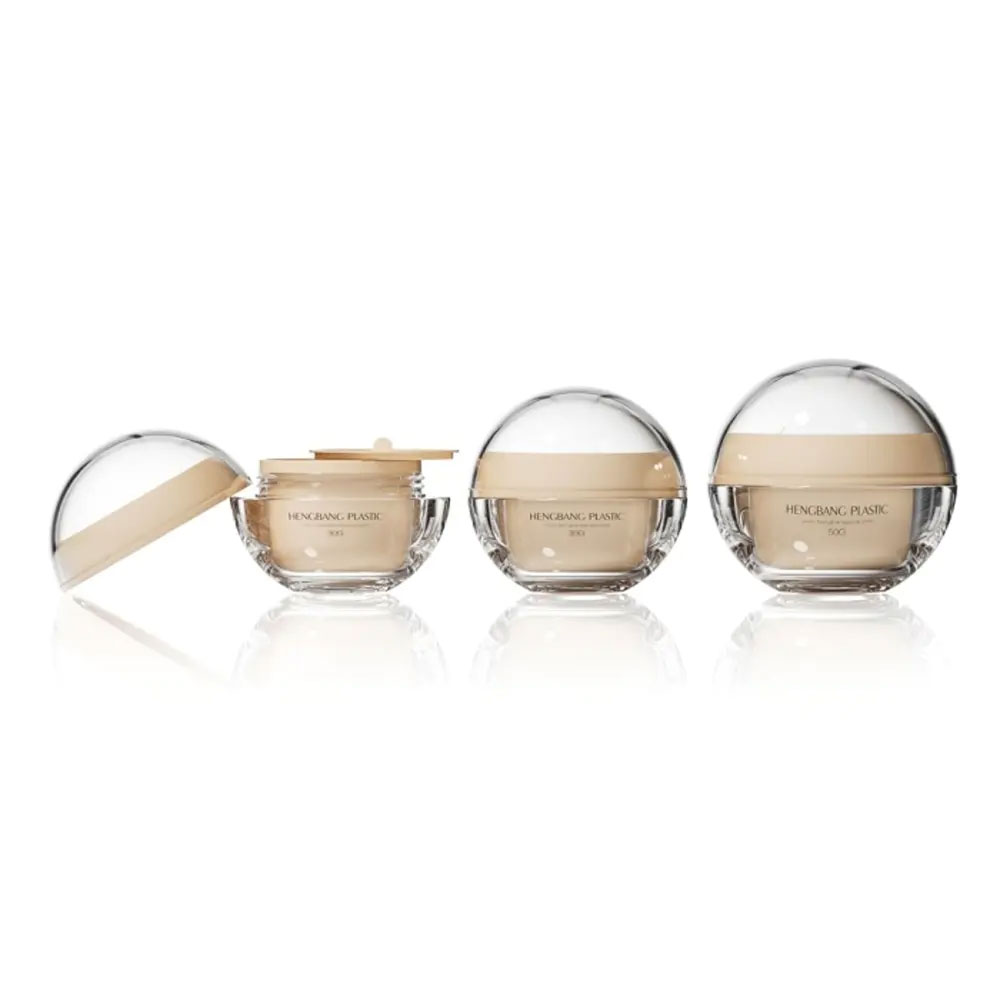
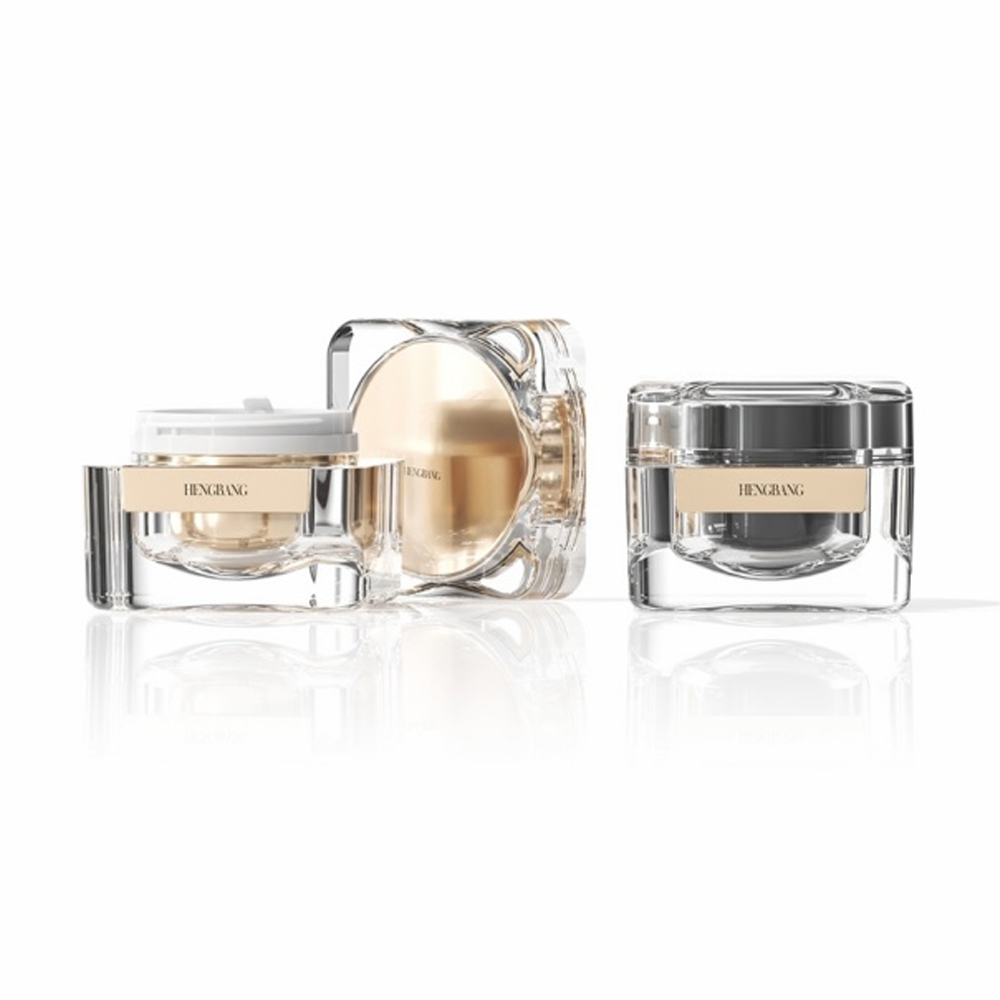
Plastic Acrylic Cream Jar products are manufactured in two structural configurations that differ in their production complexity, cost, and the packaging opportunities they create:
Plastic Acrylic Cream Jar products are commercially available in a standard size range that spans the most common cosmetic product fill weights for the cream and balm category:
The Refillable plastic Cream Jar category has grown from a niche sustainability proposition to a mainstream packaging format embraced by prestige brands across the skincare market, driven by the convergence of consumer demand for sustainable products, regulatory pressure to reduce single use plastic, and the commercial discovery that refillable systems can enhance brand loyalty and improve consumer lifetime value compared to single use packaging models.
The cosmetic packaging industry generates approximately 120 billion units of packaging annually, of which a substantial majority is currently not recycled due to the complexity of multi material cosmetic packaging, consumer behavior limitations, and the absence of recycling infrastructure for small plastic components. Independent sustainability lifecycle analyses consistently show that a Refillable plastic Cream Jar system using a reusable outer shell for 3 to 5 refill cycles reduces the total plastic consumption per dose of cream by 60 to 75 percent compared to an equivalent single use jar system, and reduces the carbon footprint of the packaging per use by 50 to 70 percent when the energy required to produce replacement outer shells is accounted for. For brands building a credible sustainability position, these numbers are the quantified foundation of their packaging sustainability claim rather than a vague aspiration.
Regulatory drivers are reinforcing market momentum: the European Union Single Use Plastics Directive and Extended Producer Responsibility regulations in multiple markets are creating financial incentives and in some cases mandates for recyclable and refillable packaging that make the transition from single use to refillable formats increasingly commercially rational beyond the consumer marketing benefits.
The engineering of a Refillable plastic Cream Jar system centers on the design of the interface between the reusable outer shell and the replaceable inner pod (or inner cup). The outer shell, typically manufactured in Plastic Acrylic Cream Jar quality acrylic or premium grade PP, provides the visual identity, structural rigidity, and consumer handling experience of the package. It is designed for durability across multiple refill cycles, with wall thicknesses, surface treatments, and closure mechanisms engineered for 3 to 5 years of consumer use rather than the single product lifecycle of a traditional cream jar.
The inner pod is a thin wall container (typically PP or recycled content PET) that holds the formulation and is discarded or recycled at the end of the product. The pod interface with the outer shell must satisfy several demanding engineering requirements simultaneously:
From the consumer perspective, the Refillable plastic Cream Jar model delivers both financial and environmental benefits that, when effectively communicated, drive strong adoption rates and create a purchasing habit that builds brand loyalty. Refill pods for premium skincare are typically priced at 20 to 40 percent below the equivalent full package product, reflecting the lower material and production cost of the pod compared to the full jar assembly. A consumer who makes the initial investment in the outer shell and then purchases 4 refill pods over the same period that they would have purchased 5 full jars typically saves 15 to 30 percent of their total spend on the product over the lifecycle, while reducing their plastic packaging consumption by 60 to 75 percent as noted above.
Whether specifying a standard Plastic Cream Jar, a Plastic Acrylic Cream Jar, or a Refillable plastic Cream Jar, the functional performance features of the container determine whether the formulation it protects arrives at the consumer in optimal condition and whether the product delivers its designed performance throughout its shelf life. The following features are the most commercially and technically critical to evaluate in any cream jar specification process.
Many skincare cream formulations contain active ingredients that oxidize progressively on exposure to air, reducing their efficacy over time. Vitamin C (ascorbic acid) derivatives, retinoids, and polyunsaturated fatty acid rich plant oils are particularly oxygen sensitive, and a cream jar that allows significant air exchange through its lid closure will produce a product with measurably declining activity as the container is repeatedly opened and closed during use. Quality Plastic Cream Jar and Plastic Acrylic Cream Jar products address this through precision engineered lid to jar sealing systems that minimize the internal headspace volume and the air exchange rate during normal use and storage.
The gold standard for cream jar airtight sealing is a combination of a PE (polyethylene) or EVA foam inner liner disc, pressed into the lid and maintained in contact with the jar rim by the compression of the threaded or snap fit closure, combined with a precision machined rim to lid engagement surface with a surface roughness below 0.8 micrometers Ra to ensure consistent contact seal performance. Jars using this dual liner and precision surface sealing approach demonstrate oxygen transmission rates below 0.5 mL per day at standard conditions, adequate for the shelf life protection of all but the most extremely oxygen sensitive formulations.
Light sensitive cosmetic ingredients, including retinoids, certain peptides, chlorophyll containing botanical extracts, and photo labile preservative systems, require packaging that blocks the UV and visible light wavelengths that catalyze their degradation. While the glass like clarity of a standard Plastic Acrylic Cream Jar is a visual asset for premium positioning, it provides minimal UV protection unless supplemented with UV absorbing additives in the acrylic formulation or an opaque outer layer. Options for UV protection in cream jar packaging include:
The surface decoration of a Plastic Cream Jar or Plastic Acrylic Cream Jar is the primary medium through which brand identity is communicated on the product, and the selection of decoration technique must balance visual impact, durability, production lead time, and minimum order quantity constraints. The principal decoration options for plastic cream jars are:
Selecting the optimal Plastic Cream Jar, Plastic Acrylic Cream Jar, or Refillable plastic Cream Jar for a specific formulation and brand requires systematic evaluation across three interdependent dimensions: the physical and chemical compatibility of the packaging with the formulation, the logistical requirements of the supply chain, and the alignment of the packaging specification with the brand's positioning and price strategy.
Compatibility testing is the technical foundation of any cream jar specification decision, because a visually and commercially suitable jar that is chemically incompatible with the formulation it contains will produce a commercially damaging product failure through discoloration, dimensional change, surface crazing, ingredient extraction, or container induced formula instability. The standard compatibility testing protocol for a Plastic Cream Jar or Plastic Acrylic Cream Jar specification includes:
The logistical implications of Plastic Cream Jar selection extend beyond the product to the carton and pallet configurations of the distribution supply chain. A heavier jar increases both the product level shipping weight and the dimensional weight, both of which affect freight cost for e commerce direct to consumer shipments where the incremental weight of the packaging relative to the fill weight is highly visible. A standard 50g fill in a double wall Plastic Acrylic Cream Jar weighs approximately 85 to 110g total (fill plus package), compared to 70 to 80g for an equivalent PP cream jar of the same fill volume. For a DTC beauty subscription with 10,000 monthly shipments, this 10 to 30g per unit weight difference translates to a freight cost premium of $15,000 to $45,000 annually at standard parcel carrier rates, a real cost that must be offset against the revenue premium enabled by the premium packaging.
Break risk in shipping is lower for plastic cream jars than for glass alternatives, but Plastic Acrylic Cream Jar products can fracture under sharp corner impact, particularly in thin wall single construction designs. Adequate secondary packaging (tissue paper, box inserts, or void fill foam) is required to protect the jar during transit in e commerce shipping where the package undergoes multiple handling events between dispatch and consumer delivery.
The final and most commercially important dimension of cream jar selection is its alignment with the brand's market position and the product's price point. Packaging investment should be proportional to the retail price of the product: a cream retailing at $80 to $200 can justify a Plastic Acrylic Cream Jar with double wall construction, hot stamping, and a silk screened lid that costs $3 to $8 per unit at commercial order quantities, representing 4 to 10 percent of the retail price. The same packaging investment on a $15 mass market moisturizer would represent an unsustainable 20 to 50 percent of retail and would price the product out of its competitive market.
The Refillable plastic Cream Jar strategy creates a two tier pricing architecture that can be deployed across a range of brand positioning levels: an initial full kit purchase at a premium price (outer shell plus first pod) followed by lower priced refill pod repurchases that build repeat purchase frequency while the reusable outer shell remains in the consumer's possession as a continuous brand presence. This model is particularly effective for brands where the core consumer demographic values both premium aesthetics and environmental responsibility, which market research consistently identifies as the fastest growing segment in prestige skincare purchasing.
| Property | Acrylic (PMMA) | Polypropylene (PP) | PET |
|---|---|---|---|
| Light transmission | 92 percent (glass like clarity) | Semi transparent to opaque | 80 to 90 percent (very clear) |
| Chemical resistance | Moderate (avoid high alcohols) | Excellent (pH 3 to 11 stable) | Good (test with fatty esters) |
| Impact resistance | Low (brittle fracture) | High (elastic deformation) | Moderate to high |
| Recyclability | Limited infrastructure | Widely recycled (code 5) | Most recycled plastic (code 1) |
| Relative cost | High (30 to 60 percent premium) | Low (industry baseline) | Low to moderate |
| Premium perception | Very high (35 to 45 percent premium score) | Standard | Moderate to high |
Drawing together the material properties, structural options, sustainability considerations, and brand positioning factors covered in this article, the following decision framework provides a practical guide for selecting the optimal cream jar specification for any given cosmetic product and brand context.
Applied systematically, this decision framework narrows the specification options quickly to the jar type that best serves the product, the brand, and the consumer simultaneously, which is the foundation of packaging decisions that deliver commercial success alongside formulation quality.
Brydson, J. A. (1999). Plastics Materials, 7th edition. Butterworth Heinemann, Oxford, UK. (Material properties of PMMA, PP, and PET.)
Paine, F. A., and Paine, H. Y. (Eds.) (1992). A Handbook of Food Packaging, 2nd edition. Springer, Dordrecht, Netherlands. (Cosmetic and food grade packaging materials and migration.)
European Commission (2011). Regulation (EU) No 10/2011 on Plastic Materials and Articles Intended to Come into Contact with Food. Official Journal of the European Union. (Migration limits applicable to cosmetic packaging by analogy.)
Cosmetics Europe (2021). Sustainable Packaging Guidelines for the Cosmetics Industry. Cosmetics Europe, Brussels.
Sherrill, C. (2019). Refillable packaging in prestige beauty: consumer behavior and commercial outcomes. Journal of Cosmetic Science, 70(5), 291–304.
Harper, C. A. (Ed.) (2006). Handbook of Plastics Technologies. McGraw Hill, New York. (Injection molding of PMMA, PP, and PET for cosmetic packaging applications.)
Hahladakis, J. N., Velis, C. A., Weber, R., Iacovidou, E., and Purnell, P. (2018). An overview of chemical additives present in plastics: migration, release, fate and environmental impact during their use and after their end of life. Journal of Hazardous Materials, 344, 179–199.
Packaging Digest (2022). State of Sustainable Packaging in Beauty and Personal Care. Packaging Digest Annual Report, Chicago, IL.
PlasticsEurope (2022). Plastics: The Facts 2022. PlasticsEurope, Brussels. (Global plastic production, recycling rates, and material specific data.)
Mintel Group Ltd (2023). Global Packaging Trends: Sustainability and Refillability in Beauty. Mintel, London.


Copyright © Yuyao Hengbang Plastic Co., Ltd.
All Rights Reserved.
 Wholesale Plastic Cosmetic Packaging Manufacturers