English
 中文简体
中文简体
News
Home > News > Industry News > Cosmetic Containers Manufacturers: How to Choose the Right Packaging Partner

 2026.08.20
 Industry News
Content
Imagine you are preparing to launch a new skincare line. The formula is ready, the label is designed, but you still need dependable cosmetic containers. You start contacting cosmetic containers manufacturers and quickly discover that prices, lead times, and product claims vary widely. The selection you make now will affect product stability, on-shelf appeal, and customer trust. This guide explains the practical criteria that matter when evaluating manufacturers, from certifications and production capacity to product range and customization support.
Start with the basics: a reliable manufacturer should have verifiable credentials, a controlled production environment, and a clear quality system. ISO 9001 and ISO 14001 certifications are common baseline requirements for export-oriented plastic packaging suppliers. They indicate that a factory has documented procedures for quality management and environmental control. Manufacturer background also matters. A company with a dedicated factory floor, such as Yuyao Hengbang Plastic Co., Ltd., which operates a 35,000-square-meter facility with more than 300 employees, is better positioned to handle design refinements, pilot runs, and large orders in one place. Recent recognition as a high-tech enterprise and ownership of invention patents further suggest in-house technical capacity.
A supplier that cannot clearly describe its quality checks or material sourcing is a higher risk. Ask how the factory controls dimensions, wall thickness, and sealing performance. Insist on seeing sample approval records and batch traceability. These details separate a professional manufacturer from a simple trader.
A strong manufacturer should cover the container formats your product range needs. The following table shows the main categories commonly supplied by cosmetic packaging factories.
| Container Type | Typical Capacity | Best For | Key Design Features |
|---|---|---|---|
| Airless bottles | 15 ml–50 ml | Serums, foundations, lotions | Piston-based dispensing, protect oxygen-sensitive formulas |
| Double/triple chamber bottles | 7 ml–30 ml | Multi-step treatments, mixed formulas | Two or three separate compartments |
| Lotion bottles | 30 ml–250 ml | Body lotions, facial emulsions | PETG or PET, pump or flip-top closures |
| Plastic cream jars | 15 ml–100 ml | Creams, masks, balms | Wide opening, double-wall options, refillable versions |
| Sunscreen squeeze bottles | 30 ml–50 ml | Sunscreens, travel-proof lotions | Squeeze dispensing, lightweight, leak-resistant |
| Toner bottles | 15 ml–200 ml | Toner, micellar water, essences | PET/PETG clarity, various neck finishes |
Airless bottles are particularly relevant for skincare brands. Their piston design minimizes oxygen exposure and helps preserve active ingredients. For example, a plastic airless lotion bottle can work for both daily lotion and liquid foundation.
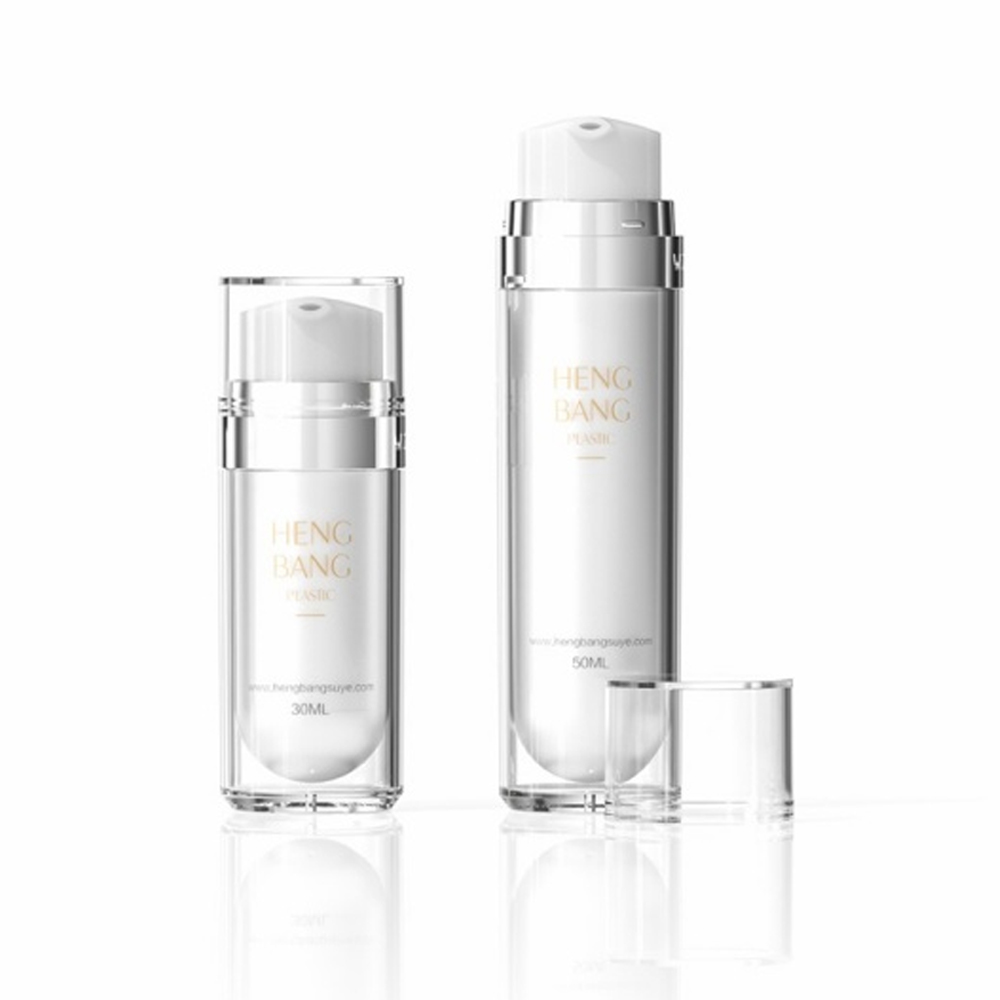 Custom HB-K009A/B Plastic Airless Lotion Bottle Empty Suppliers, OEM/ODM FactorYuyao Hengbang Plastic Co., Ltd. is China HB-K009A/B Plastic Airless Lotion Bottle Empty Suppliers and OEM Factory, details:Our HB-K009A...View Product →
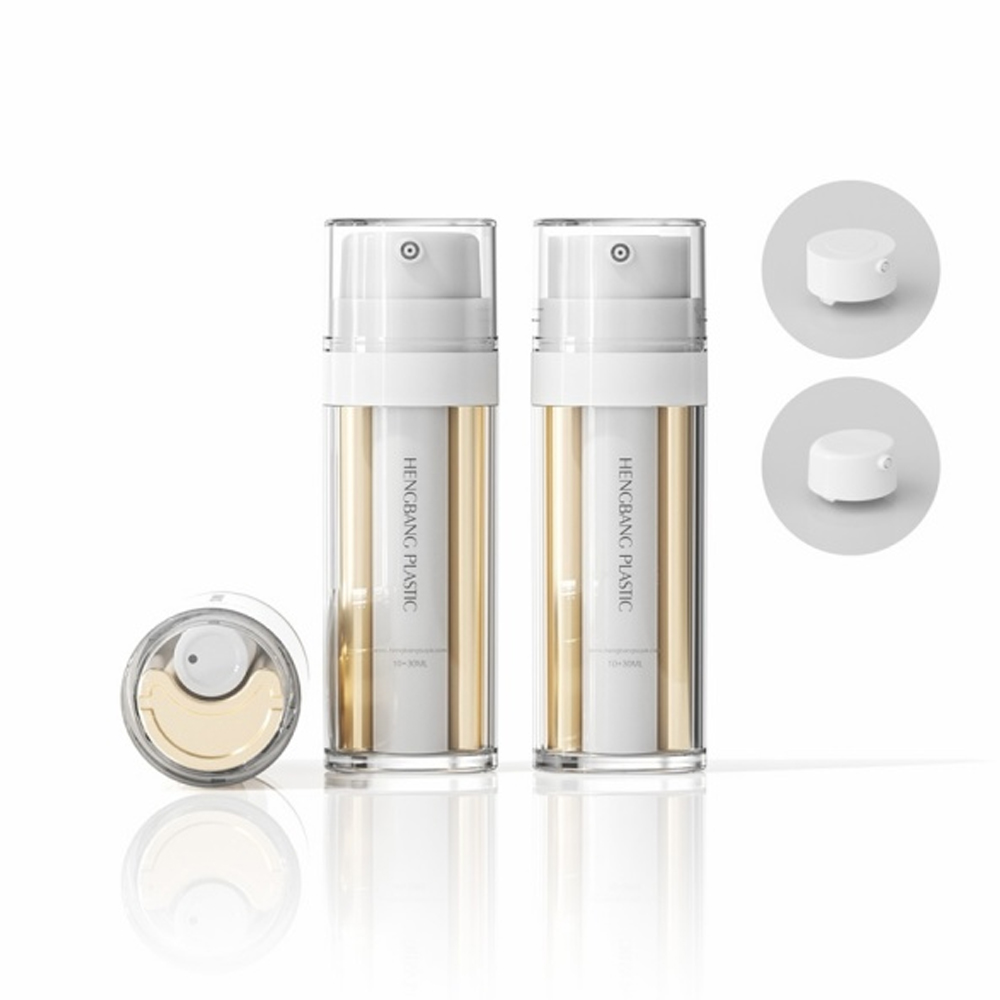
If you plan to package two complementary formulas in one unit, consider a double-chamber bottle. The cosmetic double-chamber lotion bottle keeps the two phases separated until the moment of dispensing, which is useful for fresh-mix formulas.
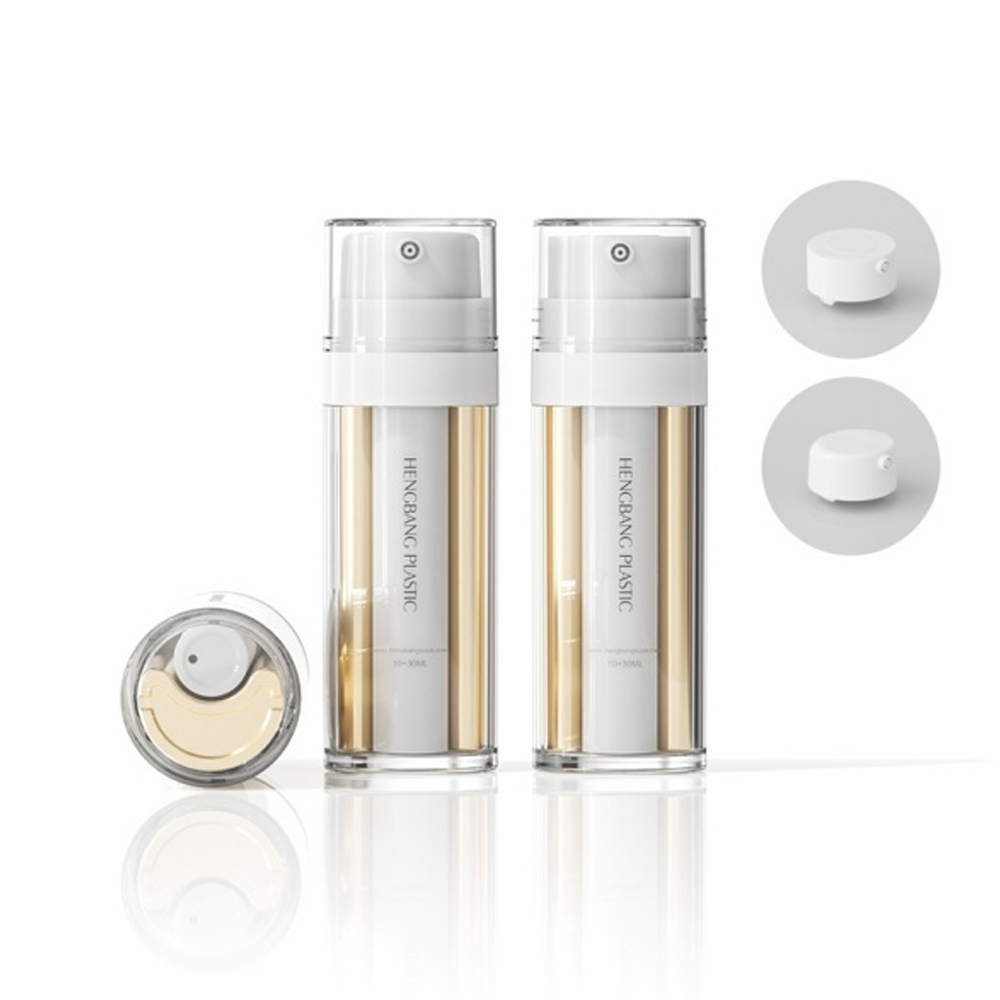 Custom HB-S003C 7+28ml Cosmetic Double Chamber Lotion Botlle Empty Suppliers, OYuyao Hengbang Plastic Co., Ltd. is China HB-S003C 7+28ml Cosmetic Double Chamber Lotion Botlle Empty Suppliers and OEM Factory, details...View Product →
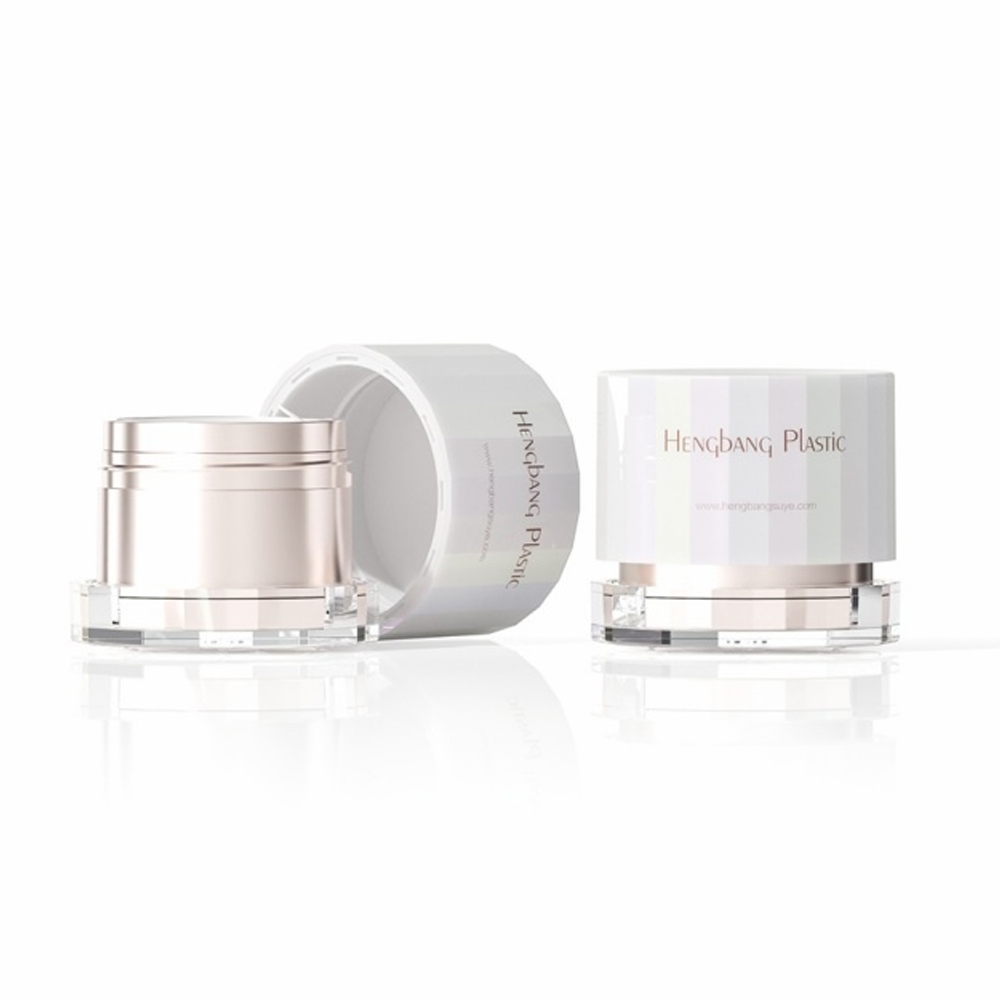
For thicker creams and balms, a wide-mouth jar is usually the safest format. A double-wall acrylic body cream jar offers both structural protection and a premium look, and it can be reused by consumers if you choose a refillable version.
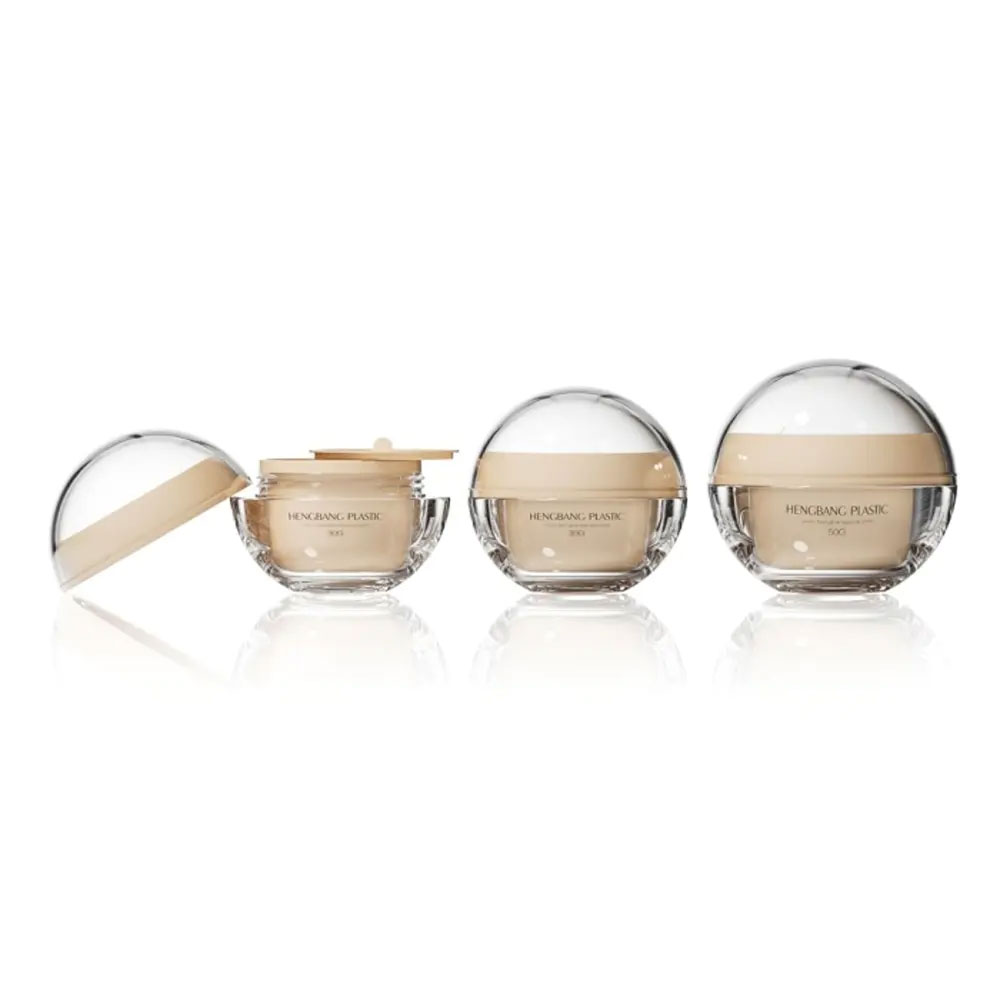 Custom HB-G002 Double Wall Plastic Acrylic Body Cream Jar Empty Suppliers, OEM/OYuyao Hengbang Plastic Co., Ltd. is China HB-G002 Double Wall Plastic Acrylic Body Cream Jar Empty Suppliers and OEM Factory, details:HB-...View Product →
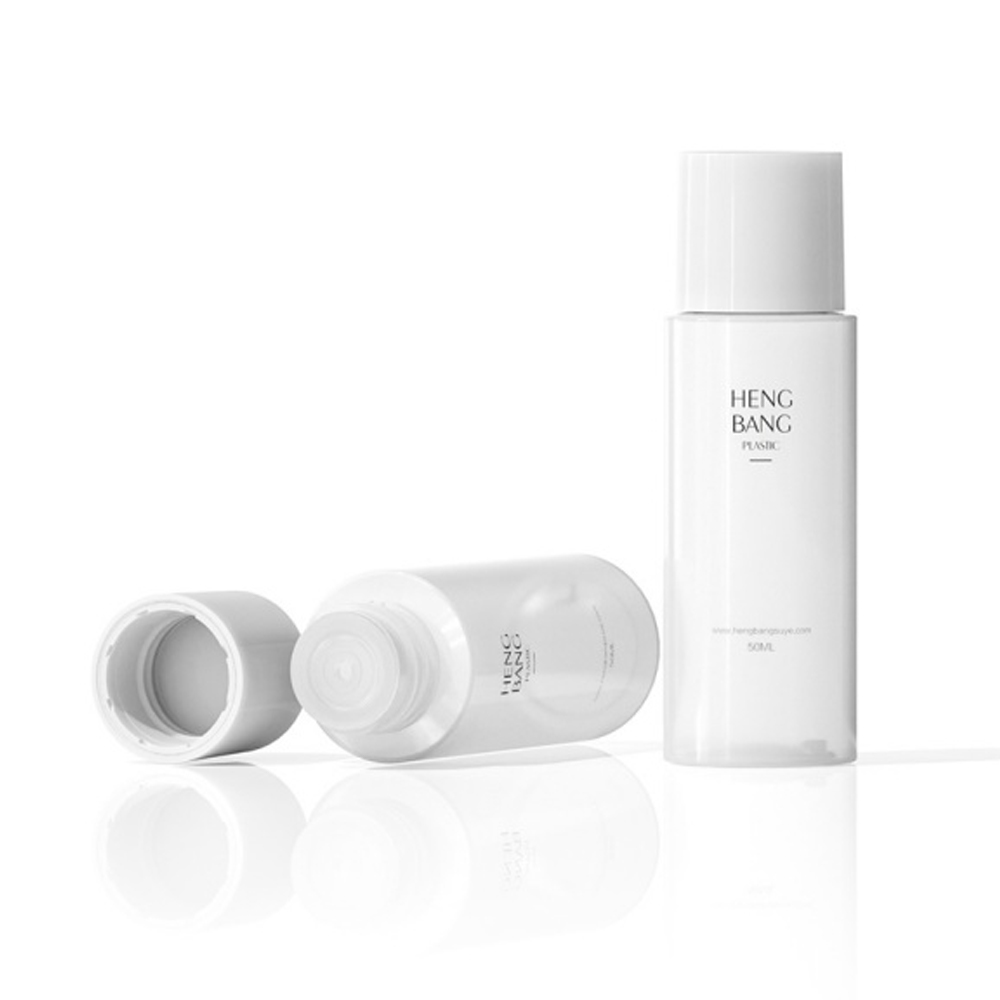
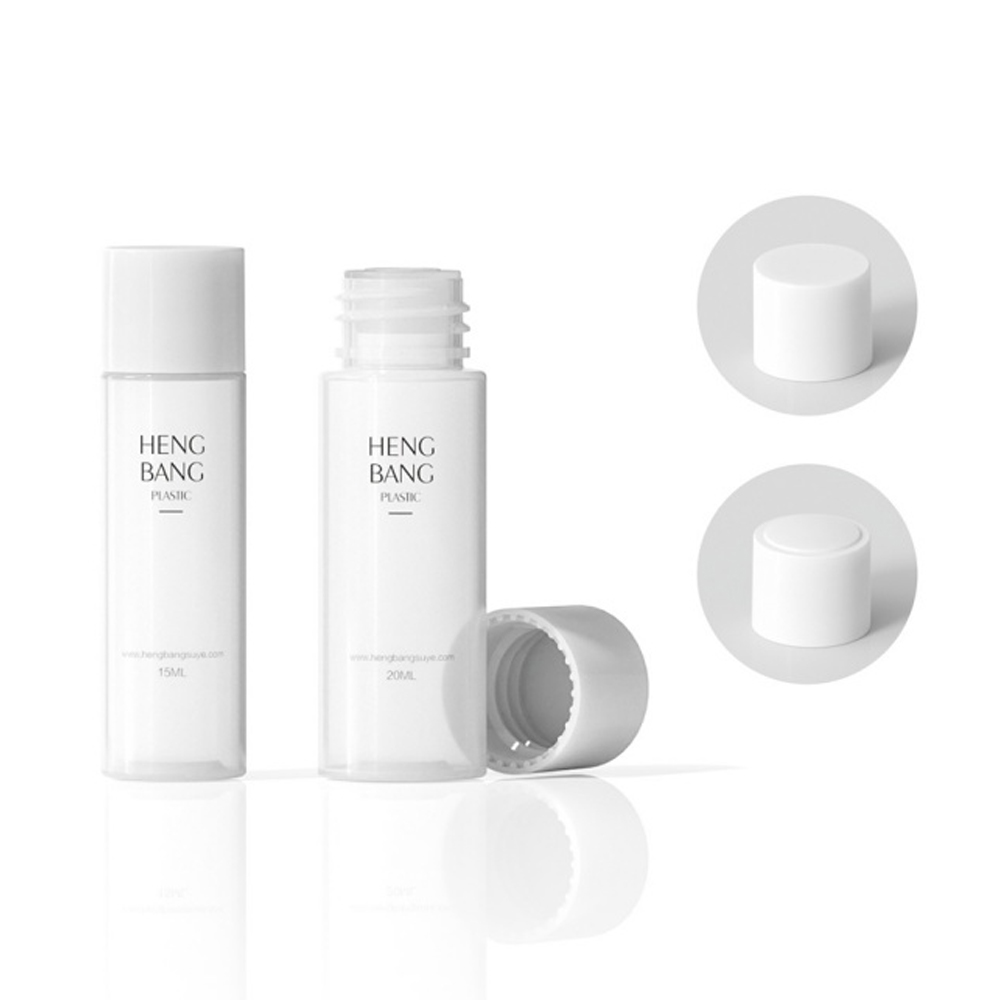
Beyond these, a good product line should include PETG lotion bottles, sunscreen squeeze bottles, and PET/PETG toner bottles. Depth of range means you can consolidate orders with one qualified manufacturer instead of managing multiple suppliers, which simplifies quality control and logistics.
Container selection is not only about compatibility with the product. Packaging is often the first physical contact a customer has with your brand. That is why customization matters. A manufacturer with in-house design and development support helps you adjust bottle shape, neck finish, surface texture, color, and decoration. Clear communication during the sampling stage prevents costly changes after mass production begins.
Refillable and replaceable designs are another area to watch. A refillable cream jar or an airless bottle with a replaceable inner cartridge addresses two growing concerns: waste reduction and long-term consumer value. These designs also create opportunities for repeat purchases when you offer refill pouches or cartridges. To stay competitive, it is useful to work with a manufacturer that already offers customized beauty packaging options rather than only stock containers.
Once you have narrowed down potential suppliers, compare quotes on a like-for-like basis. Low unit price can be misleading if it comes from downgraded resin, thinner walls, or weaker sealing performance. Instead of choosing the cheapest offer, evaluate the total cost of quality, including defect rates, rejection handling, and reorder consistency.
An experienced cosmetics container manufacturer should be able to state tolerances for bottle capacity, wall thickness, and closure torque. During sample evaluation, check for visible defects such as sink marks, flash, uneven color, and stress cracking. If a supplier cannot provide consistent samples, mass production will likely be worse.
Also ask about minimum order quantities (MOQs). Some factories offer lower MOQs for stock bottle shapes, while custom molds require higher commitments. Clear terms for mold ownership, sample lead time, and production cycle should be documented before you place an order.
Use the following questions as a starter when you evaluate a new cosmetic container manufacturer:
Choosing the right cosmetic container manufacturer is a strategic decision with long-term consequences. Begin with the factory's credentials and production capability, then narrow down by product range, customization, and quality control. A capable supplier will help you reduce development risk, maintain consistent quality, and bring your product to market with confidence. When you compare options, treat transparent communication as a non-negotiable requirement. The time you invest in supplier evaluation will directly reflect on the quality of the finished product.


Copyright © Yuyao Hengbang Plastic Co., Ltd.
All Rights Reserved.
 Wholesale Plastic Cosmetic Packaging Manufacturers