

 English
 中文简体
中文简体
News

Industry News
Plastic Cosmetic Containers: Types, Materials & Manufacturer Guide
 2026.08.06
 Industry News
Content
- 1 Why Plastic Cosmetic Containers Matter for Your Brand
- 2 Main Types of Plastic Cosmetic Containers
- 3 Plastic Materials Compared: PET, PETG, Acrylic, and More
- 4 How to Evaluate a Plastic Cosmetic Container Manufacturer
- 5 The Customization Process: From Concept to Production
- 6 Questions to Ask Before You Request a Quote
- 7 Conclusion: Partner with a Manufacturer That Grows With Your Brand
When you are sourcing packaging for a new skincare line or refreshing an existing brand, the choice of plastic cosmetic containers forms the first physical link between your formula and your customer. The right container protects active ingredients, supports filling efficiency, and shapes the perceived value of the product. This guide explains the main container types, material trade-offs, and the practical steps for evaluating plastic cosmetic containers manufacturers before you commit to a quote.
Why Plastic Cosmetic Containers Matter for Your Brand
Plastic is the default choice for most cosmetic and skincare launches because it offers a balanced combination of cost, weight, durability, and design freedom. Unlike glass, plastic containers are lighter and less fragile, which simplifies transport, reduces breakage during filling, and lowers shipping costs for e-commerce brands.
Plastic also allows manufacturers to create complex packaging structures that would be difficult or expensive to achieve with other materials. Airless pump systems, double-chamber bottles, and refillable cream jars all rely on precision-molded plastic parts. For a brand, this means you can differentiate your product with a custom bottle shape while keeping production realistic and scalable.
From a customer perspective, the container is the first part of your product they touch. A well-designed plastic jar or pump bottle communicates quality, supports the sensory experience of using your formula, and gives you space to tell your brand story through color, texture, and surface finish.
Main Types of Plastic Cosmetic Containers
Cosmetic packaging is more fragmented than it looks. Each product category has its own functional requirements, and the container you choose will affect how the formula is stored, dispensed, and perceived. Before contacting suppliers, map your product format to the right container family. You can also browse our full range of plastic cosmetic containers to compare models side by side.
Airless Bottles for Serums and Foundations
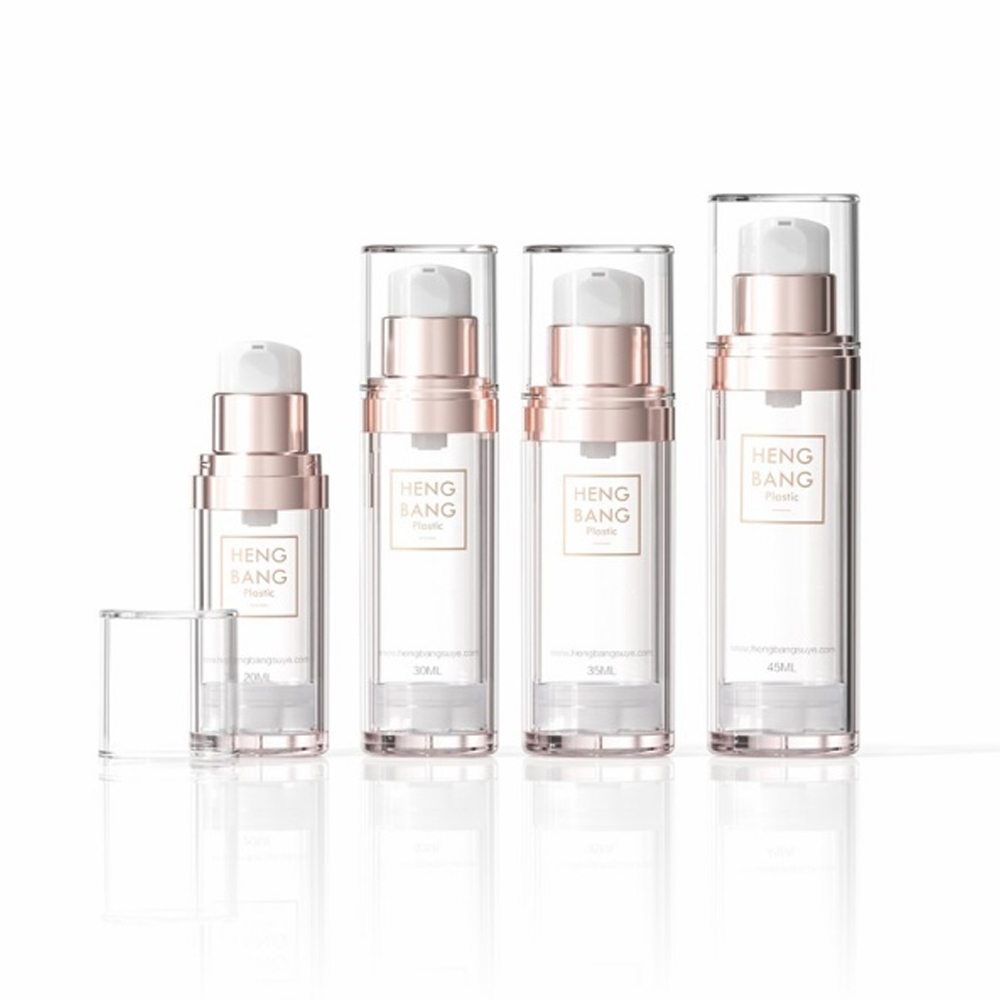
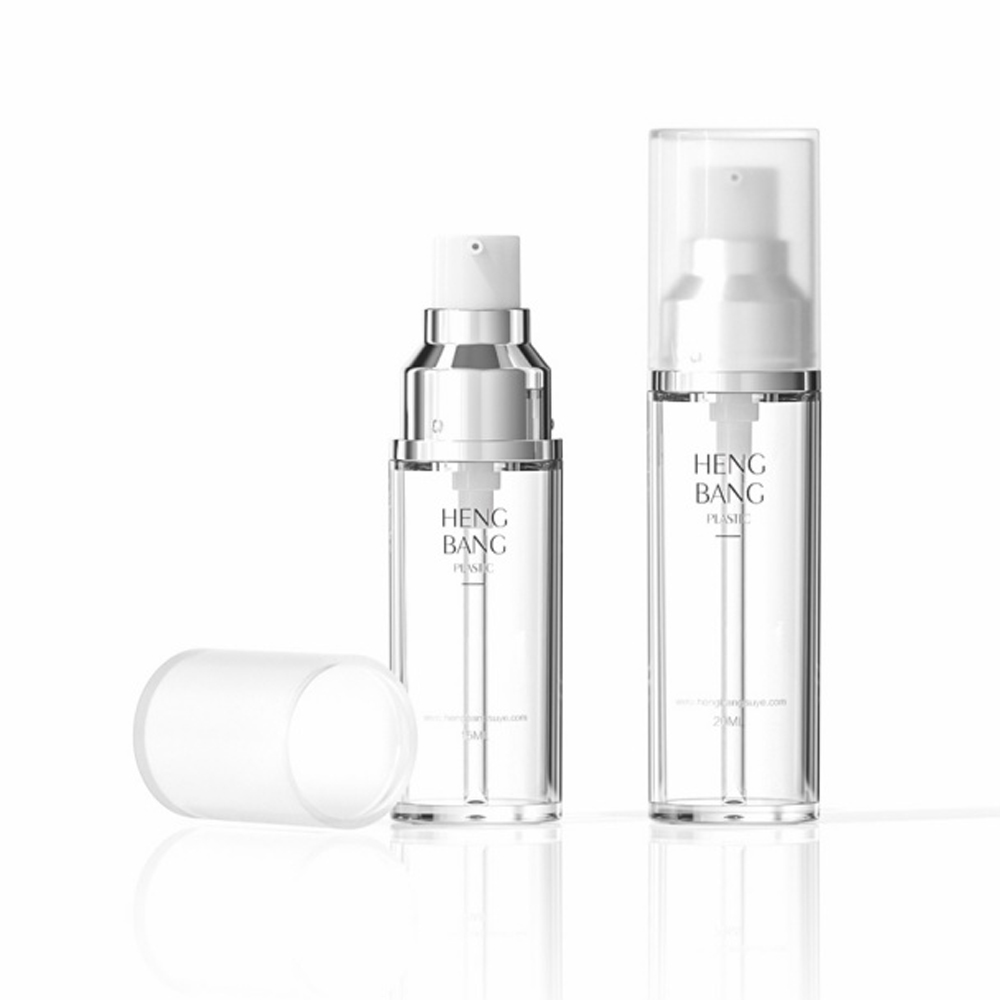
An airless bottle uses a vacuum pump to dispense the product without allowing air to re-enter the chamber. This mechanism keeps oxygen out, preserves the stability of formulas that contain vitamins, peptides, or botanical active ingredients, and minimizes leftover product at the bottom of the bottle.
Airless packaging is particularly well suited to serum, foundation, and premium lotions where you want controlled, hygienic dispensing. One representative model is the plastic airless foundation bottle, which pairs an airtight structure with a lightweight feel. Other models in the same family, such as HBK009A/B, HBK022A/B, and HBK023, extend the concept to refillable and replaceable airless systems, giving established brands a more sustainable option.
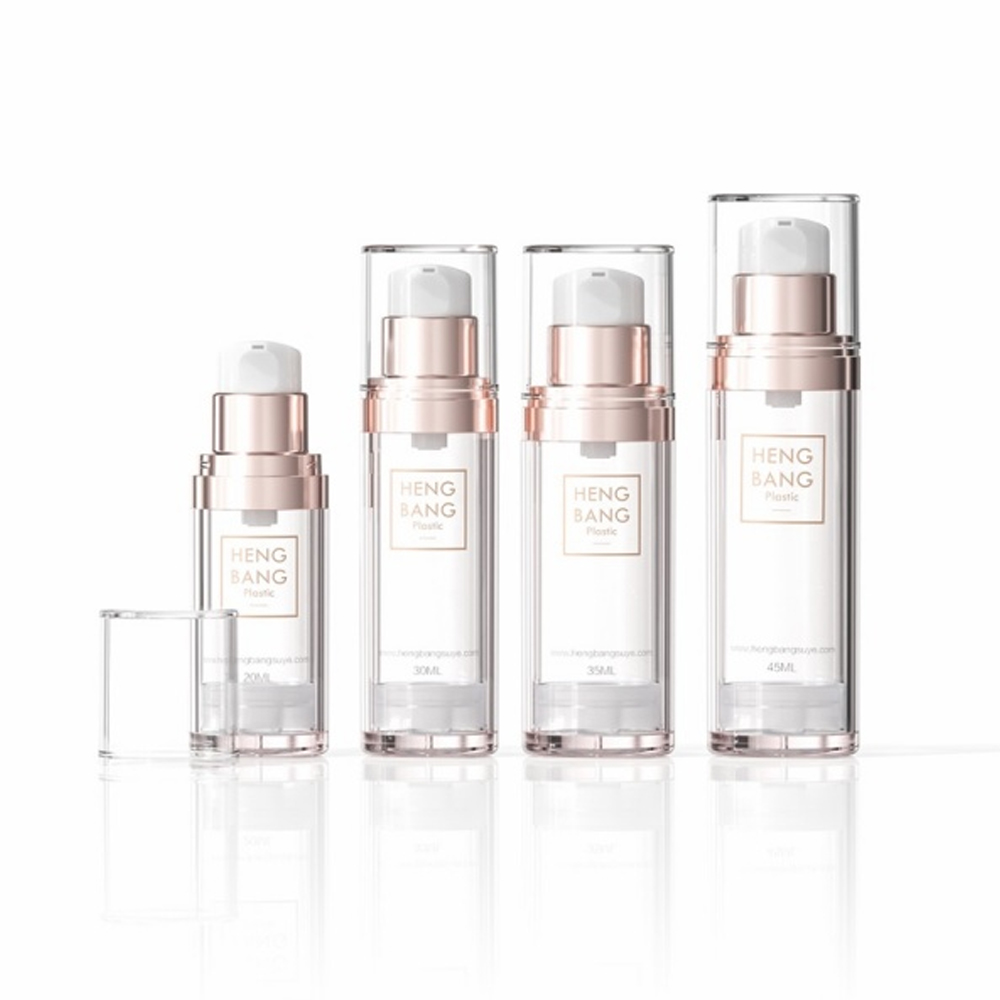 Custom HB-K006 Plastic Airless Foundation Bottle Empty Suppliers, OEM/ODM FactorYuyao Hengbang Plastic Co., Ltd. is China HB-K006 Plastic Airless Foundation Bottle Empty Suppliers and OEM Factory, details:Our HB-K006 ...View Product →
Double Chamber and Triple Chamber Bottles for Multi-Formula Products
Double-chamber and triple-chamber bottles solve a problem that single-compartment packaging cannot address: keeping two or more formulas separate until the moment of use. This structure is valuable for DIY mixing concepts, two-step skincare routines, or formulas that need fresh activation, such as vitamin C with a separate base.
From a production standpoint, multi-chamber packaging requires precision molding to ensure that each compartment seals correctly and dispenses at the right ratio. The HBS003C is a 7–28ml double-chamber lotion bottle, the HBS004 is a 2-in-1 double-chamber airless bottle, and the HBS007 is a 30ml triple-chamber airless bottle. If you are exploring this format, the double chamber airless bottle collection is a practical starting point.
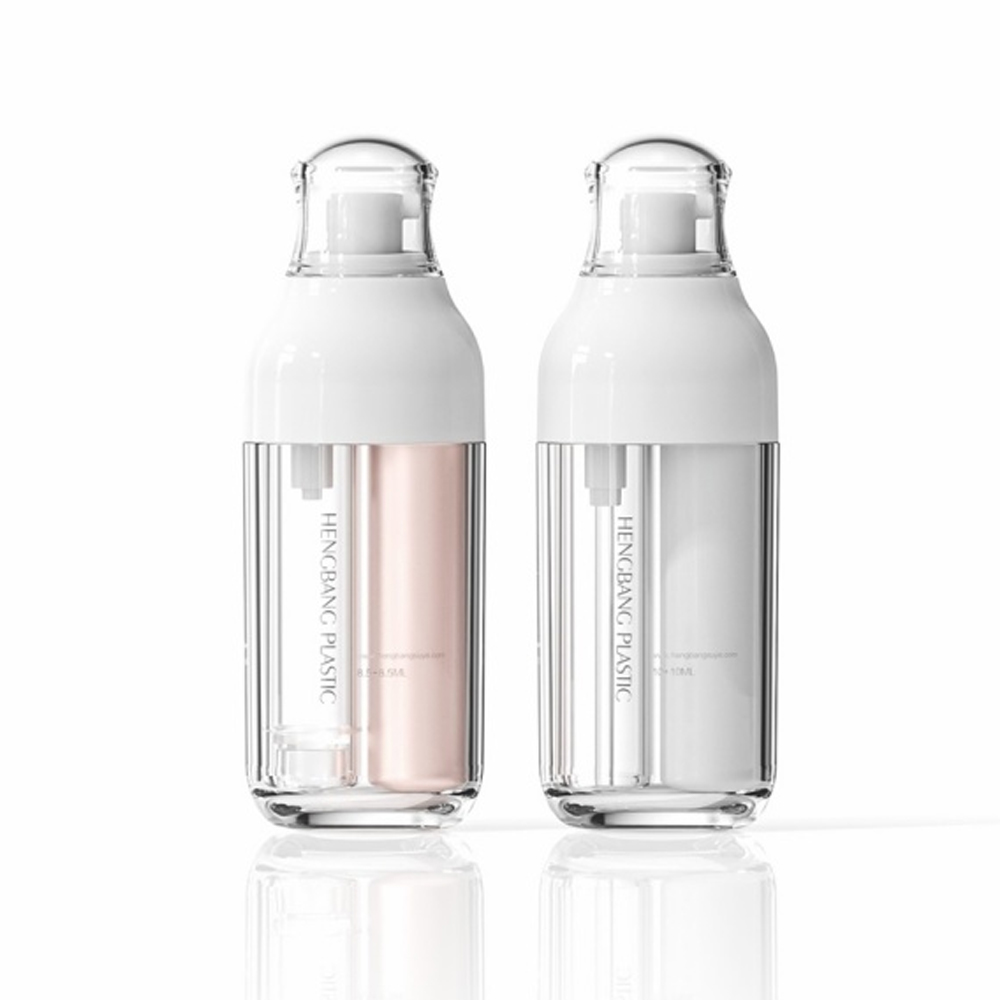 Wholesale Double Chamber Airless Bottle Manufacturers, OEM FactoryAs China Double Chamber Airless Bottle Manufacturers and Double Chamber Airless Bottle OEM Factory, Yuyao Hengbang Plastic Co., Ltd. supp...View Product →
Lotion Bottles and PETG Options
Lotion bottles are one of the most versatile categories in cosmetic packaging. They work for body lotion, facial emulsion, hair care, and cleansing products, and they are generally cheaper to produce than airless systems. The material choice matters: PETG is a popular option because it offers high clarity, good chemical resistance, and smooth molding quality.
A clear or white PETG bottle lets the consumer see the product texture while protecting it from external moisture. The HBR001 is a PETG white lotion bottle designed for simple, reliable filling. For brands that need a compact size for travel kits or sampling campaigns, the HBR007 PETG travel-size lotion bottle provides the same material performance in a smaller footprint.
Plastic Cream Jars and Refillable Designs
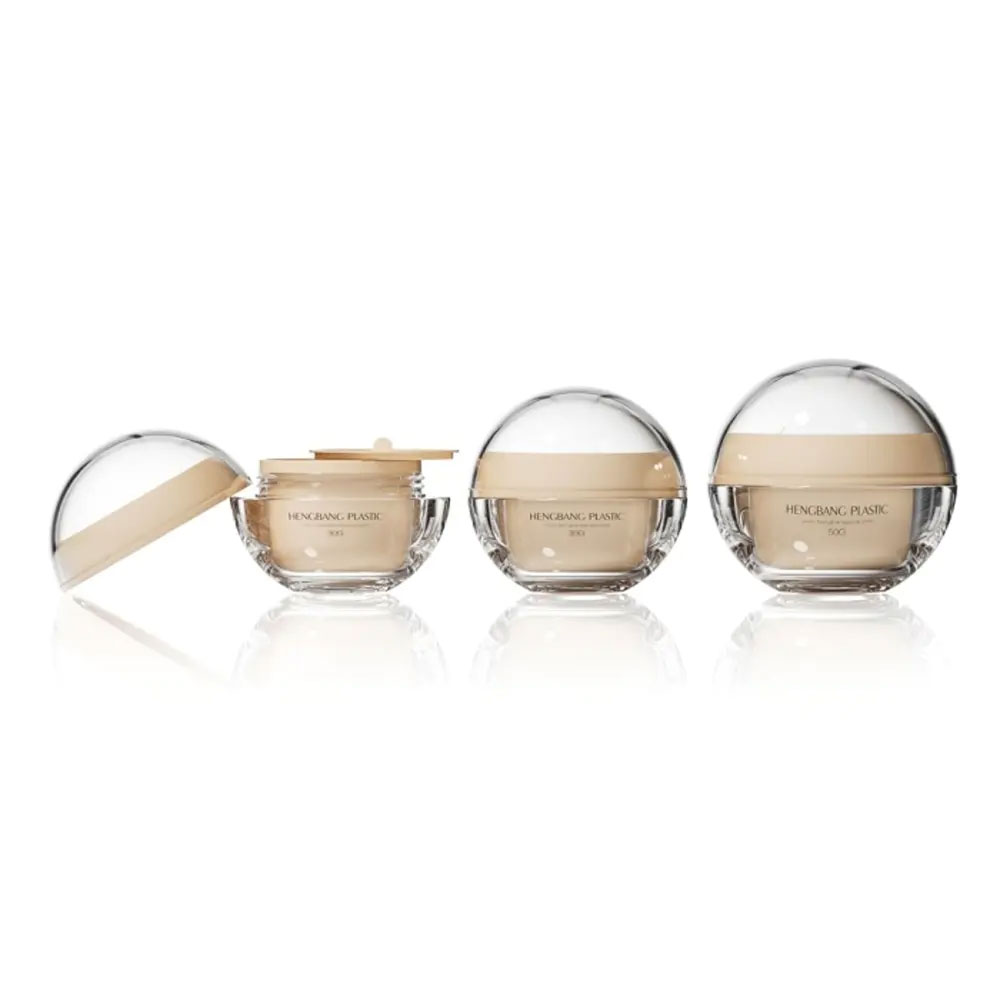
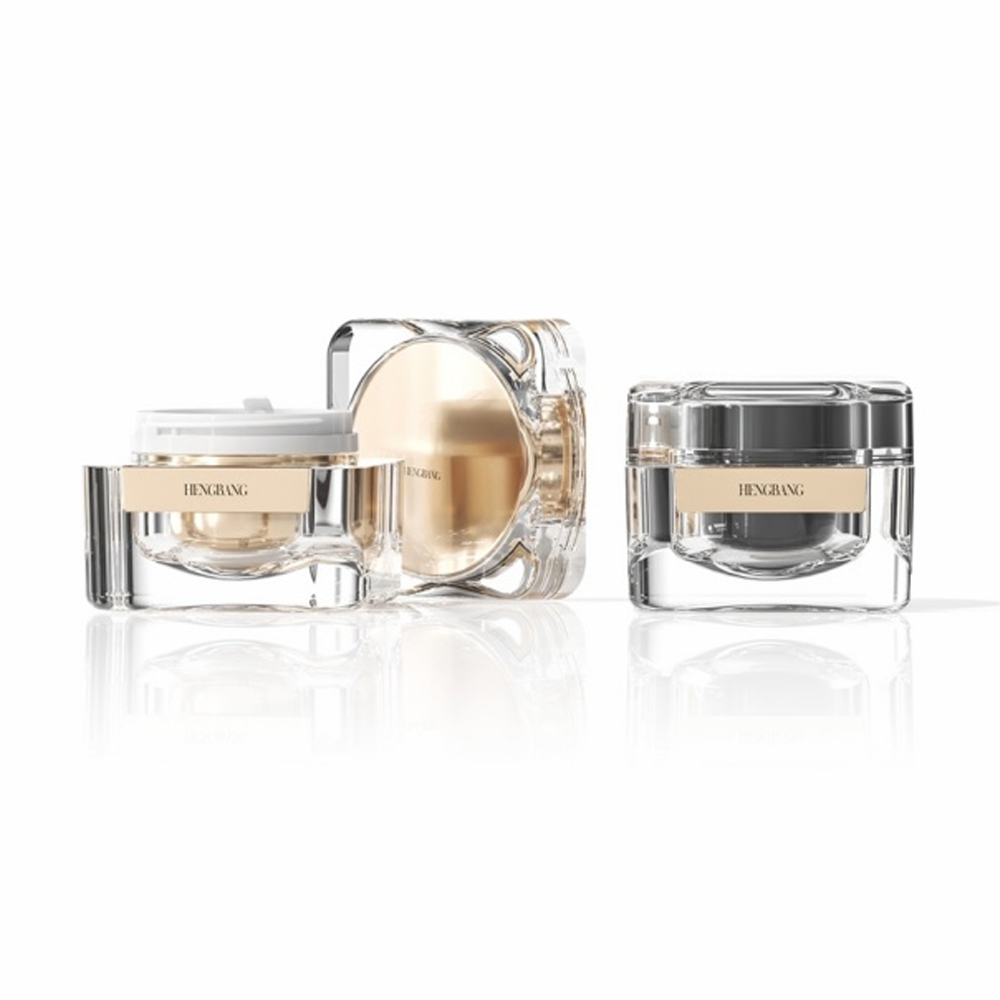
Cream jars remain a standard format for face creams, body butters, masks, and balms. Double-wall construction adds a layer of air between the inner jar and the outer shell, which improves insulation and gives the packaging a thicker, more premium feel. The HBG002 double-wall acrylic body cream jar and HBG004 double-wall acrylic face cream jar are examples of this design.
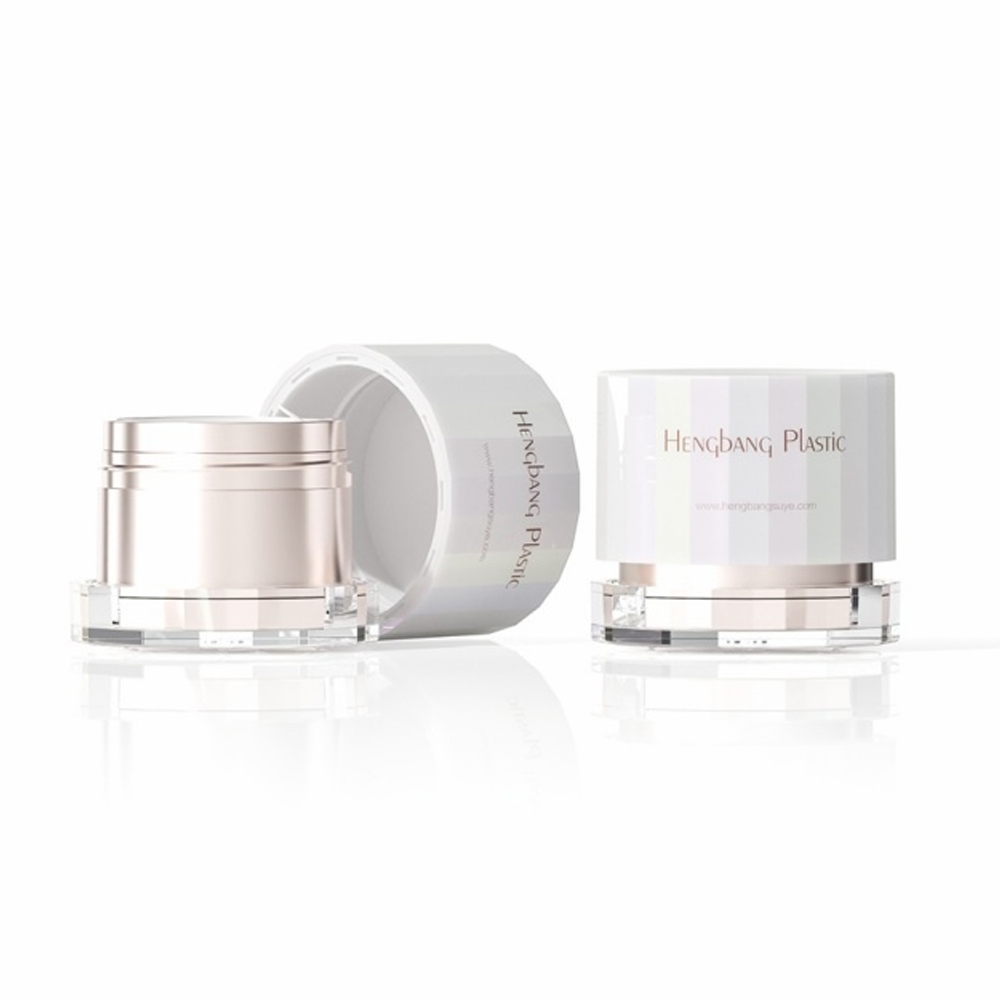
Sustainability is also changing the cream jar market. Refillable jars let consumers keep the decorative outer shell and replace only the inner container, which lowers packaging waste over the product's lifecycle. The HBG015 and HBG021 are refillable plastic cream jar options that combine double-wall structure with a removable inner cup. For broader context on the shift toward high-end design and greener materials, this beauty packaging industry trends article explains the direction in more detail.
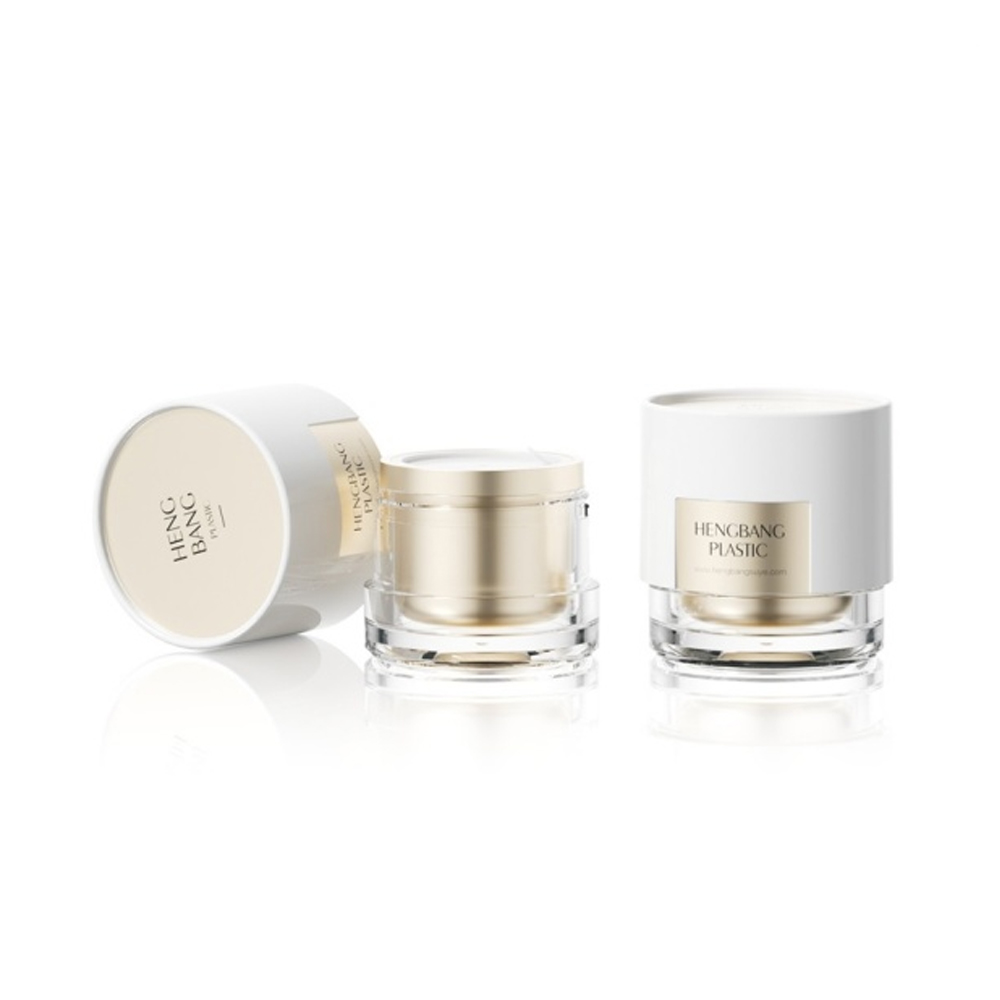 Refillable Cream Jar Manufacturers, Refillable Cosmetic Jar FactoryYuyao Hengbang Plastic Co., Ltd. is China Refillable Cream Jar Manufacturers and Refillable Cosmetic Jar Factory, offer Wholesale Refilla...View Product →
Sunscreen Bottles and Toner Bottles
Low-viscosity products such as sunscreen and toner have different container needs. Sunscreen formulas are often packaged in squeeze bottles, which allow the user to control the amount and avoid pumping mechanisms that can clog with thick filters. The HBF003 and HBF004 are plastic sunscreen squeeze bottles designed for 30ml to 50ml formats, making them practical for daily use and travel.
Toner bottles, on the other hand, need a stable neck and closure that can handle frequent opening and pouring. PET and PETG are both suitable, depending on how much clarity you want. The HBC017 is a 50ml PETG toner bottle, and the HBC019 is a PET travel-size toner bottle in 15ml to 20ml formats. These smaller sizes are ideal for brand trial sets, gift boxes, and airline-friendly packaging.
Plastic Materials Compared: PET, PETG, Acrylic, and More
Your choice of plastic material affects the container's appearance, barrier performance, and compatibility with your formula. There is no single best material; instead, you need to match the material to the product's viscosity, chemical composition, and target shelf positioning.
| Material | Typical Uses | Key Properties |
|---|---|---|
| PET | Toner bottles, travel bottles, lightweight packaging | Lightweight, economical, good moisture barrier, recyclable |
| PETG | Lotion bottles, toner bottles, decorative packaging | Higher clarity, good chemical resistance, easy to mold, glossy surface |
| Acrylic | Cream jars, double-wall jars, premium makeup packaging | Glass-like transparency, heavier feel, strong visual appeal |
| PE | Squeeze bottles, sunscreen bottles, flexible packaging | Flexible, durable, squeeze-friendly, resistant to many cosmetic ingredients |
When selecting a material, consider the formula's oil content, pH level, and sensitivity to light and oxygen. For example, a formula with high oil content may require a material with stronger chemical resistance, while a lightweight toner can use PET to keep packaging costs down. If you are unsure, ask your supplier to recommend a material based on your exact product profile.
How to Evaluate a Plastic Cosmetic Container Manufacturer
Not all cosmetic packaging manufacturers have the same production depth. Some focus on standard stock bottles, while others support full custom mold development. Your evaluation should cover certifications, production scale, and customization capability.
Certifications and Quality Management
Documented quality systems are the first thing to check. Look for ISO 9001 for quality management and ISO 14001 for environmental management as baseline evidence. The company website for this manufacturer states that it holds ISO9001:2015 and ISO14001:2015 certification and that it was recognized as a high-tech enterprise by Ningbo city in 2021. These credentials do not guarantee problem-free production, but they indicate that the factory has structured processes in place. Verify current certification validity through documentation or audit when you start serious discussions.
Production Capacity and Facility Scale
Production scale matters when you need consistent supply for growing order volumes. According to the company website, this manufacturer operates 35,000 square meters of building area, employs more than 300 people, and was founded in 2006. A larger, established facility is more likely to handle peak-season orders, maintain stable mold capacity, and respond to unexpected demand changes. Ask each manufacturer about their monthly output, mold capacity, and typical lead time, then compare those figures with your sales forecast.
Customization and Mold Development Capability
If your brand needs a distinctive bottle shape, check whether the manufacturer can support original mold development. Custom projects usually involve drawing confirmation, 3D modeling, steel mold creation, and sample iterations. A supplier with in-house mold development reduces the risk of miscommunication and shortens the overall timeline. The website's "Customization Advantage" section claims design, development, and production support, which is a useful signal that custom work is a core part of the business rather than an occasional side service.
The Customization Process: From Concept to Production
Understanding the typical customization workflow helps you plan your product launch realistically and avoid delays. While each project varies, most plastic cosmetic container projects follow the same basic path:
- Define the product requirements: capacity, material, color, surface finish, and closure type.
- Decide between an existing stock bottle and a fully custom mold based on budget and timeline.
- Confirm the technical drawing and structural details with the manufacturer.
- Develop the mold if required, then produce the first sample for fit and visual review.
- Test the sample with your actual formula to check chemical compatibility and dispense performance.
- Approve any adjustments to texture, color, printing, or labeling, then proceed to mass production.
- Complete final inspection, packaging, and shipment preparation.
The earlier you confirm details such as volume, material grade, and decoration method, the faster the sample stage moves. Changing the bottle structure or surface treatment after mold production begins usually adds cost and time.
Questions to Ask Before You Request a Quote
A well-prepared inquiry helps both sides evaluate the project more efficiently. The following checklist is designed for a brand owner or procurement manager comparing cosmetic containers manufacturers for the first time.
- What is the minimum order quantity for stock and custom molded bottles?
- Which capacities, neck sizes, and closure options are available for your existing models?
- Do you offer refillable or replaceable structures for this product type?
- What are the sampling fees, and how long does a sample take to produce?
- Is the mold development cost refundable when the order reaches a certain volume?
- Which surface treatments and decoration methods can be applied to this material?
- Can you produce custom colors that match my brand identity?
- Will you recommend a different material if my formula needs stronger chemical resistance?
- What quality checks are performed during mass production?
- What are the standard packing and delivery terms for export orders?
Save this list and use it in your first conversations with shortlisted suppliers. Consistent answers will make it easier to compare one factory against another.
Conclusion: Partner with a Manufacturer That Grows With Your Brand
Choosing a plastic cosmetic container manufacturer is not just about finding the lowest unit price. It is about matching the supplier's product range, production discipline, and customization experience to your formula, brand positioning, and launch timeline. Start by narrowing down the container type and material, then evaluate each manufacturer using certifications, facility scale, and mold development capability.
If your project is still early, a small order with stock packaging is a sensible way to test communication, quality consistency, and delivery performance. Once you confirm the supplier can meet your expectations, you can move toward custom molds and exclusive designs with more confidence. Browse the product catalog, compare the container models that fit your formulation, and request a quote when you are ready to move forward.

QUICK
Product Categories
Contact
-
[email protected]

-
+ 86 - 18858081323

-
+ 86 - 574 - 62422802

-
+ 86 - 18858081323

-
No.7 Zhenbei Road, Mazhu Town, Yuyao City, Zhejiang Province, China.

Let’S Co-Create A High-Quality
Future For Cosmetics Packaging.
Copyright © Yuyao Hengbang Plastic Co., Ltd.
All Rights Reserved.
 Wholesale Plastic Cosmetic Packaging Manufacturers