English
 中文简体
中文简体
News
Home > News > Industry News > Cream Jars Cosmetic Packaging: Material, Refill Options & Sourcing Guide

 2026.09.24
 Industry News
Content
A product developer once handed me a batch of cream jar samples that looked flawless under showroom light. When we tested them on the filling line, two of the caps cross-threaded, and one inner wad shifted so far that the cream would have leaked before reaching the customer. That gap between appearance and performance is where most cream jars cosmetic packaging decisions go wrong. The jar is the highest-touch element of a skincare product; it has to seal, stack, decorate, and satisfy the consumer every time the lid is opened.
The practical conclusion is simple: choose cream jars by working backward from the formulation. First decide the opening and material based on viscosity and oxygen sensitivity, then add the brand layer — color, finish, decoration, and a refillable structure if the product and market call for it. Getting the order right prevents expensive mold changes later.
Thick creams, balms, butters, and masks do not behave well in pump bottles. A pump depends on a thin formulation to move upward through the dip tube; when viscosity climbs into the tens of thousands of centipoise, the pump starts to struggle, consumers must push harder, and the bottle still retains a significant amount of product at the bottom. A jar removes that problem entirely. The wide mouth gives direct access to the formula, a spatula or fingertip can reach the last gram, and the filling process is straightforward for any contract manufacturer.
The trade-off is oxygen exposure. Every time the lid opens, fresh air reaches the surface of the product. For conventional emulsions this is acceptable; for formulas containing retinol, hydroquinone, or unstable botanical extracts, a jar needs either an airtight inner seal or a different packaging format altogether. That decision belongs with the formulator, not the packaging buyer alone.
Material choice determines what your cream jar looks like, how heavy it feels, which formulas it tolerates, and how much it costs per unit. It also locks in the tooling: once a custom mold is cut for one material, changing to another means starting over.
| Material | Clarity | Weight feel | Impact resistance | Chemical resistance | Relative cost |
|---|---|---|---|---|---|
| Acrylic | High, glass-like | Heavy | Moderate, can chip | Good for most cosmetics | Highest |
| PETG | High | Medium | Good | Good | Middle |
| Polypropylene | Opaque | Light | Excellent | Excellent | Lowest |
Acrylic is the default for premium cream jars because it transmits light the way glass does, and its weight signals quality in the hand. PETG delivers a large share of that clarity at a lower price and with better impact resistance, which is why many mid-priced skincare brands use it for face and body creams. Polypropylene is rarely the outer material of a prestige jar, but its excellent chemical resistance and low cost make it the standard choice for inner cups in refillable systems and for economical stock jars with a label. Each material behaves differently under decorating, so ask the factory for decorated samples before finalizing the tolerance stack.
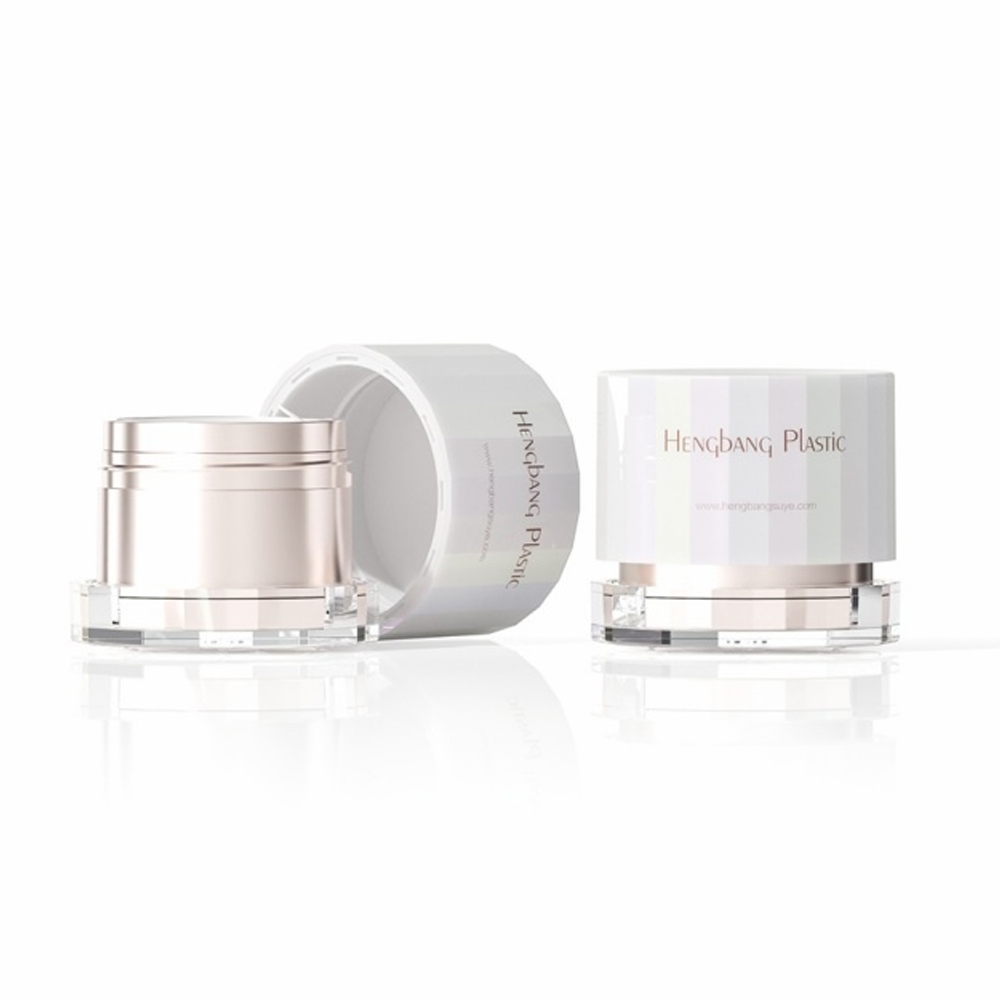
Consumers feel quality before they read a label. A double-wall jar creates that feeling with an inner shell and an outer shell separated by a thin air gap. The gap produces three practical effects: the side wall appears thicker and more refractive than it is, the jar weighs less than a solid block of acrylic, and the air layer adds a small amount of insulation so a warm bathroom does not transfer heat straight to the product.
From a manufacturing standpoint, double-wall construction also separates the visual wall from the functional wall. The outer shell carries the color, finish, and brand decoration; the inner shell is molded for sealing and dimensional accuracy. That division of labor makes it easier to achieve both a beautiful container and a reliable container in the same product.
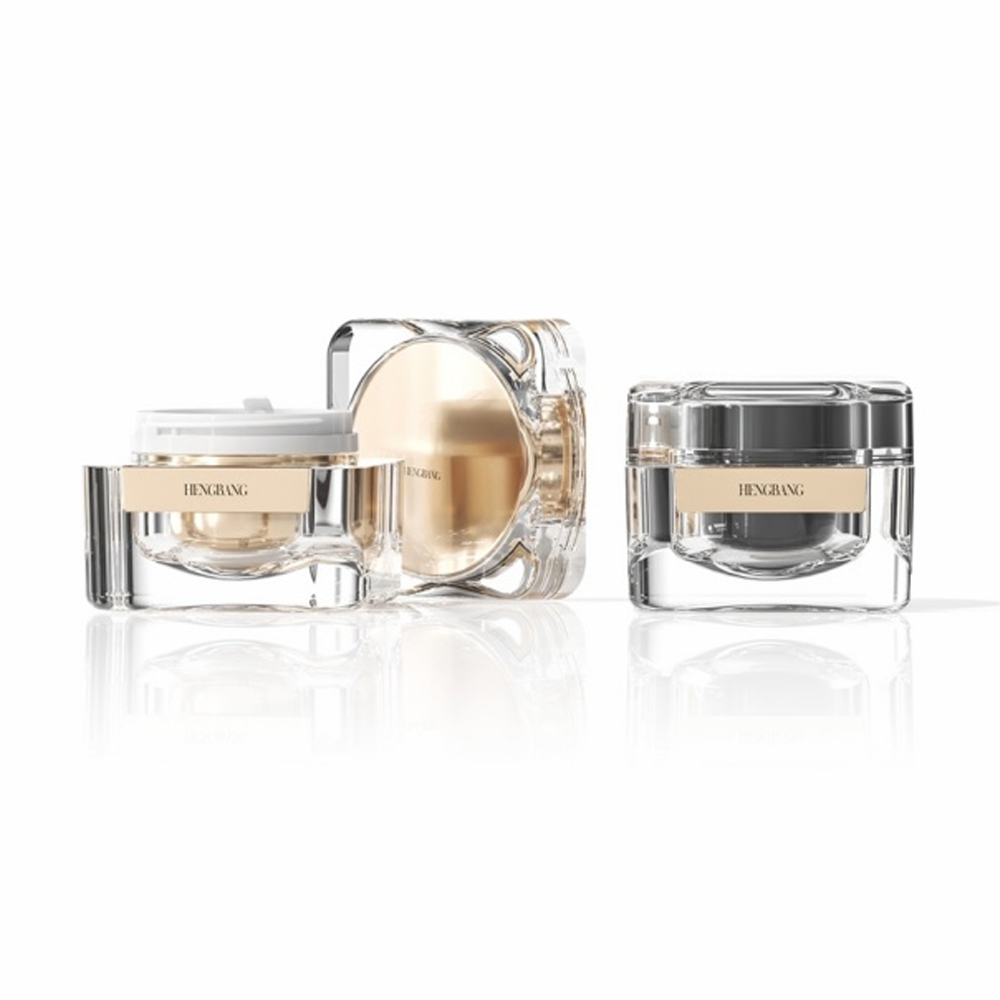
A face cream positioned at a higher price point benefits directly from this structure. A double-wall acrylic face cream jar gives the brand the thick, glossy wall that consumers associate with premium skincare, while keeping the total weight low enough for cost-efficient shipping.
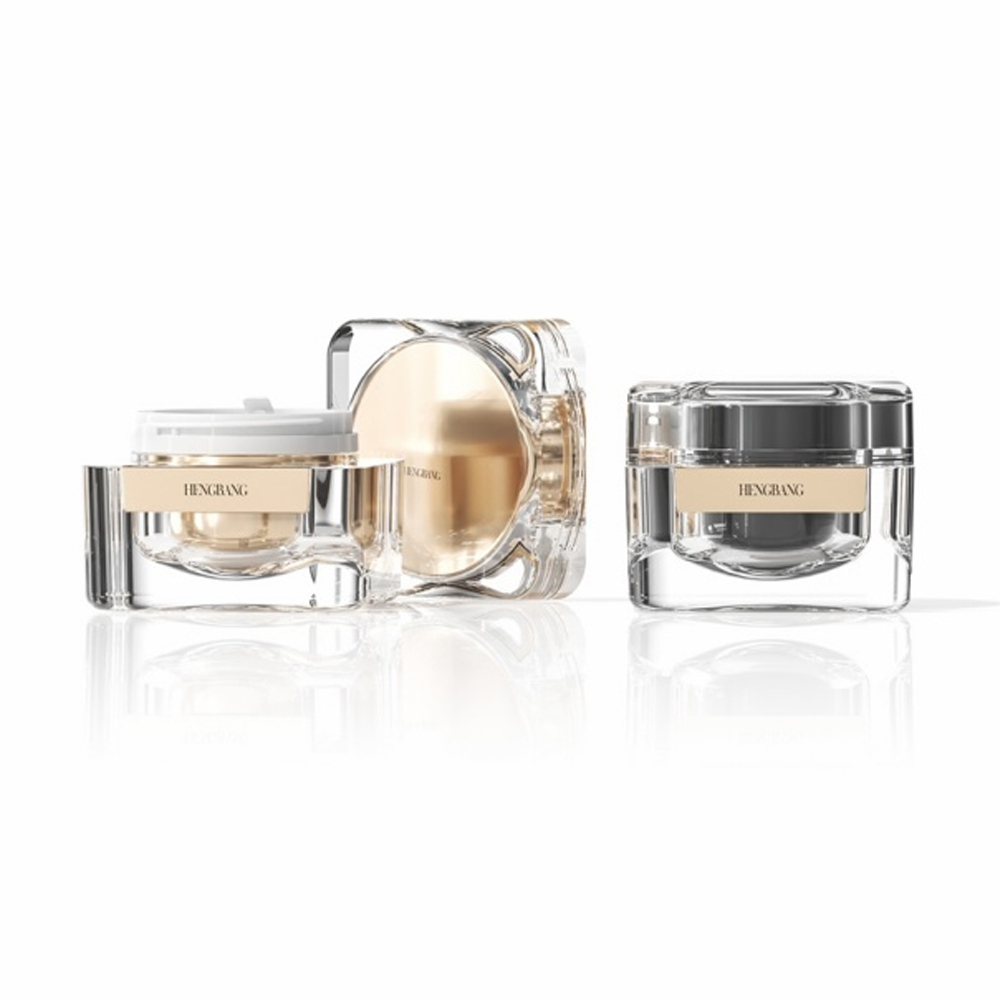 HB-G004 Double-Wall Acrylic Face Cream Jar with Gold-Plated FinishA square double-wall acrylic jar that delivers a thick, glossy premium feel while keeping shipping weight low, ideal for higher-priced face creams seeking a luxurious presentation.View Product →
For body creams in larger sizes, the same double-wall effect helps a big jar feel substantial and valuable in the consumer's hand, which is why the double-wall acrylic body cream jar is a common choice for body butters and thick moisturizers.
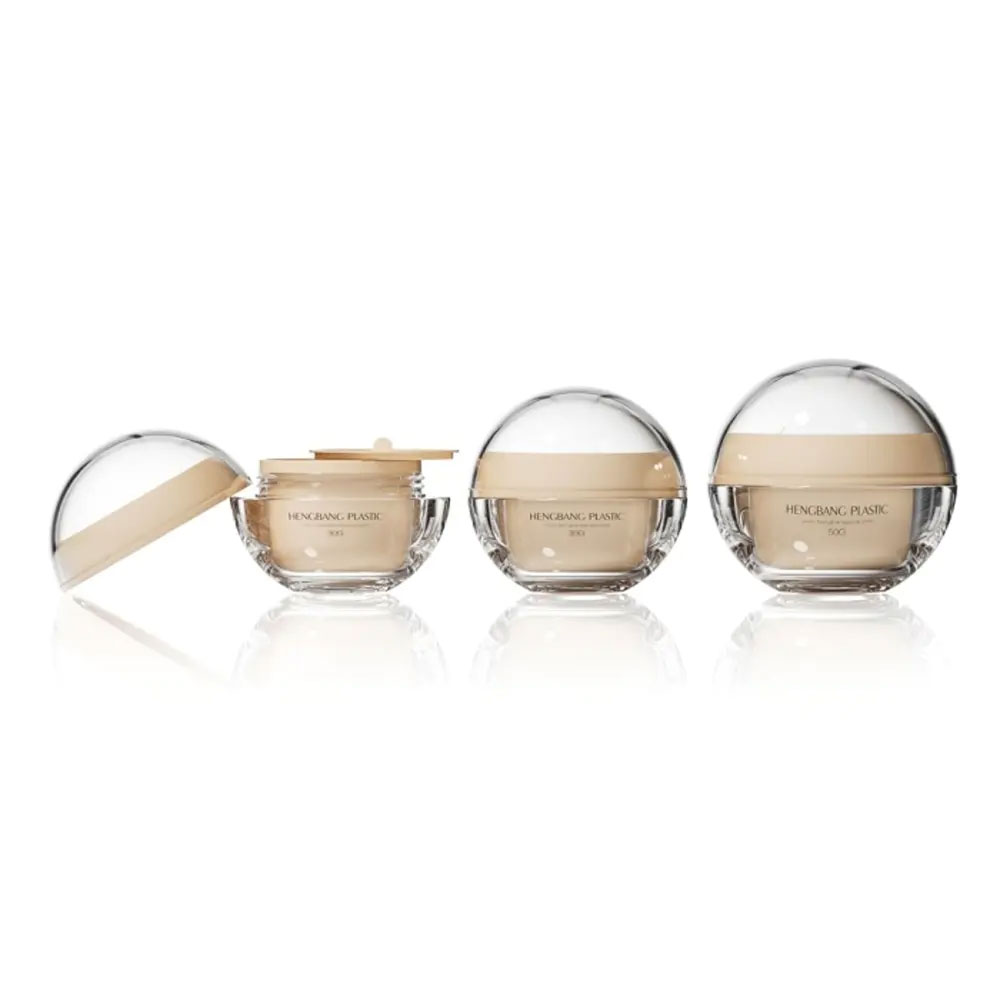 HB-G002 Double-Wall Acrylic Spherical Body Cream JarA wide-mouth spherical acrylic jar with a double-wall structure that makes large body butter containers feel substantial and valuable, while the clear material showcases the product.View Product →
The clearest shift in cream jars cosmetic packaging in recent years is the move from single-use jars to refillable systems. A refillable structure uses a durable outer shell that the consumer keeps and a replaceable inner cup that holds the formula. When the product is empty, the buyer inserts a new cup into the existing shell.
Refillable packaging is not only an environmental point; it also creates a measurable cost advantage for the consumer, which drives repeat purchases. And it responds to tightening packaging regulations in the EU and other markets that require reuse or stricter recyclability for cosmetic packaging. For a brand, offering a refill means shipping fewer and lighter components after the first purchase, reducing the carbon footprint of the entire distribution cycle.
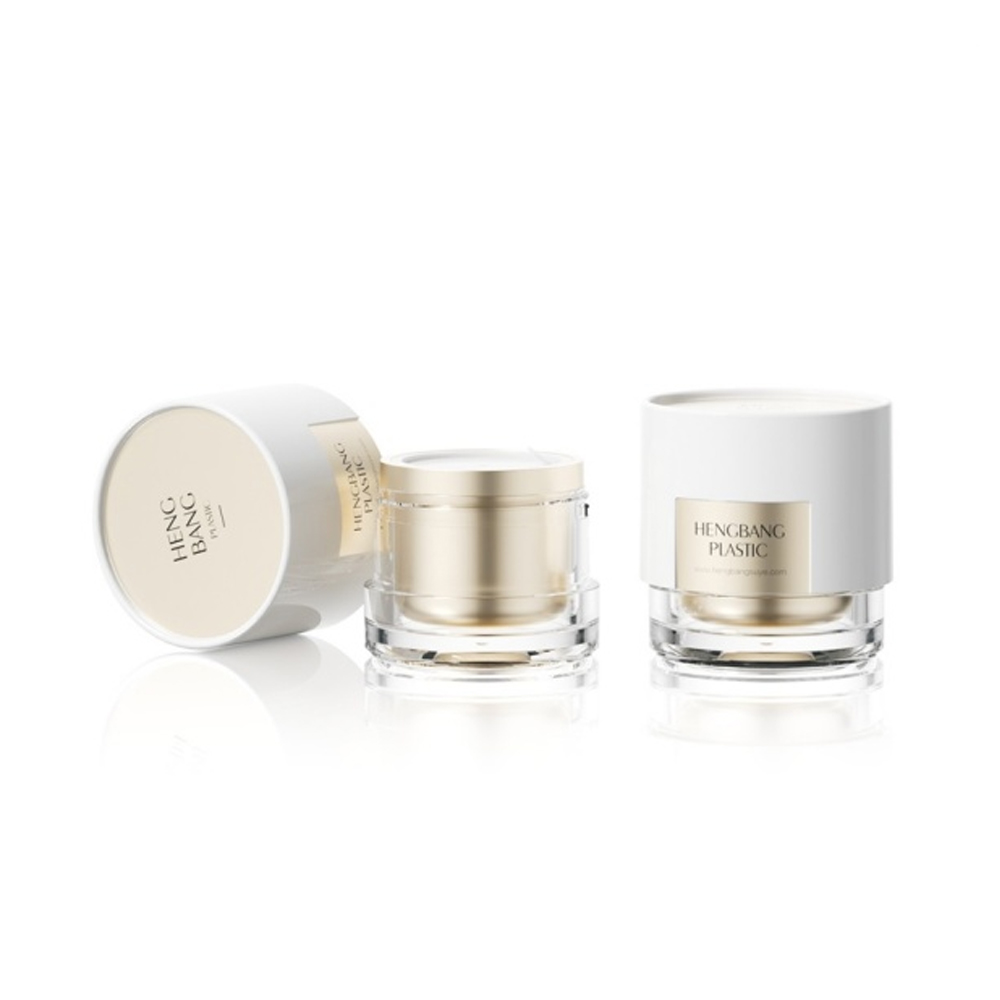
Formulators benefit as well, because the inner cup can be produced in polypropylene, which resists a wide range of oils and active ingredients, while the outer shell remains acrylic or PETG for presentation. That combination is difficult to achieve with a single molded wall. A double-wall refillable cream jar brings the outer premium look and the inner functional cup into one assembly, giving brands a direct route to a sustainability story without compromising the sensory experience.
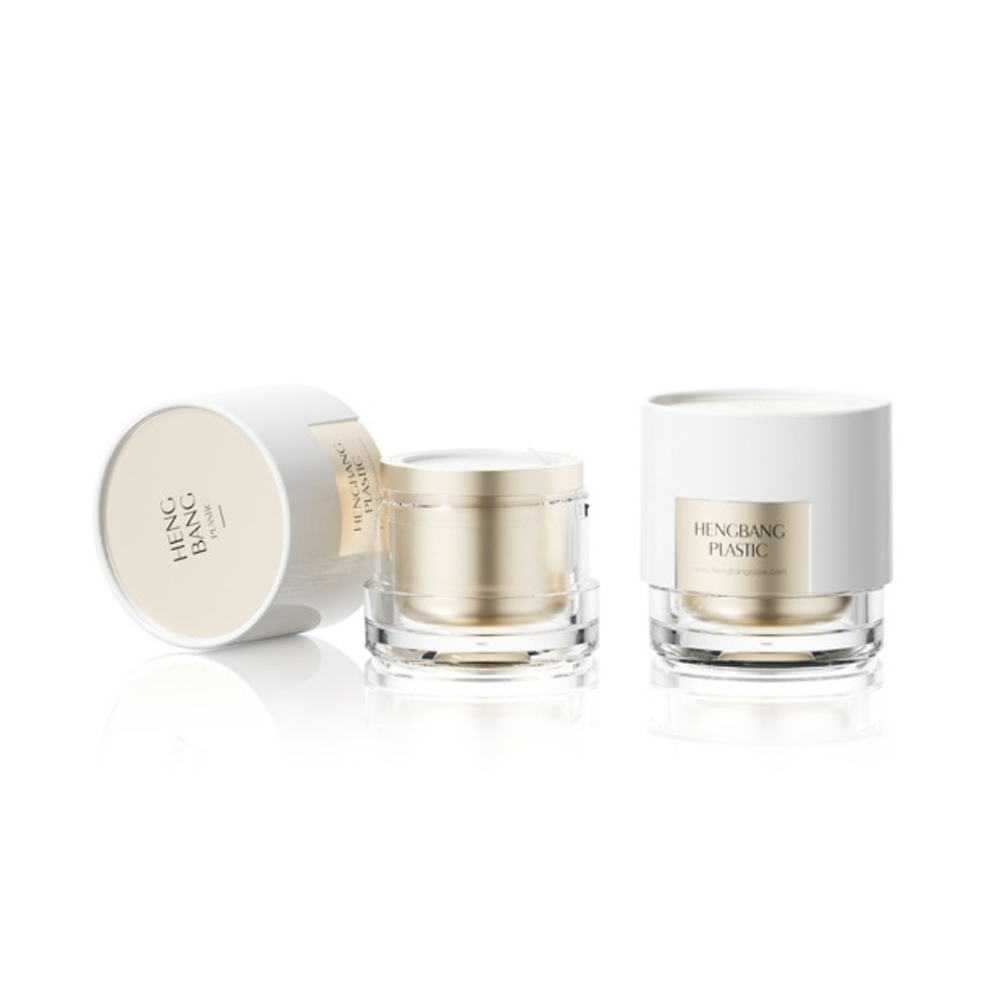 HB-G021 Double-Wall Refillable Plastic Cream Jar with PP Inner CupA refillable jar combining a premium outer shell with a functional polypropylene inner cup, supporting sustainability for day and night creams without compromising sensory experience.View Product →
Good cream jars are defined by details that do not show up in a photograph. Before ordering production quantities, run a sample evaluation that matches your real filling conditions. The checklist below covers the points that most often cause field failures.
Dimensional drawings matter as much as visual samples. Check the exact capacity, headspace, and opening diameter against your fill weight. A 30 g face cream can look uncomfortably thin in a 50 ml jar, while the same net weight looks well proportioned in a 30 ml format. Cream formulations generally have a density close to 1 g/ml, so treat the label volume as a delivery target, not a suggestion.
If you are evaluating a supplier's full line, examine the way the catalog is organized. A manufacturer that offers a coordinated plastic cream jar range across sizes, materials, and refillable options has usually invested in tooling maturity, and that translates into shorter lead times and less risk.
Most first-time buyers do not need a custom jar. Stock jars with existing tooling can be decorated across a wide range of colors, finishes, and branding methods, with a much lower minimum order and a shorter lead time. The reliable decoration routes for cream jars are silk-screening for flat logos and hot-stamping for metallic details; frosting the outer wall can upgrade a standard jar into a premium-looking package at a modest cost.
A custom mold makes sense when your volume justifies the tooling investment or when the jar silhouette is inseparable from the brand identity. Custom molds for double-wall jars take longer and require a higher minimum quantity, but they also give the brand exclusive control over capacity, wall thickness, and closure design. In between, there is a middle route: take an existing stock mold and change the decoration, cap, or finish. That route captures much of the brand differentiation without the cost of new tooling.
Whichever route you choose, the material decision should be documented first. Understanding how acrylic, PETG, and polypropylene behave in a jar format will keep the project on track; for a deeper look at how these materials compare in cream jars specifically, this guide to plastic cream jars and their material options explains the differences in practical terms.
The best cream jars cosmetic packaging is the one that survives the supply chain, protects the formulation, and still feels special on a bathroom shelf. Start the selection process with the formula, verify the engineering with samples, and check the approach of the supplier against a coordinated product range. When those three pieces are aligned, the jar stops being a risk and becomes a sales asset.


Copyright © Yuyao Hengbang Plastic Co., Ltd.
All Rights Reserved.
 Wholesale Plastic Cosmetic Packaging Manufacturers