English
 中文简体
中文简体
News
Home > News > Industry News > How to Choose a Cosmetic Jar Manufacturer: Materials, Quality & Sourcing

 2026.09.17
 Industry News
Content
Your first sample shipment from a new cosmetic jar manufacturer has just arrived. The jar photographed well, but in your hand the wall feels thin, the cap cross-threads, and the 50 ml fill mark sits a couple of millimeters high. That sample tells you more about the factory than any brochure or website.
Most sourcing problems are not caused by the price level. They come from process control, material selection, closure tolerances, and decoration consistency. The right manufacturer is the one that controls all four; everything else, including the quoted price, is secondary. This article explains what a cosmetic jar manufacturer actually controls, which materials suit which products, and how to evaluate a supplier before committing to a production run.
A cosmetic jar looks simple: one body, one cap, possibly a liner and an inner cup. In mass production, dozens of variables decide whether the jar runs smoothly on your filling line and keeps the formula stable on the shelf.
These five areas are where manufacturers differ. Two factories can quote the same jar at similar prices, yet deliver batches that behave very differently under filling, shipping, and customer use.
The material choice drives cost, weight, chemical compatibility, and perceived value. The table below covers the four most common options for plastic cosmetic jars.
| Material | Typical jar styles | Key properties | Relative cost |
|---|---|---|---|
| Acrylic (PMMA) | Double-wall cream jars, thick-walled jars | Glass-like clarity and heavy feel; sensitive to high alcohol and some essential oils | Mid-high |
| PETG | Single-wall jars, travel sizes | Good clarity and impact resistance; reliable compatibility with most cosmetics | Mid |
| PET | Lightweight jars, toner containers | Clear, light, with strong barrier properties for many formulas | Lower-mid |
| PP | Refillable jars, mono-material packs | Flexible and shatterproof; broad chemical resistance; easy to recycle in mono-material systems | Lower |
Acrylic remains the most common choice for premium cream jars because it delivers a thick, glass-like wall without the weight or breakage risk of actual glass. Double-wall acrylic jars separate the visual outer shell from a functional inner cup, which can be molded in a different resin for better compatibility with high-oil or high-acid formulas. Before comparing quotes, it helps to review the material options for plastic cream jars, because material choice affects not just unit price but also mold construction and decorating limitations.
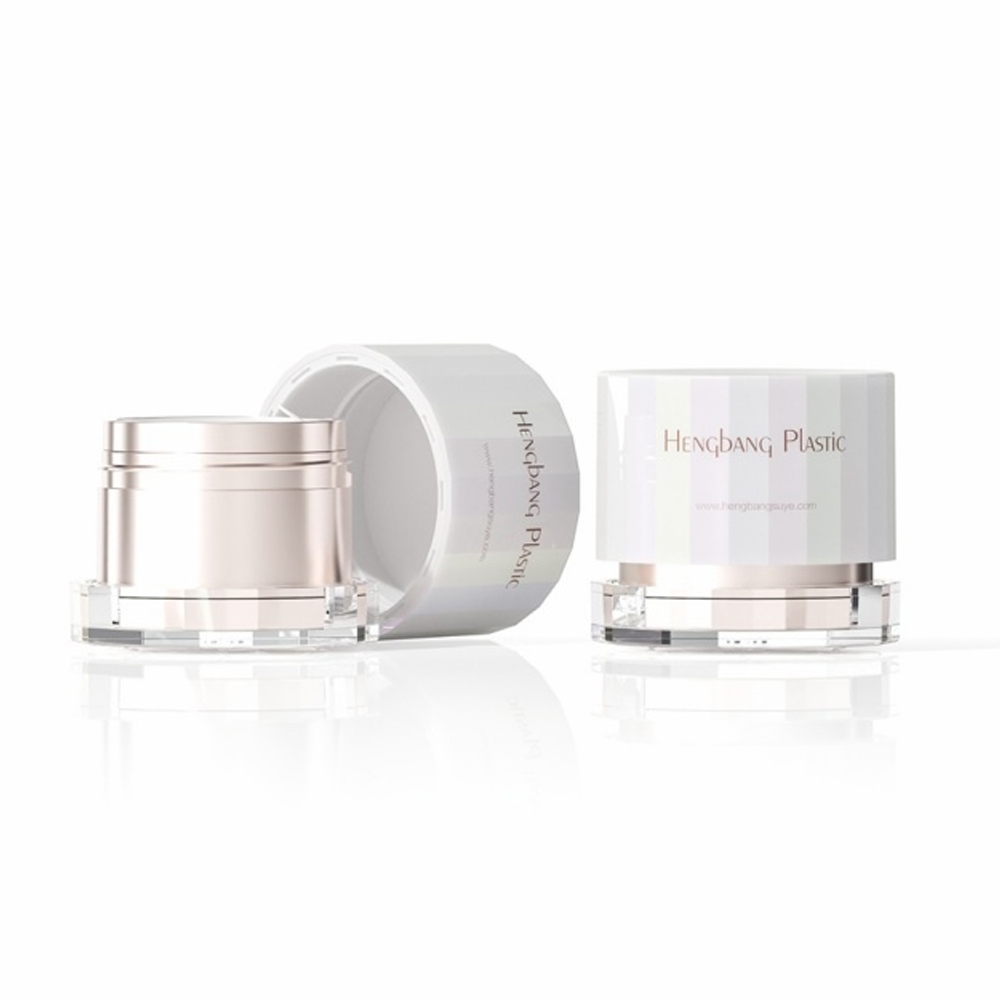
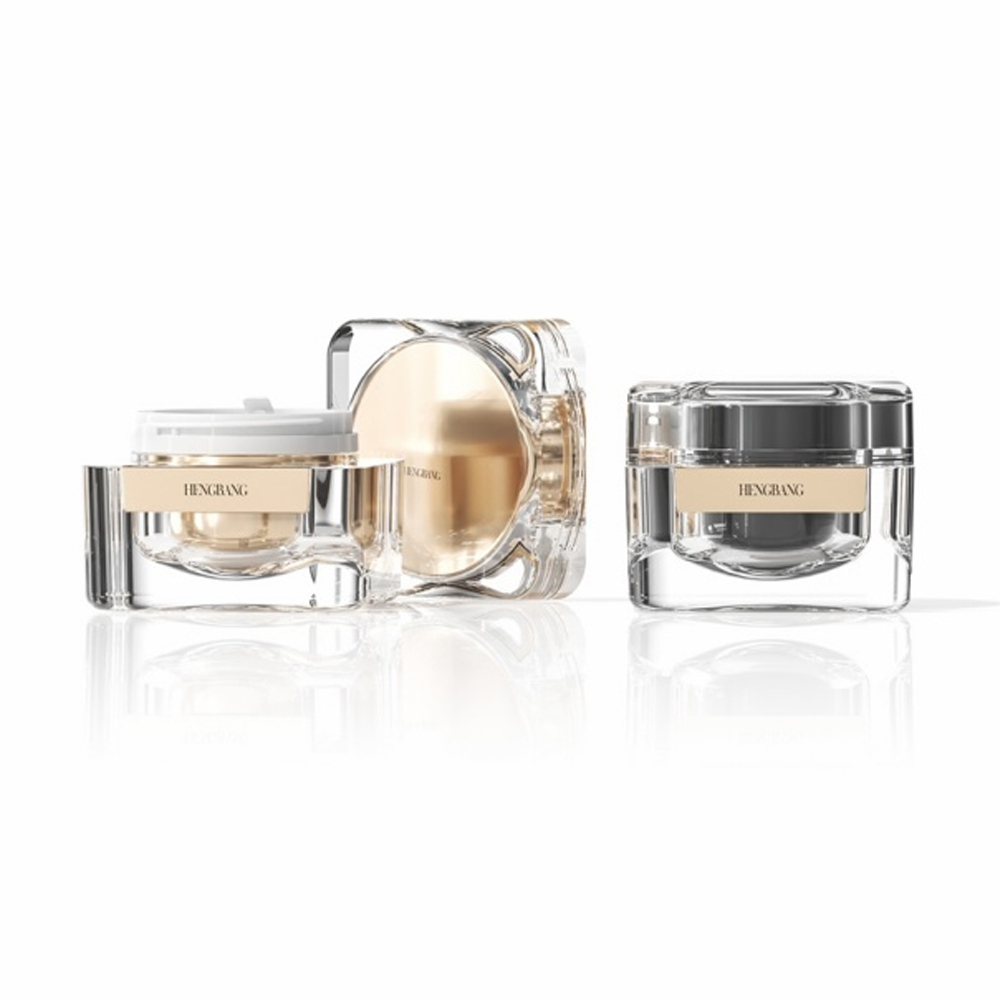 HB-G004 Double-Wall Acrylic Face Cream Jar with Metallic FinishThis double-wall acrylic jar combines a geometric PMMA outer shell with a PP inner cup, offering glass-like clarity and formula compatibility. Its gold-plated coating adds a luxurious feel, making it a strong candidate for premium cream packaging.View Product →
Never approve a supplier based on a single photograph. Put samples through simple, repeatable tests and record the results against your specification.
These tests cost little and take one working day. They separate manufacturers who run process control from those who rely on luck.
Buyers increasingly ask for cosmetic jars that support refill programs and premium tactile experiences. A refillable jar combines a durable outer shell with a replaceable inner cup. The consumer keeps the outer jar, buys a refill cartridge or pouch, and snaps in a fresh cup. This design reduces packaging waste and builds brand loyalty, because the customer re-engages with the pack at every refill.
Double-wall jars fit the same premium positioning. The outer acrylic shell provides the glass-like look, while the inner cup can be made in a resin selected for the specific formula. Tooling is more complex than single-wall molding because two parts must be produced and assembled with concentric alignment. An uneven wall gap is visible immediately and is the most common complaint in double-wall jar production.
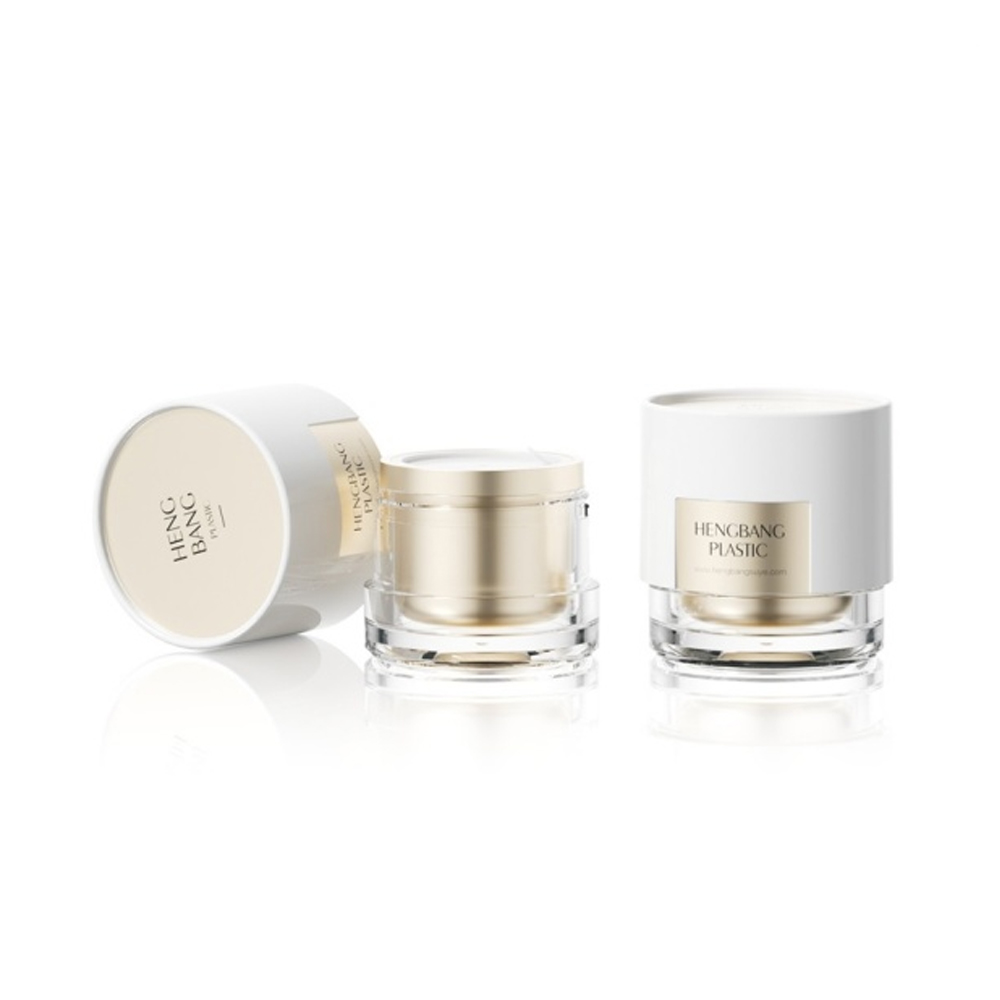
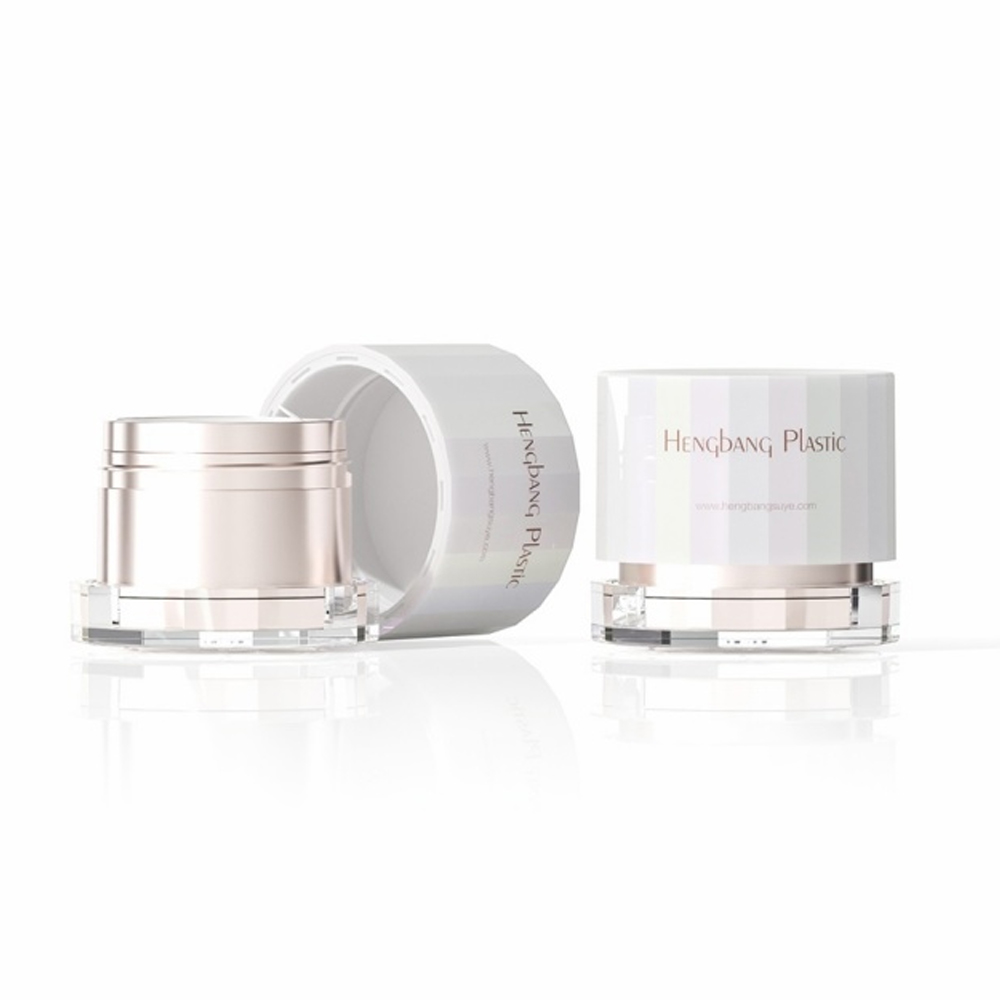 HB-G015 Refillable Double-Wall Cosmetic Jar with Matte FinishThis refillable jar pairs an ABS/PP cap with an MS/ABS outer bottle and PP inner cup, featuring a matte white exterior and rose-gold electroplated inner container. It supports sustainability goals while maintaining a premium, tactile experience for luxury cream lines.View Product →
The refillable logic also extends beyond jars. Airless pump bottles work the same way: the outer dispenser is retained, and a refill cartridge replaces only the inner pouch or bottle. If your product lineup combines creams and serums, working with one manufacturer that handles both jar and airless bottle tooling reduces quality control complexity and freight costs.
Once samples pass your basic tests, assess the factory's operating discipline before scaling up.
It is also worth checking structural facts about the company. Yuyao Hengbang Plastic Co., Ltd., for instance, states that it operates a 35,000-square-meter facility with more than 300 employees, holds ISO 9001 and ISO 14001 certification, and has been recognized as a high-tech enterprise in Ningbo since 2021. These claims should be verified with certificates, audit reports, or customer references, and used as a starting point rather than a substitute for your own due diligence.
Here is a condensed version of the process described above. Use it when comparing cosmetic jar manufacturers.
If most suppliers look equal, a factory visit or video audit usually breaks the tie. Look at how molds are stored, how process parameters are recorded, and whether the shop floor matches the flow the sales team describes. These details predict the consistency of the thousands of jars you will receive, not just the handful of samples on your desk.
Choosing a cosmetic jar manufacturer is a decision about control: control over material quality, wall tolerances, decoration registration, and structural features that add value to your brand. Start with samples and data, verify certification and capacity, and only then compare price. That sequence costs a few extra days at the start and prevents much larger costs later in filling, shipping, and customer returns. To see how these criteria apply across an actual catalog, browse our complete packaging range and compare jar structures side by side.


Copyright © Yuyao Hengbang Plastic Co., Ltd.
All Rights Reserved.
 Wholesale Plastic Cosmetic Packaging Manufacturers