English
 中文简体
中文简体
News
Home > News > Industry News > Cosmetic Container Manufacturers: How to Choose a Reliable Packaging Partner

 2026.09.10
 Industry News
Content
Two suppliers quote the same 30 ml airless bottle. One is five cents cheaper per unit, so the buyer places the order. The first batch arrives with walls that flex under thumb pressure, pistons that stall halfway down, and pumps that spit uneven drops. The other candidate, priced slightly higher, delivers uniform walls, smooth pump action, and zero leaks in the 72-hour test. The gap had nothing to do with resin cost. It came from how the two cosmetic container manufacturers run their molding lines and inspect output.
This guide explains the criteria that separate dependable cosmetics packaging manufacturers from the rest, and how to apply them before you commit tooling spend or production slots.
The fastest filter is simple: match the manufacturer's standard catalog against the container types your formula requires. Toner needs a leak-proof neck finish, a rich cream needs a rigid jar, and a serum with volatile actives needs an airless pump. A supplier that already manufactures the right format owns the molds and has production experience that shows up in fewer defects.
Catalog breadth is also a cost question. Standard bottles from the factory's existing mold bank avoid tooling fees entirely, and the unit price reflects an amortized mold. A manufacturer like Yuyao Hengbang Plastic Co., Ltd., with separate lines for airless bottles, double-chamber bottles, cream jars, lotion bottles, toner bottles, and sunscreen squeeze bottles, lets you add SKUs later without re-qualifying a new supplier.
Certification claims are a starting point, not a conclusion. The industry baseline is ISO 9001:2015 for quality management and ISO 14001:2015 for environmental management. Both are external audits, so they carry more weight than a supplier's own marketing language. Ask for the certificate number and confirm it with the issuing body.
| Verification check | Why it matters | What a genuine manufacturer can show |
|---|---|---|
| ISO 9001:2015 | Documents quality procedures | Valid certificate, correct scope |
| ISO 14001:2015 | Confirms environmental management | Active certificate |
| Factory ownership | Confirms in-house molding capacity | Video audit available |
| Mold workshop | Determines customization speed and mold maintenance | In-house or documented tooling partners |
| Patents and R&D | Shows original structural development | Patent numbers, working samples |
Factory ownership changes how problems are solved. Hengbang operates a 35,000-square-meter plant with more than 300 employees, publishes its ISO certifications, and has held the Ningbo High-Tech Enterprise title since 2021. A buyer can verify these facts in minutes. A trading company, by contrast, relies on another factory's certificates and capacity, so it cannot adjust mold tolerances, change process parameters, or take responsibility for the production floor when an issue appears.
The same bottle shape can be molded in four different resins, and each changes cost, clarity, chemical resistance, and breakage behavior. Cosmetic container manufacturers differ in which materials they run daily, so compare their material experience with what your formulation needs.
| Material | Typical applications | Strengths | Limits |
|---|---|---|---|
| PET | Toner, clear lotion bottles | Inexpensive, clear, recyclable | Limited heat resistance |
| PETG | Premium toner and lotion bottles | Excellent clarity and chemical resistance | Higher cost than PET |
| Acrylic | Prestige cream jars | Glass-like depth and surface | Brittle; drop testing required |
| PP / PE | Squeeze bottles and closures | Flexible, tough, low cost | Lower clarity and perceived value |
Structural tolerance matters even more than the resin. Airless bottles depend on a piston that tracks the inner wall while keeping air out of the product column. A manufacturer with real airless experience talks in terms of piston-to-wall interference and glide force ranges, not just bottle capacity. That experience has direct consequences: an airless foundation bottle that draws air back into the chamber changes the formula's color and texture within weeks, a failure mode that only appears after the product reaches consumers.
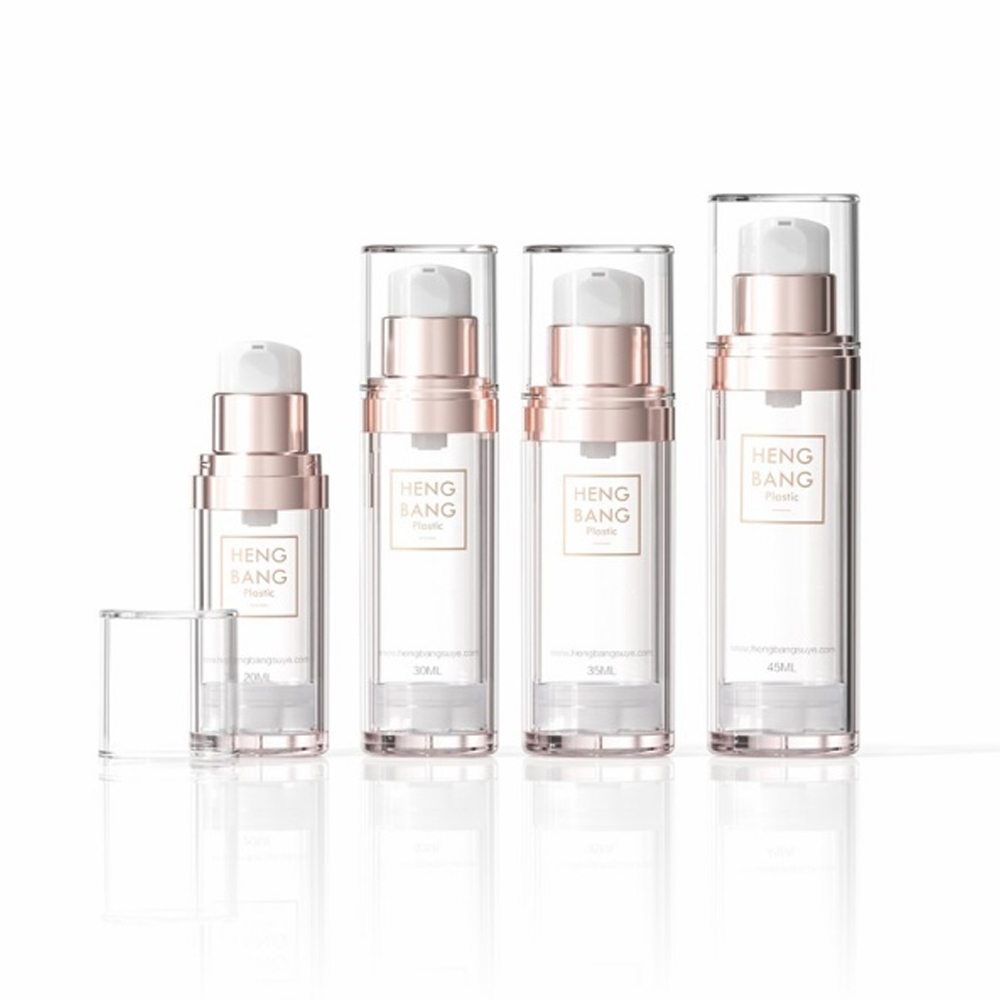
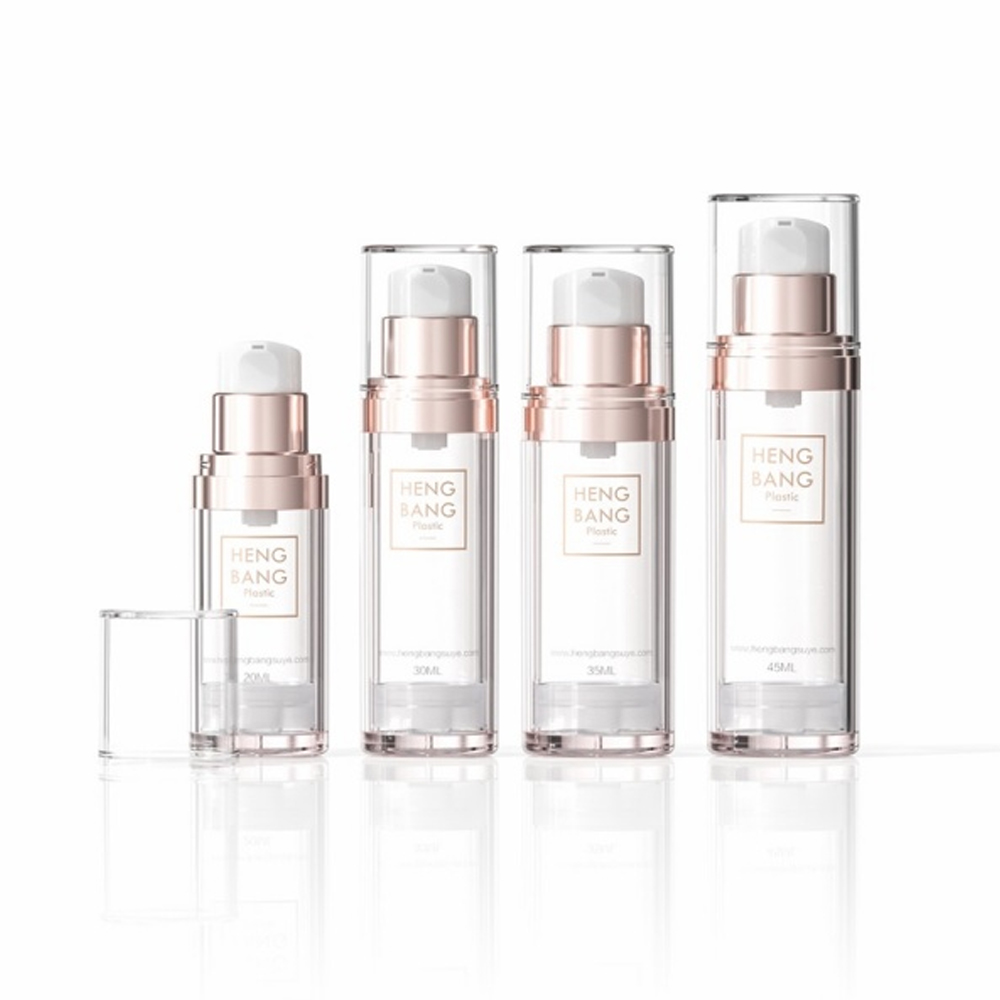 HB-K006 Plastic Airless Foundation Bottle with Clear Body and Rose Gold CollarThis airless bottle uses a piston-driven pump to keep oxygen out, protecting oxygen-sensitive formulas. Its transparent body and 0.23cc dosing offer precise, controlled dispensing for preservative-free skincare lines, addressing the tolerance and glide-force concerns raised earlier.View Product →
Multi-chamber bottles raise the difficulty further. In a double- or triple-chamber design, divider walls and pump inlet geometry control how evenly the components dispense. If the mold geometry is off, the consumer gets a few pumps of one phase, then the other. When a supplier lists double-chamber and triple-chamber options as standard catalog items, it has already solved those tolerance problems once, and its reject-rate data will reflect it.
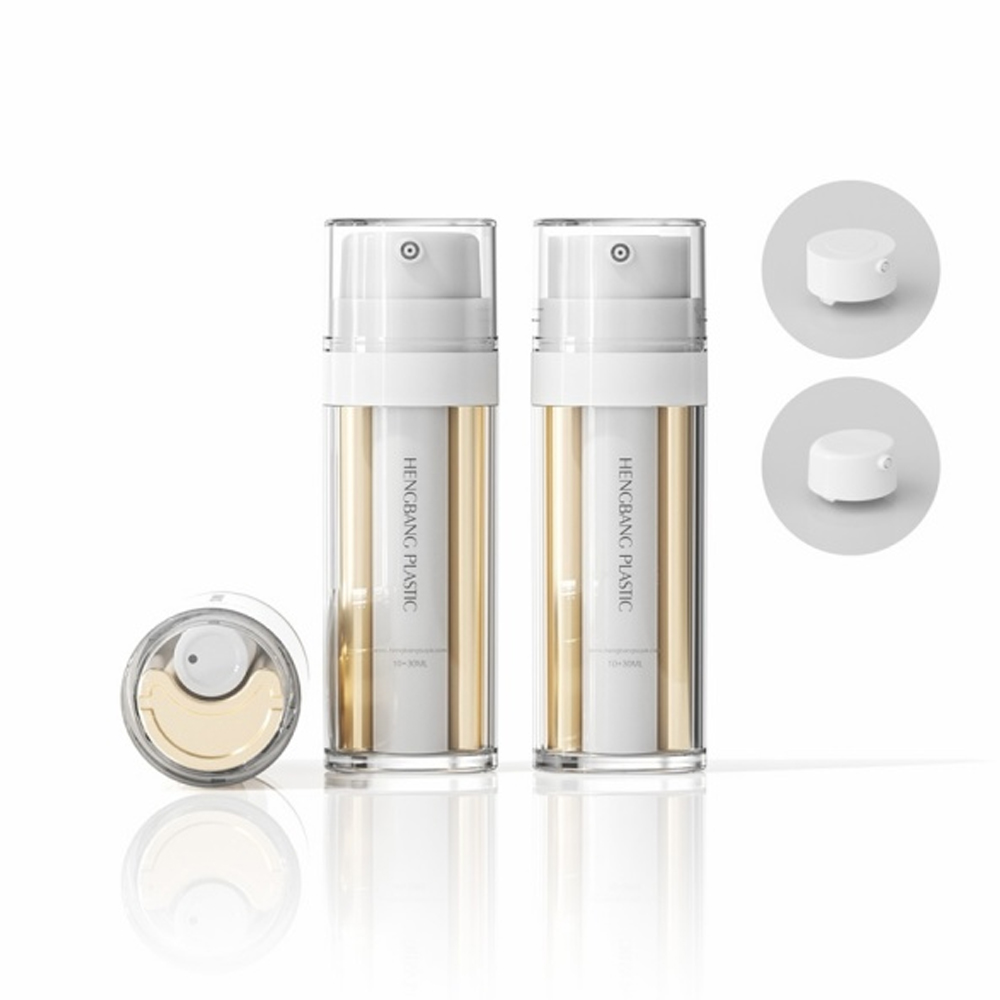
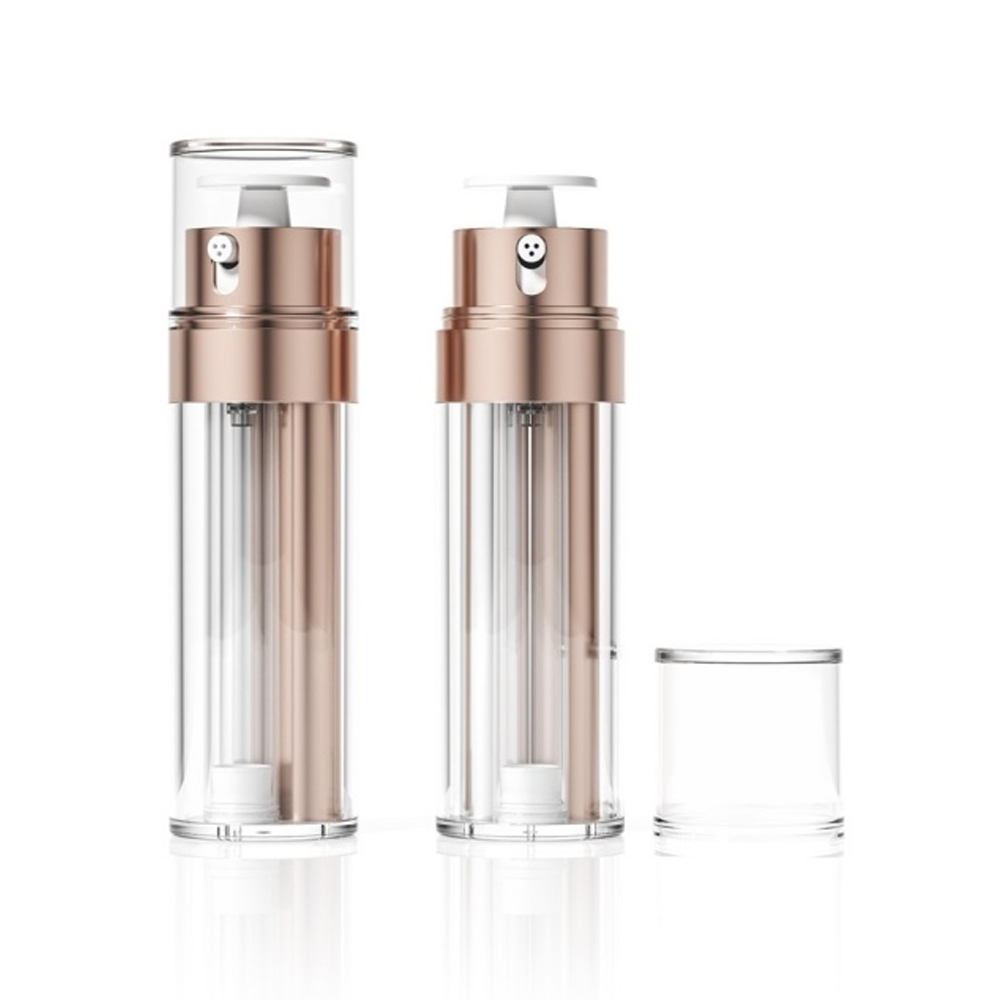
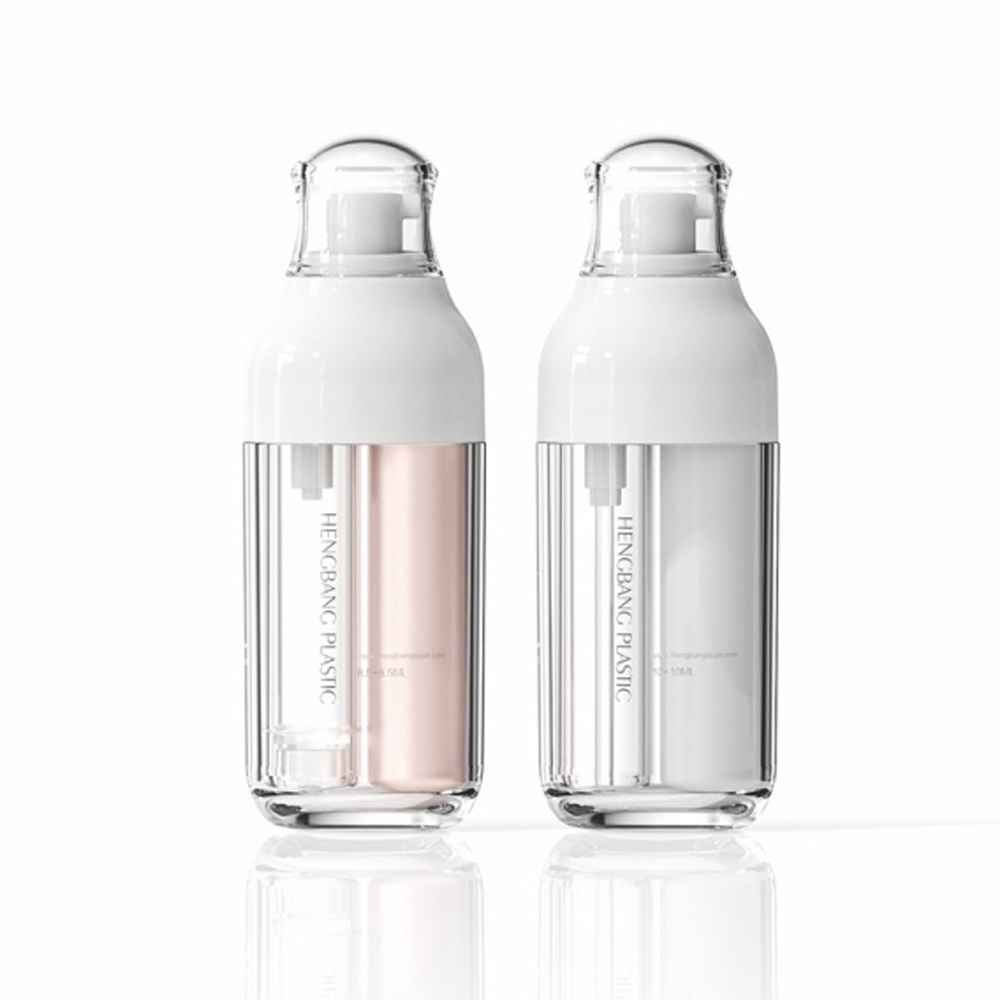 HB-S004 Double Chamber Airless Bottle with Transparent Outer ShellFeaturing two distinct chambers in a clear MS outer bottle, this design lets consumers see both formulas while a dedicated piston system maintains even dispensing. It directly addresses the multi-chamber tolerance problems discussed, offering a visually engaging solution for two-in-one products.View Product →
The interaction between pump, piston, and shell determines dosing consistency and formula shelf life. Once that mechanism is clear, the questions you ask a manufacturer become specific rather than generic.
Retailers in Europe and North America are tightening single-use plastic requirements, and refillable packaging satisfies both the brand's aesthetic goals and the retailer's sustainability criteria. Plan for it now even if the first order is a standard bottle, because changing the container structure later means re-qualifying the entire packaging line.
A refillable cream jar with a double-wall structure keeps the outer shell rigid and premium while the consumer replaces only the inner cup. That design reduces packaging waste per use and gives the brand a concrete sustainability story. The manufacturing challenges are the seal between shell and refill over multiple cycles, and the closure's torque retention after repeated opening. Ask for cycle-test data: how many times the closure can be removed and replaced before leakage appears. Manufacturers who already ship refillable SKUs will have these numbers.
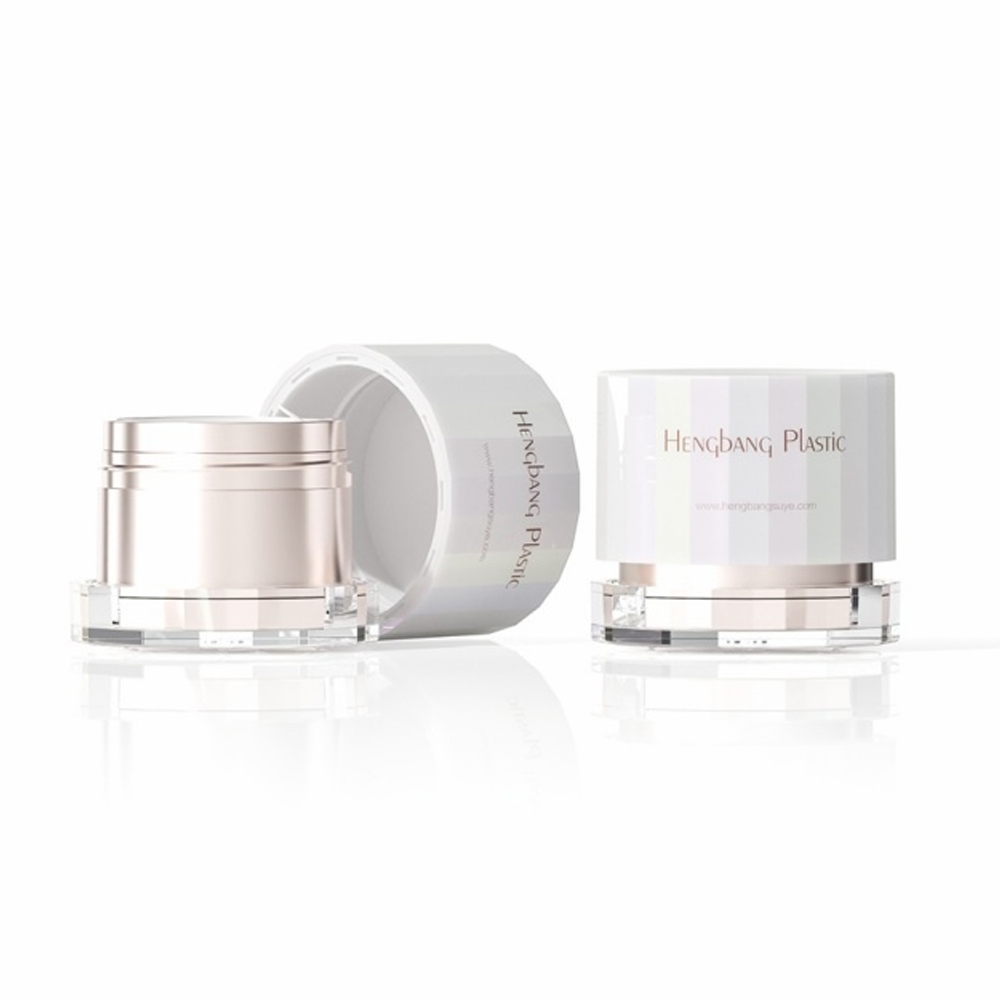
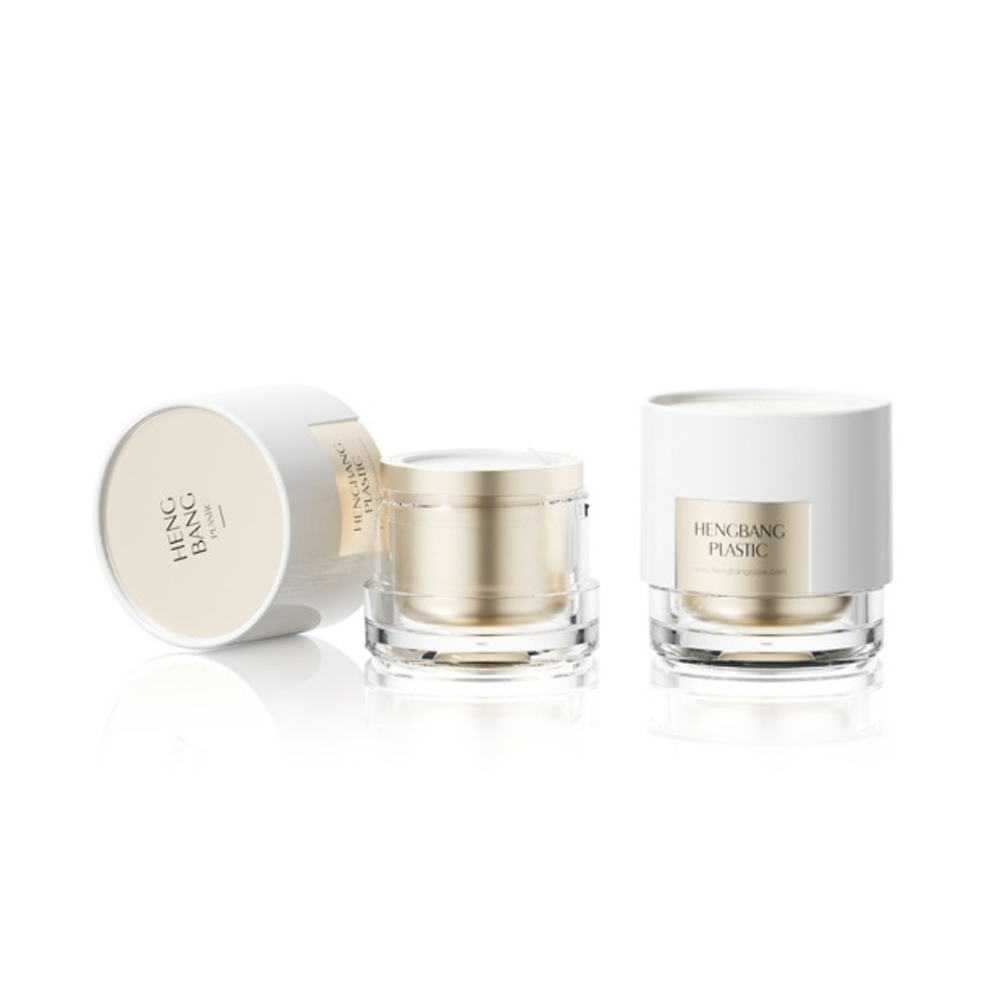 HB-G021 Double Wall Refillable Cream Jar with Replaceable Inner CupThis refillable jar pairs a rigid outer shell with a replaceable inner cup, cutting plastic waste per use. Its double-wall construction supports premium feel and repeated refill cycles, aligning with the sustainability and torque-retention questions raised in the surrounding discussion.View Product →
This direction is confirmed by broader movements in the sector. The industry trend toward higher-end, greener packaging is accelerating because consumers read a brand's environmental commitment directly from the shelf. A supplier with demonstrated refillable production shortens your path when the sales channel asks for it.
Most brands need at least one custom element, even when the base bottle is standard. The supplier's development workflow determines whether that element becomes a four-week detour or a four-month project. A mature workflow follows a fixed sequence, and you should be able to identify each phase before ordering.
Timelines are predictable when this sequence is followed. Decorating a stock bottle typically takes two to four weeks. A new mold with samples usually needs eight to twelve weeks. Acrylic molding runs at the slower end because the material needs longer cooling and more polishing. Ask for a phase-by-phase timeline and the name of the engineer who owns the project; a supplier that gives neither is showing its true planning depth.
Price-per-unit comparison makes sense only after suppliers pass a weighted evaluation. Build a matrix that reflects your priorities, then test the final two or three candidates with production-like samples before negotiating pricing.
| Evaluation criterion | Weight | Supplier A | Supplier B |
|---|---|---|---|
| Relevant format in standard catalog | 25% | Airless, jars, double-chamber | Jars only |
| Valid ISO 9001 / 14001 | 15% | Both valid | One expired |
| Factory or video audit | 20% | Offered same week | Declined |
| In-house molds or documented tooling | 15% | In-house mold shop | External quotation only |
| Refillable experience | 10% | Ships refillable jars and airless bottles | None |
| Sample lead time with first-article report | 15% | 10 days with report | 18 days, samples only |
When the samples arrive, treat them as production units. Fill them with your actual formula, close them with the closures you plan to ship, run a leak test at the temperature your logistics routes will see, and drop the two heaviest SKUs from shelf height. These tests cost very little compared with a rejected batch later.
Cosmetic container manufacturers differ in mold ownership, material discipline, certification status, structural experience, and how they handle a request that falls outside their standard line. Filter first on catalog fit, then on verifiable factory evidence, then on material and structural capability, and finally on the development workflow. The supplier that survives that sequence is the one whose competitive advantage is manufacturing, not just sales.


Copyright © Yuyao Hengbang Plastic Co., Ltd.
All Rights Reserved.
 Wholesale Plastic Cosmetic Packaging Manufacturers