English
 中文简体

News
Home > News > Industry News > Skincare Bottles Manufacturers: Buyer's Guide to Airless, Refill & Lotion Packaging

 2026.11.12
 Industry News
Content
Thirty thousand 30 ml airless serum bottles reach the filling line, and the pump stops returning after the first stroke. The formula is fine. The pump is fine. What failed was a decision made eight weeks earlier, when the pack was chosen from a mood board instead of a viscosity curve, and nobody ran a fill trial before the mould was cut.
The short version: picking skincare bottles manufacturers is a technical sourcing decision, not a design shortlist. Four things separate a supplier who ships a reliable component from one who ships a box of pretty samples: format-to-formula fit, control over resin and tooling, genuine refill capability, and QC documentation you can audit. Unit price sits fifth, because a two-cent saving per bottle disappears the moment one retail batch leaks in transit.
An empty bottle is an assembly, not a single part. It includes the body, the dispensing engine (pump, dropper, valve or cap), the decoration, and the torque and dose consistency that hold the three together. Ask any candidate where each element is made. Suppliers who injection-mould in house but buy pumps from a third party own the body tolerance and nothing else, and the argument over a leaking unit lands on your desk.
Practical questions that reveal the real capability behind a quotation:
Suppliers with a full in-house chain answer these in one email. Traders answer them over three weeks and two forwards.
Format determines whether your product survives the shelf. Airless systems suit actives that oxidise; droppers suit low-viscosity concentrates; squeeze bottles suit high-viscosity emulsions that will not pump; jars suit products scooped, not dosed. Get this wrong and no amount of tooling polish rescues the launch.
| Format | Typical fill | Best suited to | What to verify |
|---|---|---|---|
| Airless pump bottle | 15-50 ml | Serums, foundations, retinols, vitamin C | Dose consistency, vacuum retention, actuator priming |
| Dropper bottle | 15-30 ml | Concentrates, oils, acids | Teat and liner compatibility, drip control |
| Lotion pump bottle | 50-200 ml | Lotions, cleansers, micellar water | Closure torque, leakage under vibration |
| Squeeze bottle | 30-100 ml | Sunscreen, gels, body lotion | Wall thickness, orifice size, shape recovery |
| Jar | 15-100 ml | Creams, balms, butters | Liner seal, thread engagement, refill pod fit |
| Toner bottle | 15-200 ml | Toners, essences, mists | Neck finish, sprayer output, stress cracking |
For pump-driven packs, a plastic airless lotion bottle with a matched actuator removes most of the guesswork, provided the supplier confirms the dose per stroke against your actual fill weight rather than a generic figure.
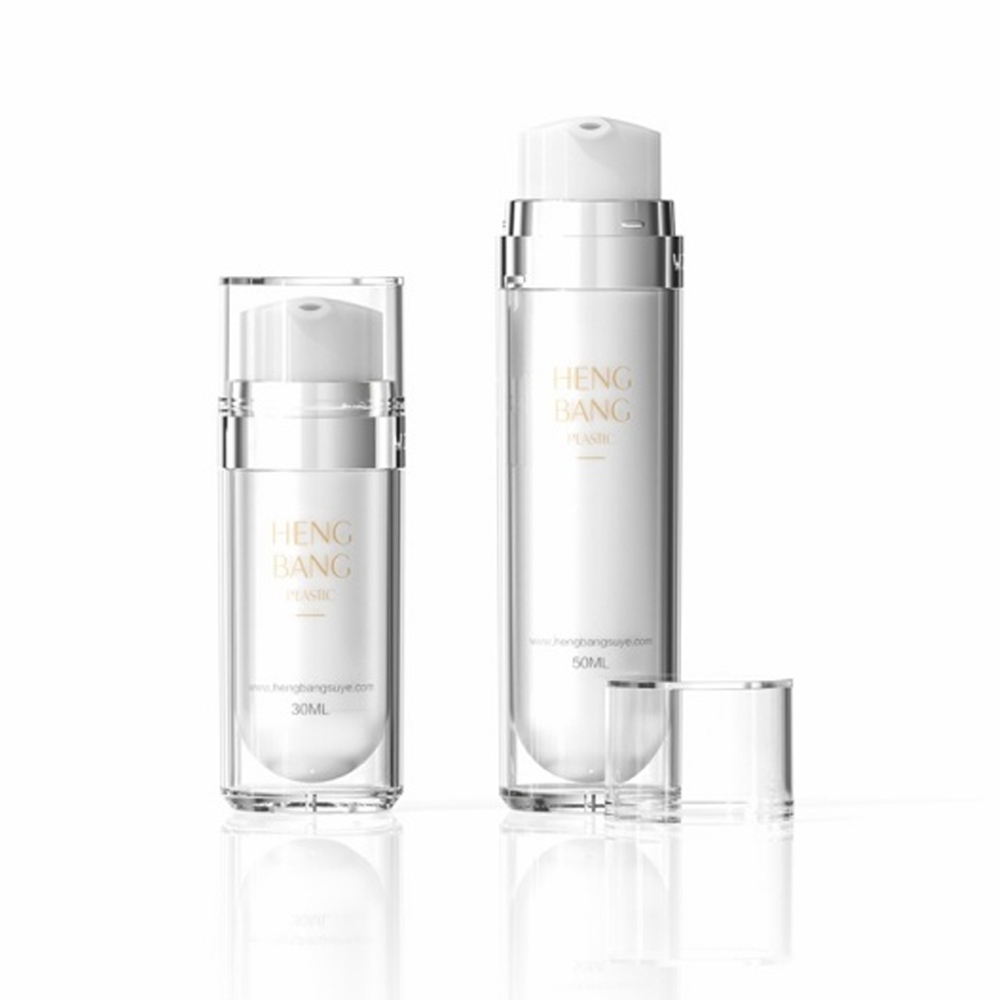
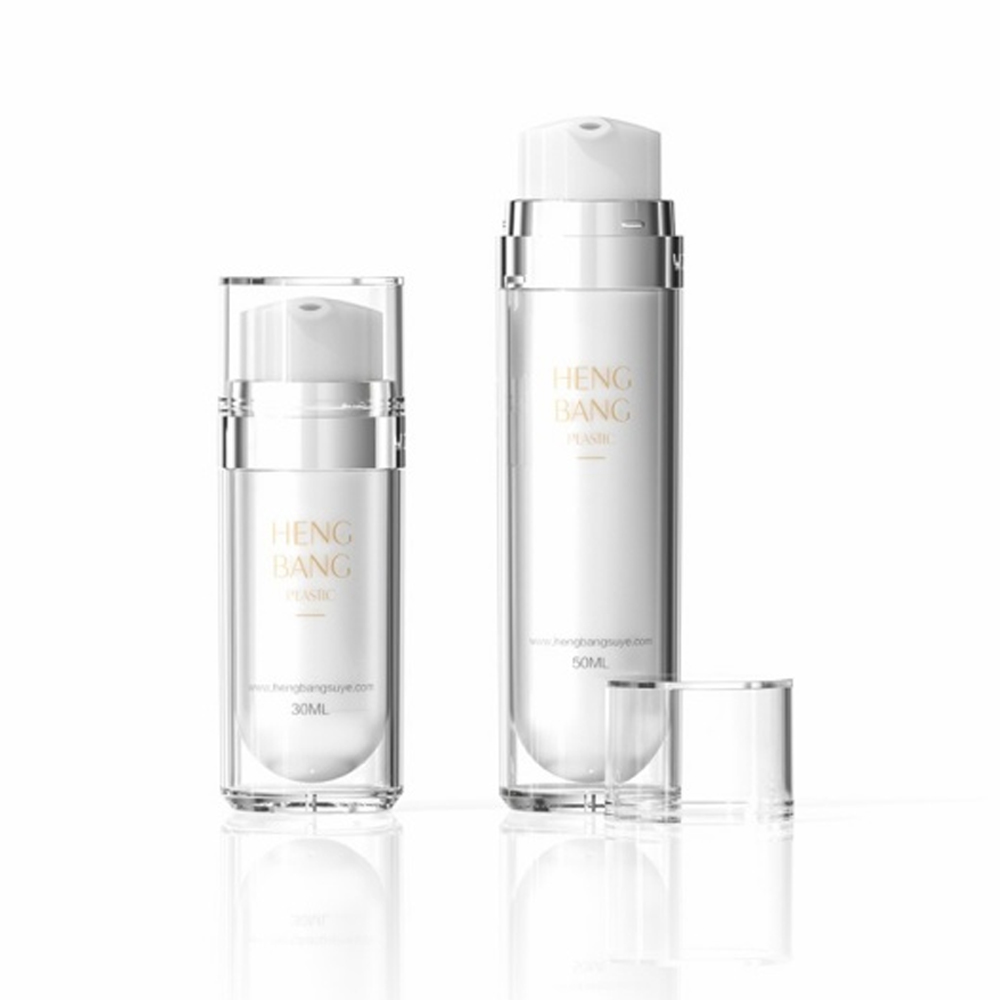 HB-K009A/B Double-Wall Airless Lotion BottleDouble-wall airless lotion bottle with matched pump, offered in 20 ml and 50 ml, suited to skincare packs where dose consistency and resin choice matter.View Product →
Two suppliers can quote the same 50 ml bottle at the same price and deliver completely different products, because the resin grade determines what the pack can hold and how it can be finished. PET gives glass-like clarity cheaply but stress-cracks with certain solvents. PETG is more forgiving and takes spray coating well. Polypropylene shrugs off almost everything and looks utilitarian. Acrylic buys weight and depth at a cost, and dislikes alcohol-heavy formulas.
| Material | Clarity | Chemical tolerance | Surface feel | Relative cost | Common use |
|---|---|---|---|---|---|
| PET | High, glass-like | Good for alcohol-free formulas; sensitive to some solvents | Rigid, glossy | Low | Toner and lotion bottles |
| PETG | Very high | Moderate; avoid aggressive solvents | Gloss, good hand feel | Low to mid | Lotion, toner, travel sizes |
| PP | Translucent to opaque | Excellent, broad tolerance | Matte, slightly waxy | Low | Airless internals, caps, squeeze packs |
| Acrylic (PMMA) | Highest, heavy | Poor with alcohols and solvents | Dense, premium | High | Double-wall cream jars, thick-wall bottles |
| PCR and mono-material blends | Varies by blend | Depends on the base resin | Varies | Mid | Recycled-content targets |
Double-wall acrylic constructions are the standard route for prestige creams, and a refill double-wall cosmetic jar adds a second benefit: the outer wall becomes a durable brand asset while the inner pod is replaced, which lowers the cost of repeat purchase and supports a refill claim you can defend.
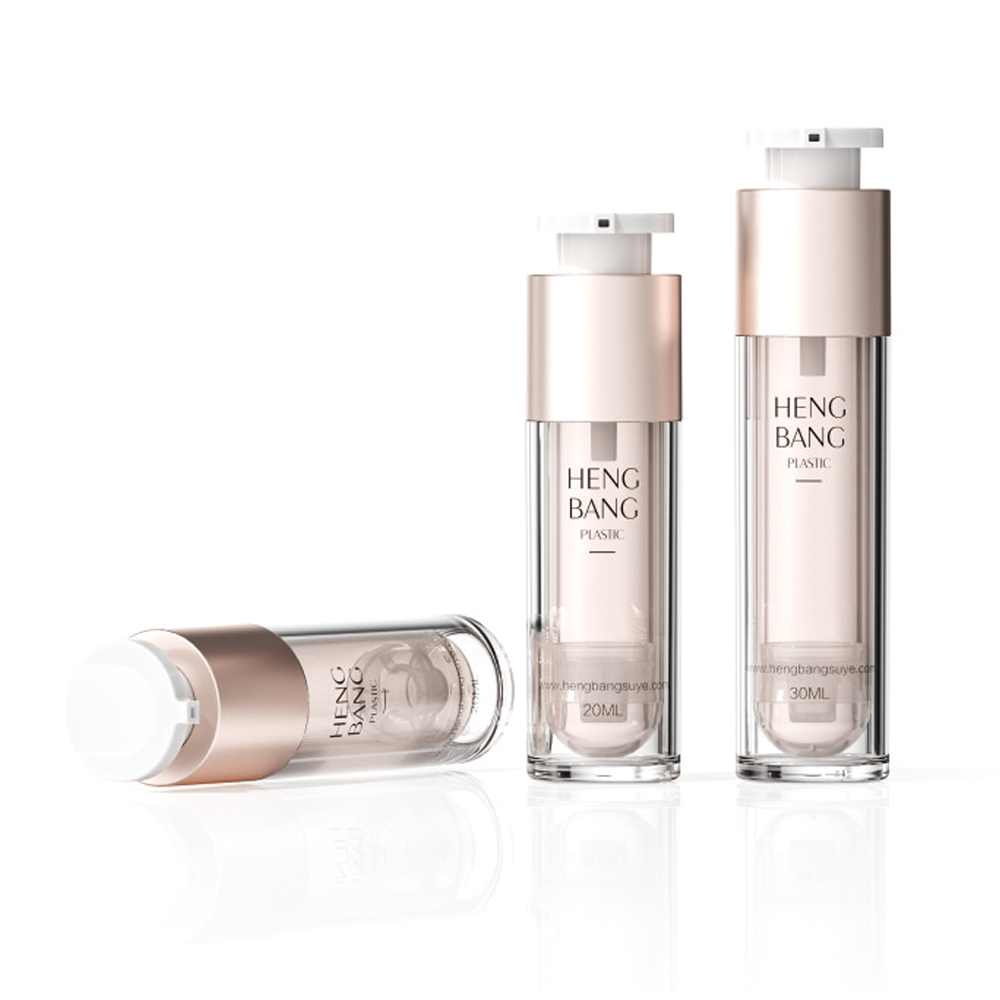
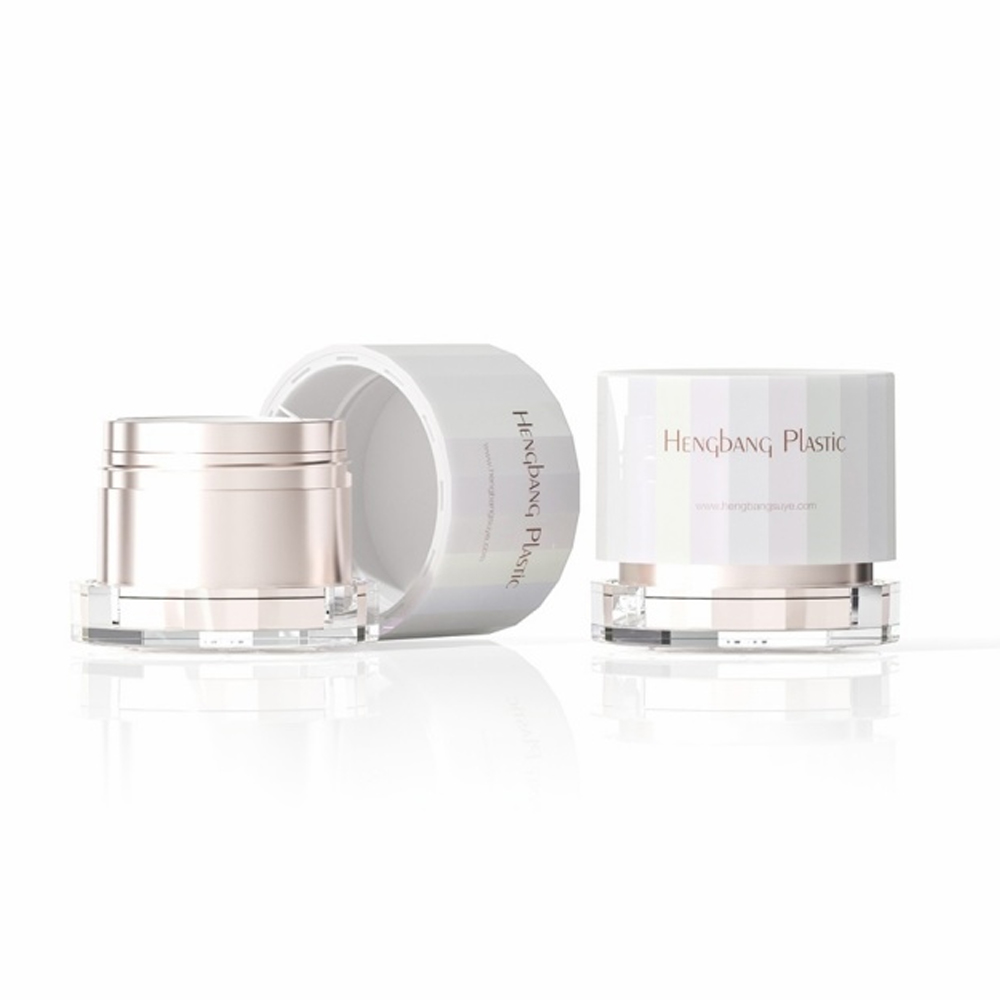 HB-G015 Refill Double-Wall Cosmetic JarRefillable double-wall cream jar in 30 ml, 50 ml, and 60 ml sizes, pairing a durable outer shell with a replaceable inner pod for repeat-use skincare packaging.View Product →
Airless packaging removes the dip tube and draws product up through a piston, which means the failure modes shift from "won't spray" to "won't stop" and "won't empty". The three recurring issues are dose drift as the pack empties, air ingress through a poorly seated piston, and a formula that is too thin to be drawn cleanly. Refill systems add a fourth: retention force. An inner pod that releases during transport is a leak, not a refill.
Both problems are solved on paper and confirmed in the lab. Send the finished formula to the supplier, request a filled sample set, and test at 40 °C for two weeks before approving tooling. If you want the mechanics explained in more depth, this overview of how a plastic airless bottle works is a useful briefing to share internally.
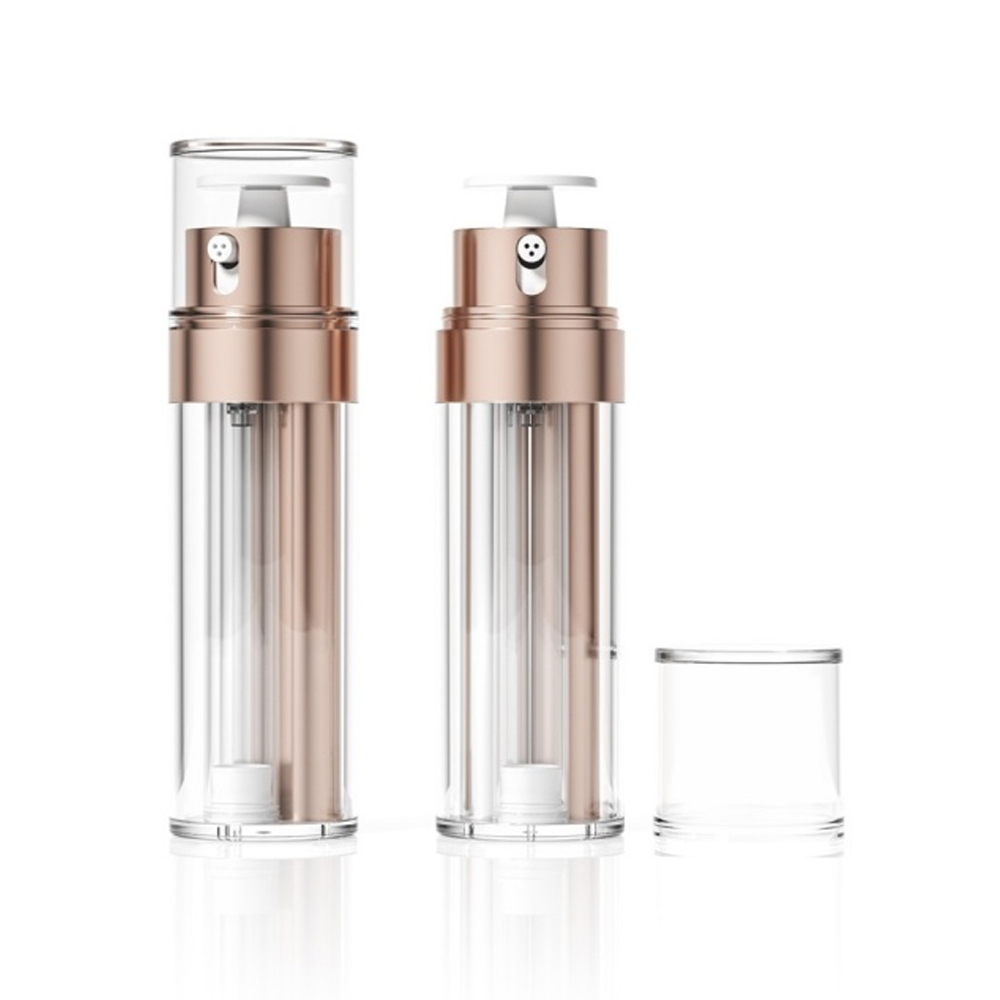
A 30 ml replaceable airless serum bottle is a reasonable reference point for a premium serum: the outer shell carries the brand, the inner cartridge carries the formula, and the specification work sits almost entirely in the retention ring and the pump dose.
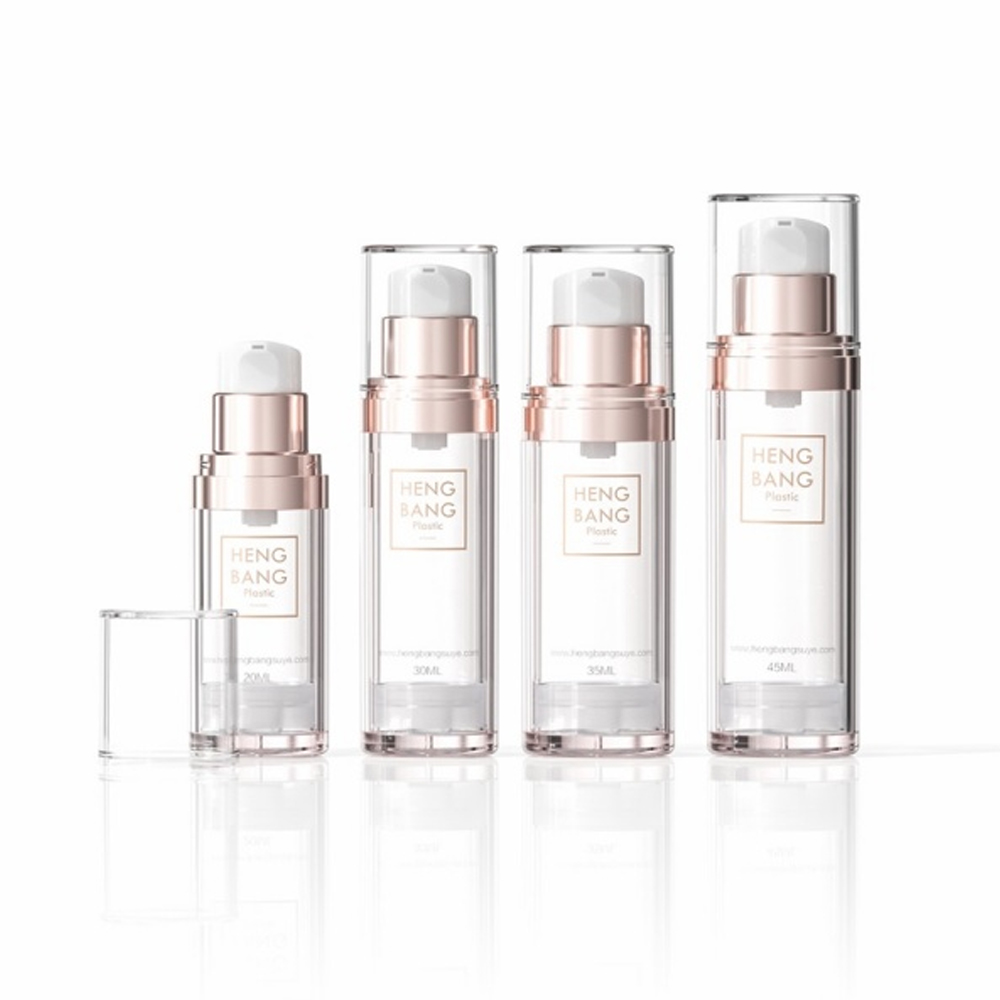
 HB-K023 Replaceable Airless Serum BottleReplaceable airless serum bottle available in 20 ml and 30 ml, with a separate inner cartridge and 0.23 cc dose for premium skincare packaging.View Product →
Tolerances are where cheap quotations hide. A neck finish held to a loose band will leak on one filling line and seal on another, so the number matters less than the consistency. Ask for the drawing, then ask what the last three production runs actually measured.
A supplier who already runs these tests will send results with the sample. One who does not will describe them as available on request.
Custom bottles carry two costs that stock shapes do not: a mould and a minimum run. A simple injection mould for a bottle body commonly lands in the low thousands of dollars, while a multi-cavity tool with a custom pump collar can multiply that figure several times. Minimum order quantities for custom moulded bottles typically start in the tens of thousands per size and colour, and drop for stock moulds with standard decoration.
Plan the calendar from mould approval, not from the enquiry date. The chart below shows where a first custom order usually spends its time.
Illustrative schedule for a first custom skincare bottle order (calendar days)
These are planning ranges, not commitments. Confirm them against your own artwork complexity, colour count and shipping lane, and add buffer for a Chinese New Year window if production falls between January and March.
Spray coating, silk screen, hot stamping, metallisation and soft-touch lacquer all change both the look and the risk profile. Spray coating adds a lead time and a colour-matching variable; metallisation can interfere with resin compatibility; soft-touch finishes scuff under rough handling. Approve decoration on the final resin, not on a generic plaque, and keep a retained sample from every run.
The direction of travel in the category is clear: premium finishing and refillable construction are being combined rather than traded off, as this summary of high-end and green packaging trends sets out. That combination raises the bar on tooling precision, because a refill pod inside a spray-coated shell leaves no tolerance for a misaligned thread.
Before a purchase order goes out, run this sequence. It takes about two weeks and prevents most of the problems that surface after the container ships.
China's plastics packaging cluster sits in Zhejiang and Guangdong, and Yuyao is one of its densest nodes. A representative example is Yuyao Hengbang Plastic Co., Ltd., founded in 2006, operating a 35,000 square metre facility with more than 300 staff and producing plastic containers for cosmetics and skincare. The company holds ISO 9001:2015 and ISO 14001:2015 certification and was designated a Ningbo high-tech enterprise in 2021, with a patent portfolio supporting its moulding work.
Its catalogue covers the formats this guide has walked through: airless bottles and refillable airless bottles, double and triple chamber packs for multi-component formulas, PETG lotion bottles, acrylic and refillable cream jars, sunscreen squeeze bottles and PET or PETG toner bottles, in sizes from 7 ml travel formats up to 200 ml. For a buyer assembling a first range, that breadth matters less than the fact that design, tooling, moulding, decoration and assembly sit inside one quality system, which is the arrangement that shortens the loop between a failed sample and a corrected one.
Start with a single format, one fill size and one decoration route. Prove the pump dose, the seal and the refill retention on that one pack, then scale the range. Suppliers are chosen on documentation and samples, and kept on consistency.


Copyright © Yuyao Hengbang Plastic Co., Ltd.
All Rights Reserved.
 Wholesale Plastic Cosmetic Packaging Manufacturers