English
 中文简体
中文简体
News
Home > News > Industry News > The Evolution of Premium Skincare Packaging: A Material Performance Comparison for High-End Formulations

 2026.07.16
 Industry News
Content
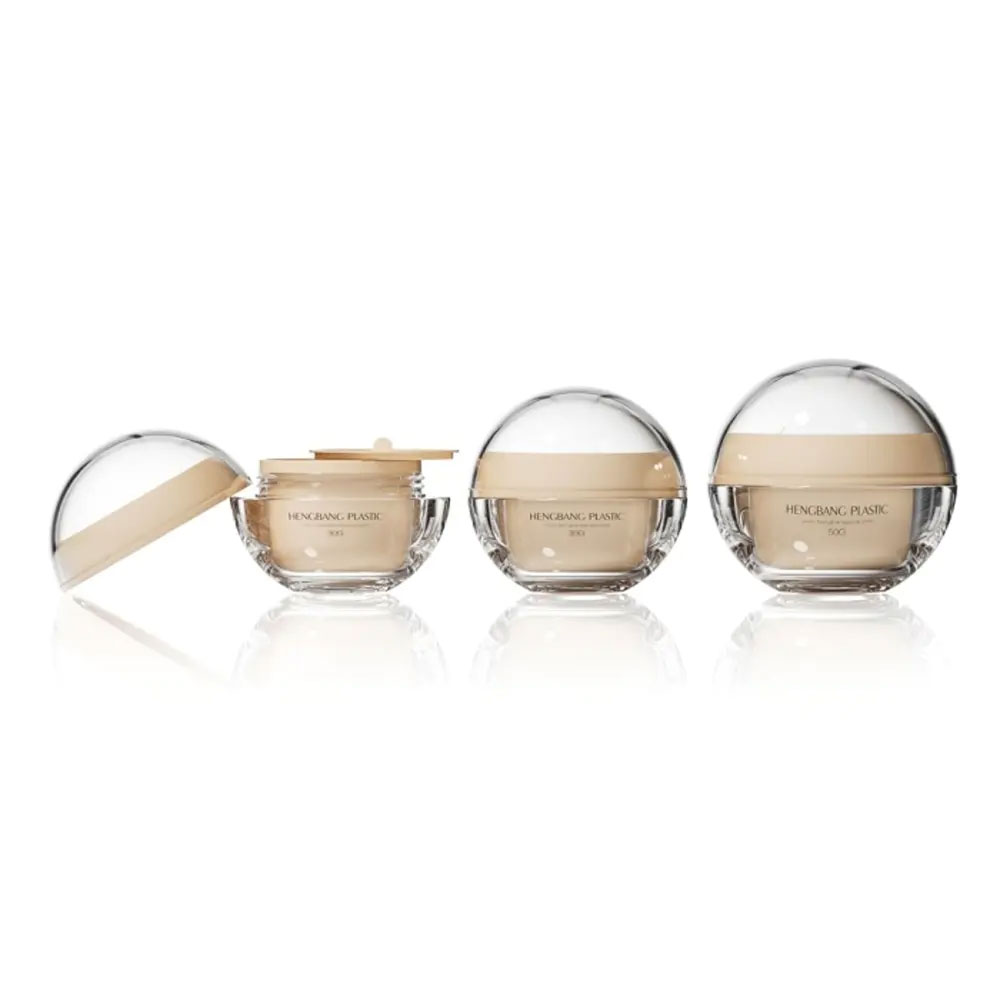
The global skincare market demands packaging that achieves a flawless balance between aesthetic sophistication and clinical-grade formula protection. As active ingredients become more sophisticated, selecting the appropriate structural vehicle for luxury emulsions is no longer just a design choice, but a critical stability requirement. The modern plastic cream jar serves as a high-performance barrier engineered to preserve formulation efficacy against environmental degradation while defining the consumer's tactile brand experience.
For high-value cosmetic brands, choosing a packaging substrate comes down to matching chemical compatibility with target market positioning. Heavy-walled Acrylic (PMMA) remains the industry benchmark for replicating the optical clarity and weight of glass in luxury markets, while Polypropylene (PP) provides unmatched chemical resilience for formulas containing volatile essential oils or active retinoids. Polyethylene Terephthalate (PET) offers the most viable path toward scalable sustainability without compromising mechanical durability.
Developing a successful skincare line requires an understanding of how different thermoplastic polymers interact with diverse cosmetic bases. Creams, salves, gels, and balms have varying oil-to-water ratios and active pH profiles that can degrade low-grade plastics over time, resulting in product contamination or container deformation. Premium manufacturers utilize specific polymer classes to counteract these structural challenges.
A high-performance plastic cosmetic cream jar must provide low moisture-vapor transmission rates (MVTR) and excellent gas barriers to prevent the oxidation of delicate compounds like Vitamin C or peptides. When a formula loses its water content through microscopic wall permeation, the remaining cream dries out, alters its viscosity, and ultimately loses its therapeutic value before reaching the end of its intended shelf life.
Evaluating packaging materials requires a careful balance between structural performance, chemical inertia, and consumer perception. The three most prevalent polymers utilized in premium cosmetic manufacturing demonstrate distinct operational behaviors across key variables.
| Performance Parameter | Acrylic (PMMA) Jar | Polypropylene (PP) Jar | PET / PETG Jar | |
|---|---|---|---|---|
| Optical Clarity & Aesthetics | Ultra-transparent; mimics heavy crystal glass perfectly. | Translucent to opaque; matte or satin finish texture. | High clarity; brilliant glossy surface finish. | |
| Chemical Compatibility | Moderate; vulnerable to specific essential oils and alcohol. | Exceptional; highly resistant to acids, bases, and organic solvents. | Good; stable against most lipids and mild formulations. | Excellent impact strength; brittle when dropped if thin-walled. |
| Impact Resistance | Rigid and brittle; prone to micro-cracks under high stress. | High flexibility; virtually shatterproof under drop tests. | Excellent impact strength; resilient against stress cracking. | |
| Sustainability Profile | Challenging to recycle in standard municipal streams. | Widely recyclable (Code 5); supports PCR integration. | Highly recyclable (Code 1); excellent rPET availability. |
High-value skincare products frequently incorporate active botanical extracts, low-molecular-weight hyaluronic acids, and lipid-soluble vitamins. These compounds are highly reactive when exposed to atmospheric oxygen or ambient light radiation. Selecting an incorrect plastic cream jar can lead to the rapid yellowing of white emulsions or the separation of oil-in-water suspensions.
The manufacturing process determines both the physical strength and the visual luxury of the finished container. High-end cosmetic jars undergo strict quality controls during molding to ensure that neck threads seal perfectly, preventing evaporation and leaks during air transit.
This method forces molten polymer into highly polished steel molds under immense pressure. It allows for ultra-precise wall distribution, crisp geometric edges, and complex double-wall structures. Double-wall configurations feature an inner PP liner for complete chemical safety, surrounded by a thick acrylic outer shell for an elegant, premium look.
Premium jars use advanced surface treatments like inner-wall lacquering, vacuum metallization for metallic rims, and soft-touch external coatings. These finishes ensure the container stands out on retail shelves while protecting the underlying plastic from surface scratches during automated filling and transport.
When engineering custom shapes, structural integrity must remain uniform across the entire surface area. Thin corners or uneven material distribution can create structural weak points that fracture under the mechanical forces of automated capping machinery, which often apply over 15 inch-pounds of torque to ensure a hermetic seal.
Corporate environmental responsibility has evolved from a marketing preference to a strict regulatory mandate. Modern cosmetic brands are re-engineering their product portfolios to transition away from virgin fossil-fuel resins, turning instead toward post-consumer recycled (PCR) materials and circular packaging designs.
Integrating up to 100% rPET or rPP into a plastic cosmetic cream jar reduces the carbon footprint of production by up to 65% compared to virgin alternatives. Advanced purification processes ensure these recycled polymers achieve food-grade purity, eliminating concerns over heavy metal migration or volatile organic compound (VOC) outgassing. Additionally, the development of mono-material jar assemblies—where the container, inner liner, and closure lid are all crafted from the same polymer family—ensures the entire package can be processed in standard municipal recycling facilities without manual sorting.
Polypropylene exhibits near-universal chemical compatibility across a wide pH range (2.0 to 12.0) and is highly resistant to lipids, essential oils, and aggressive solvents. Using a PP inner liner guarantees that the formula will not react with or dissolve the packaging, while the outer wall can be made of more brittle, crystal-clear acrylic for premium shelf appeal.
They can, provided the plastic resin is treated with UV-absorbing masterbatch additives during manufacturing. These invisible additives filter out harmful ultraviolet wavelengths (290nm to 400nm) that trigger the degradation of sensitive active ingredients, allowing brands to use clear packaging without sacrificing product shelf life.
PETG is modified with glycol, which prevents the polymer from crystallizing. This makes it more impact-resistant and easier to process in heavy-walled designs without hazing compared to standard PET. However, PETG has a slightly lower surface hardness and scratch resistance than pure PET, and it faces distinct sorting challenges in some recycling streams.
Leak prevention relies on precise thread geometry and specialized liner liners within the lid closure. Manufacturers use torque-tested continuous thread (CT) designs combined with expanded polyethylene (EPE) foam liners or pressure-sensitive induction seals. This system maintains a tight seal against variable air pressure during shipping and high-humidity bathroom storage.
Yes, premium PCR jars undergo intense mechanical and chemical purification processes to meet strict global safety standards. These resins are stripped of contaminants, color variation, and odors, resulting in a material that is structurally and chemically identical to virgin polymer, making it completely safe for direct cosmetic contact.


Copyright © Yuyao Hengbang Plastic Co., Ltd.
All Rights Reserved.
 Wholesale Plastic Cosmetic Packaging Manufacturers