English
 中文简体
中文简体
News
Home > News > Industry News > The Evolution of Clean Beauty Packaging: Why Airless Refill Systems Are Winning the Market

 2026.07.02
 Industry News
Content
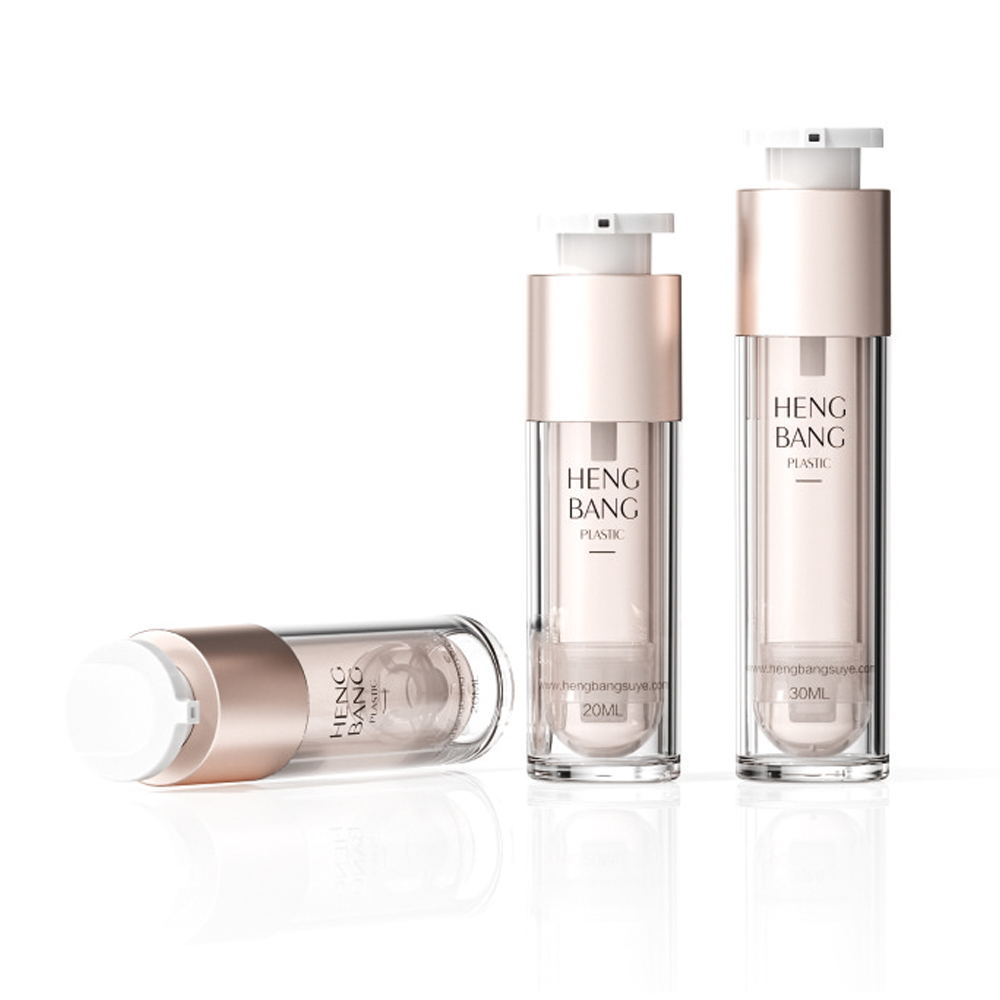
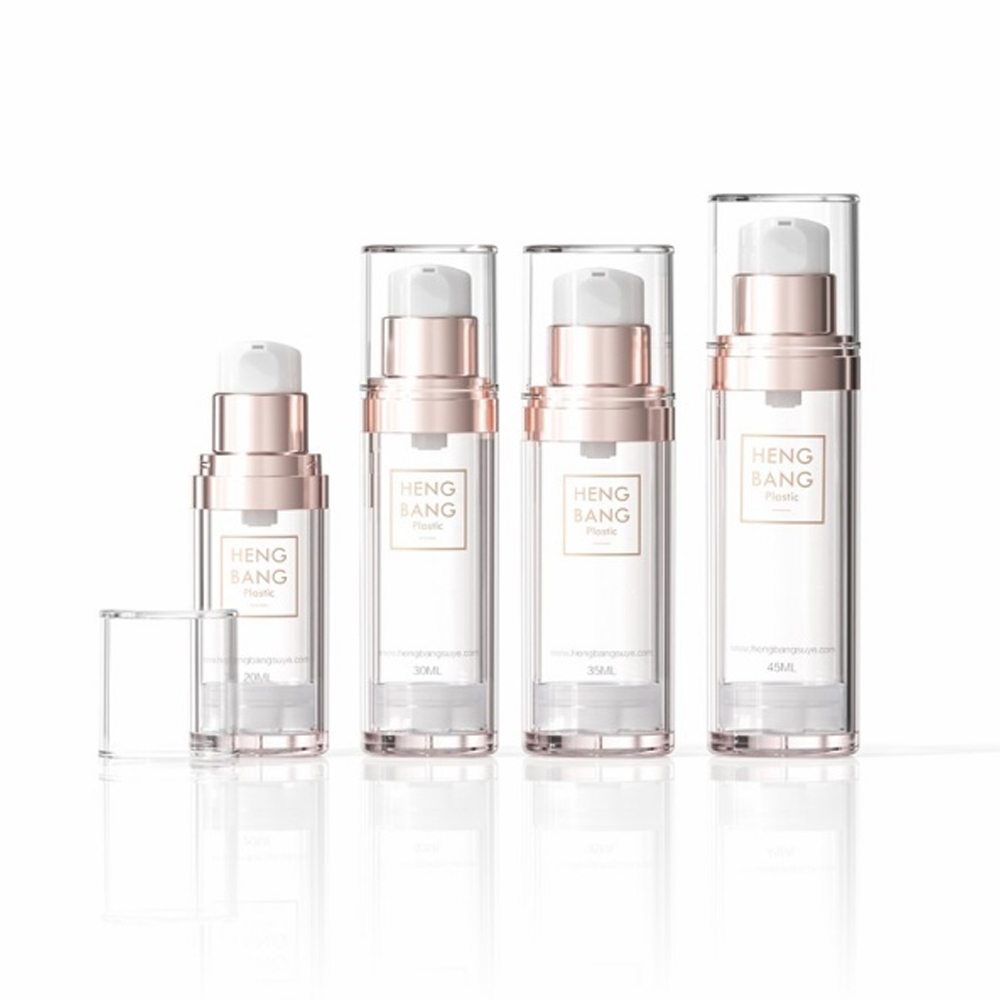
Plastic refillable airless bottles represent the most significant engineering shift in modern cosmetics packaging, solving the dual industry crisis of formula degradation and single-use plastic waste. By utilizing a mechanical piston pump instead of a traditional dip tube, these containers completely seal the product from ambient oxygen. For brands transitioning to clean, preservative-free, or high-potency active formulas, switching to airless tech **extends product shelf life by up to 15% to 20%** while simultaneously reducing total plastic consumption by up to **70% across subsequent purchase cycles** through interchangeable inner cartridges.
This packaging architecture aligns precisely with the mechanical demands of modern viscosity control and the consumer demand for zero-waste luxury. Below, we break down the mechanics, financial incentives, and specific material configurations that make refillable airless systems the standard for high-performance skincare and cosmetic formulations.
Traditional pump bottles rely on atmospheric pressure and a downward-reaching dip tube to pull liquid upward. This design forces ambient air into the chamber to occupy the space left by the dispensed product. When a formula contains highly reactive actives like L-ascorbic acid (Vitamin C) or retinol, this continuous exposure to oxygen triggers rapid oxidation, rendering the product visually discolored and chemically ineffective within weeks.
Refillable airless bottles bypass this structural flaw entirely by employing a vacuum-based evacuation system. The interior consists of a precision-molded piston disk sitting at the bottom of a sealed chamber. When the pump actuator is pressed, it creates a pressure differential that draws the formula upward while simultaneously pulling the piston base upward. Because no air ever enters the chamber, the product remains under a continuous vacuum seal from the first pump to the last.
One of the most persistent consumer complaints regarding standard lotion pumps is product left behind at the bottom of the bottle. Standard dip-tube designs routinely leave behind **12% to 15% of the total formula volume** because the tube cannot pull the final layer of high-viscosity creams. The mechanical piston in an airless bottle scrapes the interior walls clean as it moves upward, achieving a verified **evacuation rate of up to 98%**. For premium skincare formulations retailing at high price points per ounce, this virtually eliminates product waste and drastically improves perceived consumer value.
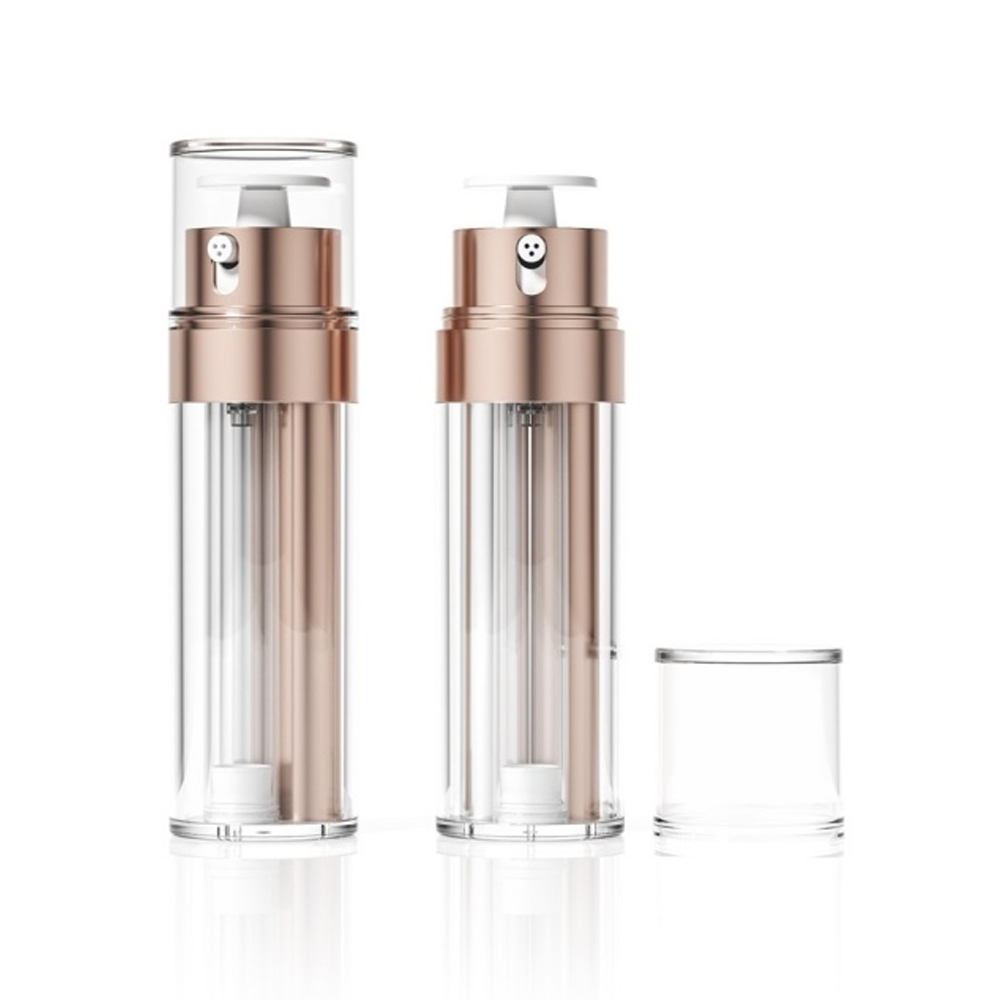
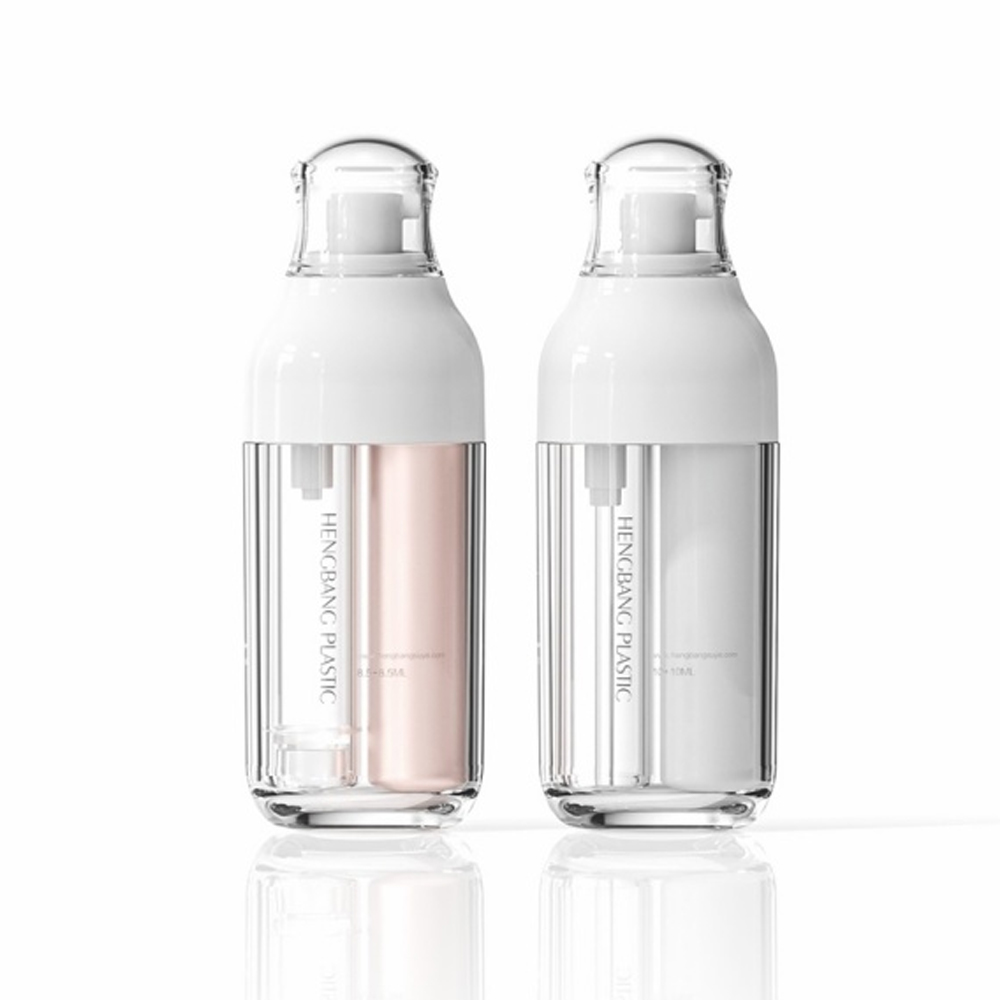
A refillable airless bottle is split into permanent exterior architecture and disposable, low-mass interior components. This design ensures that the high-precision mechanical pump and heavy-walled exterior shell remain in use for years, while only the lightweight product reservoir is swapped out by the consumer.
The primary criticism of traditional airless bottles has historically been their complex, multi-material construction. Because they often merged metal springs, glass balls, and various plastic resins into a single pump mechanism, recycling facilities could not process them effectively. Modern refillable systems overcome this by shifting to **mono-material pump designs** and separating the heavy outer shell from the recyclable inner core.
When a consumer purchases a refill cartridge instead of a completely new airless bottle assembly, the plastic reduction is immediate and measurable. The inner refill pod requires significantly less plastic mass than a standalone bottle since it does not need to withstand external handling stresses. Over a prolonged lifecycle, the environmental footprint drops dramatically across key manufacturing metrics:
| Packaging Component Metric | Standard Airless Bottle (4 Single Purchases) | Refillable Airless System (1 Shell + 3 Refills) | Net Savings Percentage |
|---|---|---|---|
| Total Plastic Weight (Gram Avg) | 240g | 84g | 65% Reduction |
| Carbon Footprint (CO2e) | 1.26 kg | 0.48 kg | 61.9% Reduction |
| Recyclability Rate at Curbside | Less than 5% | 100% (Inner PP Pods) | Significant Increase |
| Supply Chain Transport Volume | 100% Pallet Volume | 42% Pallet Volume (Refills Only) | 58% Freight Optimization |
The selection of materials for the inner cartridge is critical to ensuring chemical stability. Polypropylene (PP) is widely considered the gold standard resin for airless inner components due to its exceptional chemical resistance profile. PP creates a highly stable, inert barrier that does not leach plasticizers or react with low-pH acids or oil-in-water emulsions.
When designing cosmetic lines for airless deployment, raw material compatibility tests typically focus on three distinct vulnerabilities:
Implementing a refill system requires intuitive mechanical design to ensure that end-users can successfully swap cartridges without damaging the pump assembly or exposing the pristine formula. The replacement loop follows a precise structural sequence:
First, the consumer twists the lower base of the bottle counter-clockwise, breaking the internal lock. The depleted inner PP sleeve slides smoothly downward out of the outer protective shell. The pump actuator is then unscrewed or unclipped from the top of the old inner sleeve. Because the inner cartridge contains a seal over its neck, the user removes the temporary foil transit cap from the fresh refill cartridge and immediately fastens the clean pump mechanism directly onto the new pod. Finally, the loaded inner assembly is inserted back into the outer structural jacket and twisted clockwise until an audible mechanical click confirms the system is sealed and ready for priming.
This physical process ensures the permanent components remain pristine, while the used pod can be washed out cleanly and placed directly into domestic curbside recycling streams alongside standard milk jugs and beverage containers.


Copyright © Yuyao Hengbang Plastic Co., Ltd.
All Rights Reserved.
 Wholesale Plastic Cosmetic Packaging Manufacturers