

 English
 中文简体
中文简体
News

Industry News
What Is a Plastic Airless Bottle and How Does It Work
 2026.04.22
 Industry News
Content
- 1 The Core Mechanism: How a Plastic Airless Bottle Actually Works
- 2 Key Components of a Plastic Airless Bottle
- 3 Why "Airless" Matters: The Real Benefits for Products and Consumers
- 4 Common Plastic Materials Used and Why They're Chosen
- 5 Typical Size Range and Industry Applications
- 6 Plastic Airless Bottle vs. Standard Pump Bottle: A Direct Comparison
- 7 Limitations to Be Aware Of
- 8 Who Should Use Plastic Airless Bottles?
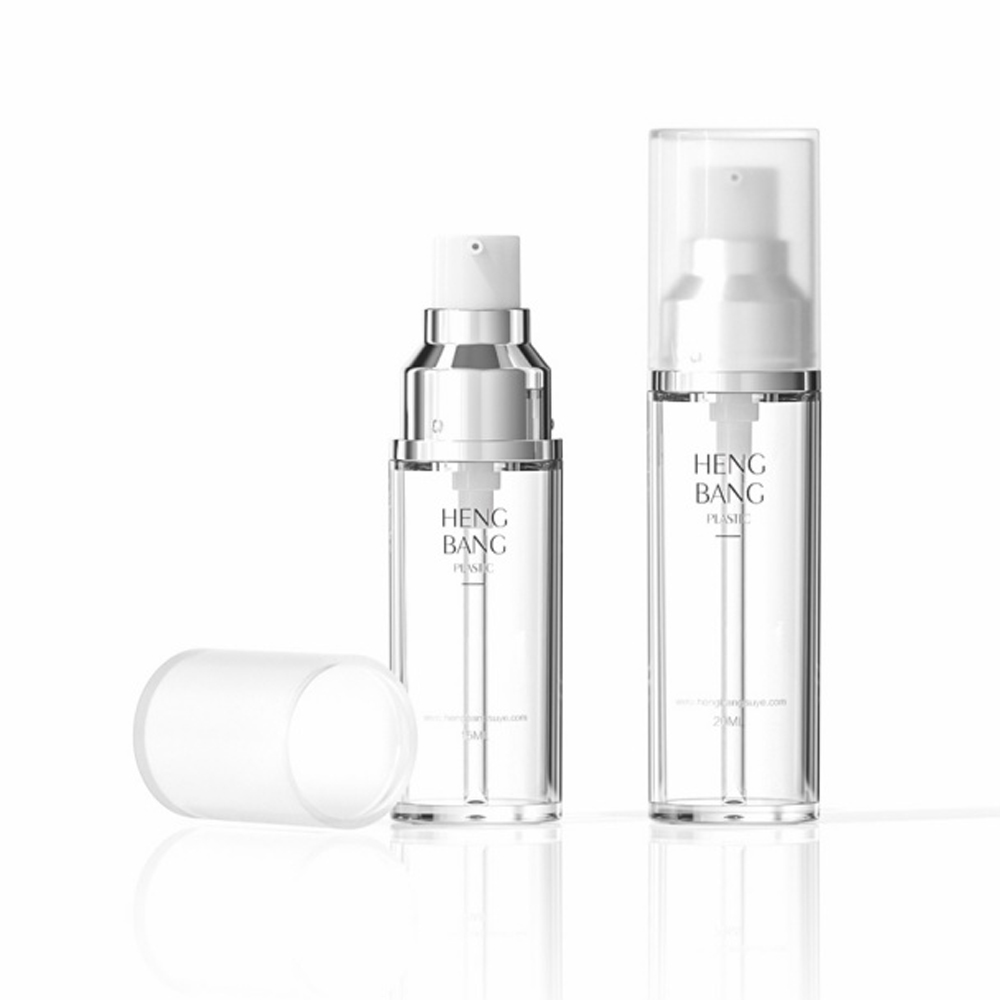
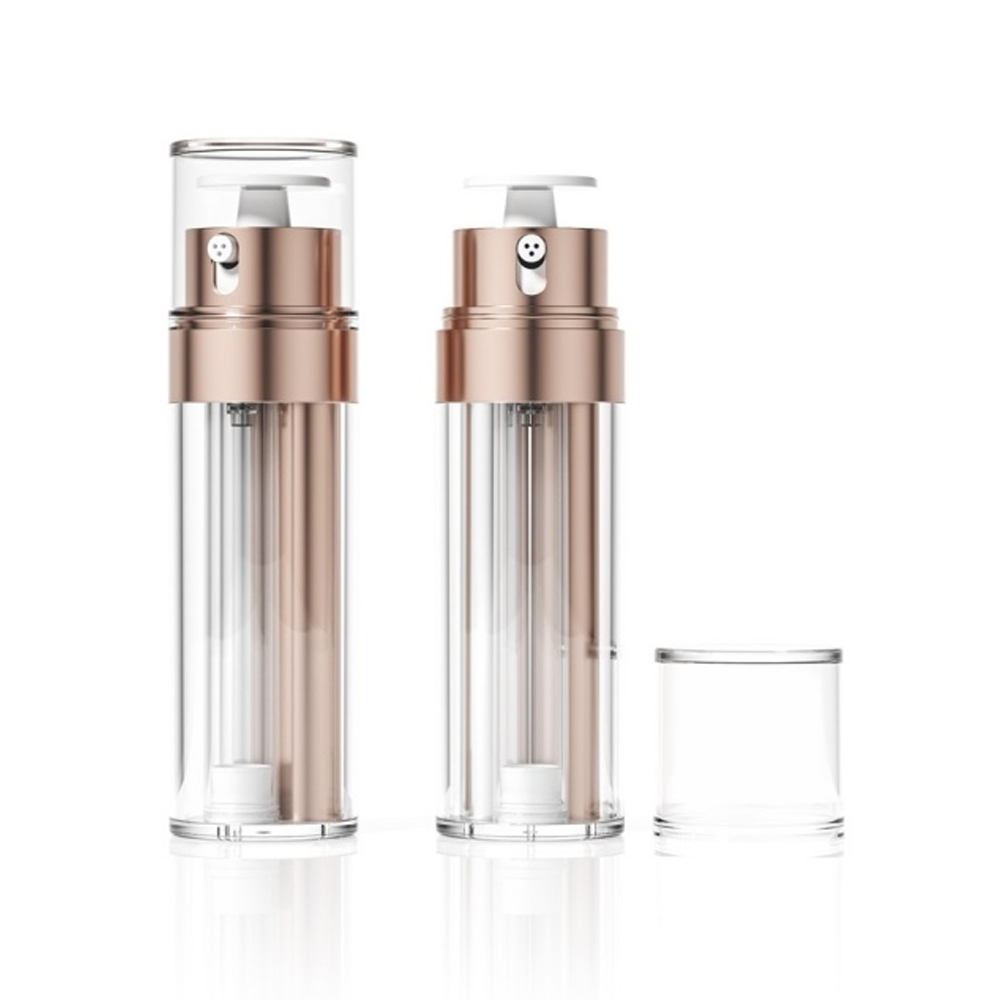
A plastic airless bottle is a dispensing container that uses a vacuum-based pump mechanism — rather than air pressure — to push product upward and out of the bottle. The core advantage: no air enters the container, which dramatically extends product shelf life, reduces oxidation, and ensures nearly 100% of the product can be dispensed. It is now one of the most widely adopted packaging formats in skincare, pharmaceuticals, and high-end cosmetics.
The Core Mechanism: How a Plastic Airless Bottle Actually Works
Unlike a standard pump bottle that draws air into the container each time you dispense product, an airless bottle operates through a piston-and-vacuum system. Here's the step-by-step breakdown:
- A disc-shaped piston sits at the bottom of the bottle interior.
- When you press the pump, a small vacuum is created inside the bottle.
- This negative pressure causes the piston to move upward, pushing the product toward the pump head.
- The product is dispensed — but no replacement air enters the container.
- The cycle repeats with every press, maintaining a sealed, oxygen-free environment throughout the product's lifespan.
This design means the formula is never exposed to air, bacteria, or external contaminants during normal use — a significant leap over traditional open-jar or standard pump packaging.
Key Components of a Plastic Airless Bottle
Understanding the structure helps explain why airless bottles outperform conventional packaging in so many applications.
| Component | Function | Material |
|---|---|---|
| Outer Bottle Shell | Structural housing and branding surface | PP, PET, PETG, or AS plastic |
| Inner Piston / Follower Plate | Moves upward to push product out | PE or PP |
| Vacuum Pump Head | Creates negative pressure to lift product | PP with stainless steel spring |
| Actuator / Nozzle | Controls and directs product flow | PP or ABS |
| Overcap / Lid | Protects pump and adds aesthetic value | PP, ABS, or Acrylic |
Why "Airless" Matters: The Real Benefits for Products and Consumers
The airless design isn't just a premium aesthetic feature — it delivers concrete, measurable performance advantages:
1. Extended Product Shelf Life
Oxidation is one of the primary reasons skincare and pharmaceutical products degrade. By eliminating air contact, airless bottles can extend active ingredient stability by 15–30% compared to standard packaging — particularly important for formulas containing Vitamin C, retinol, peptides, or plant-based extracts.
2. Near-Zero Product Waste
Traditional pump bottles often leave 15–25% of product unreachable at the bottom. The upward-moving piston in an airless bottle ensures up to 98% of the product is dispensed, reducing waste and offering better value to consumers.
3. No Preservatives Required (or Fewer)
Because the formula never contacts air or external bacteria, brands can formulate with reduced or no synthetic preservatives. This is increasingly critical as consumers demand cleaner, minimalist ingredient lists.
4. Hygienic Dispensing
Each press delivers a precisely metered dose (typically 0.1–0.5 ml per pump) without fingers or tools touching the formula. This is especially valuable in medical, dermatological, or wound-care applications.
Common Plastic Materials Used and Why They're Chosen
Not all plastics perform equally in airless bottle applications. The choice of material directly affects compatibility with the formula, clarity, recyclability, and cost.
- PP (Polypropylene) — Most common for internal components; excellent chemical resistance and heat tolerance up to 120°C.
- PET (Polyethylene Terephthalate) — Used for outer shells when a crystal-clear finish is desired; widely recyclable.
- PETG — A glycol-modified PET offering better impact resistance and easier forming than standard PET; popular for custom-shaped bottles.
- AS (Acrylonitrile Styrene) — High clarity and rigidity; often used for upscale cosmetics that mimic a glass look.
- PCR Plastic (Post-Consumer Recycled) — An emerging option driven by sustainability goals; some brands now use 30–50% PCR content in their airless bottle shells.
Typical Size Range and Industry Applications
Plastic airless bottles are manufactured across a wide capacity range to serve diverse industries:
| Volume Range | Typical Application | Industry |
|---|---|---|
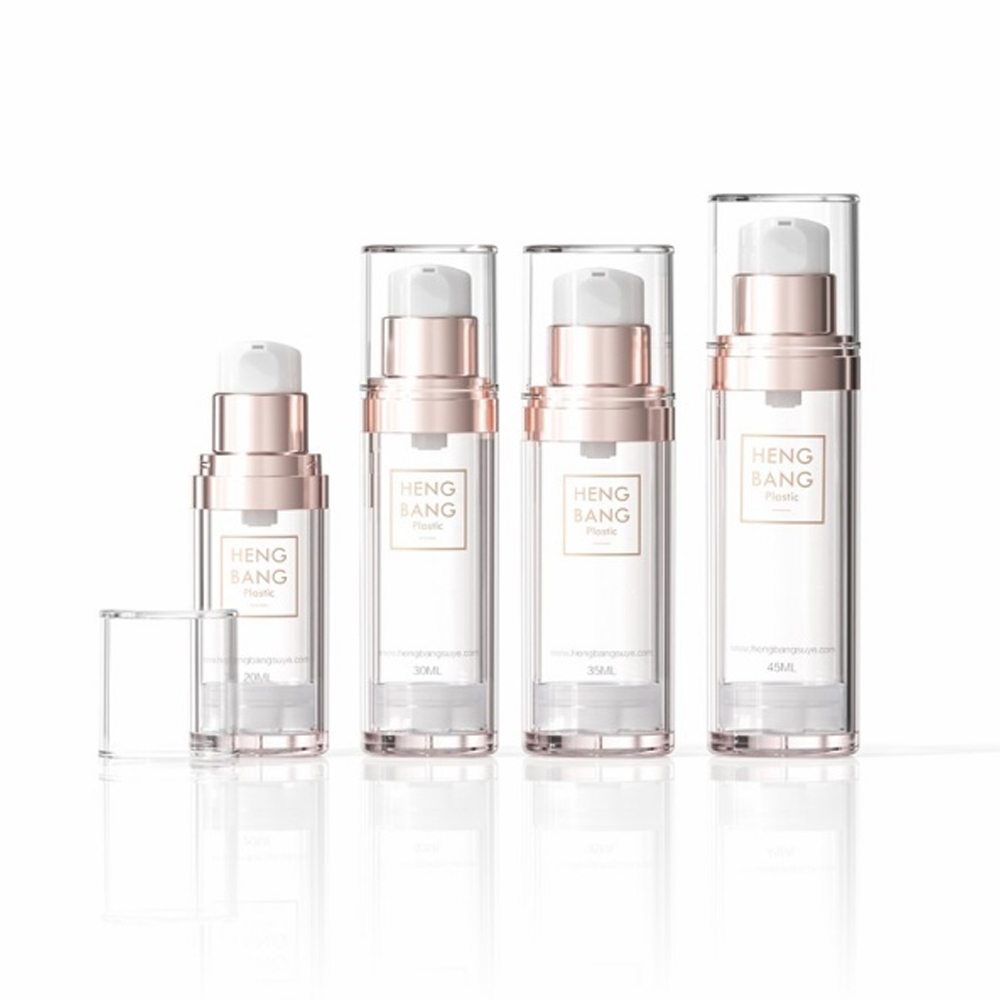
| 5 ml – 15 ml | Eye cream, travel-size serums, samples | Cosmetics / Skincare |
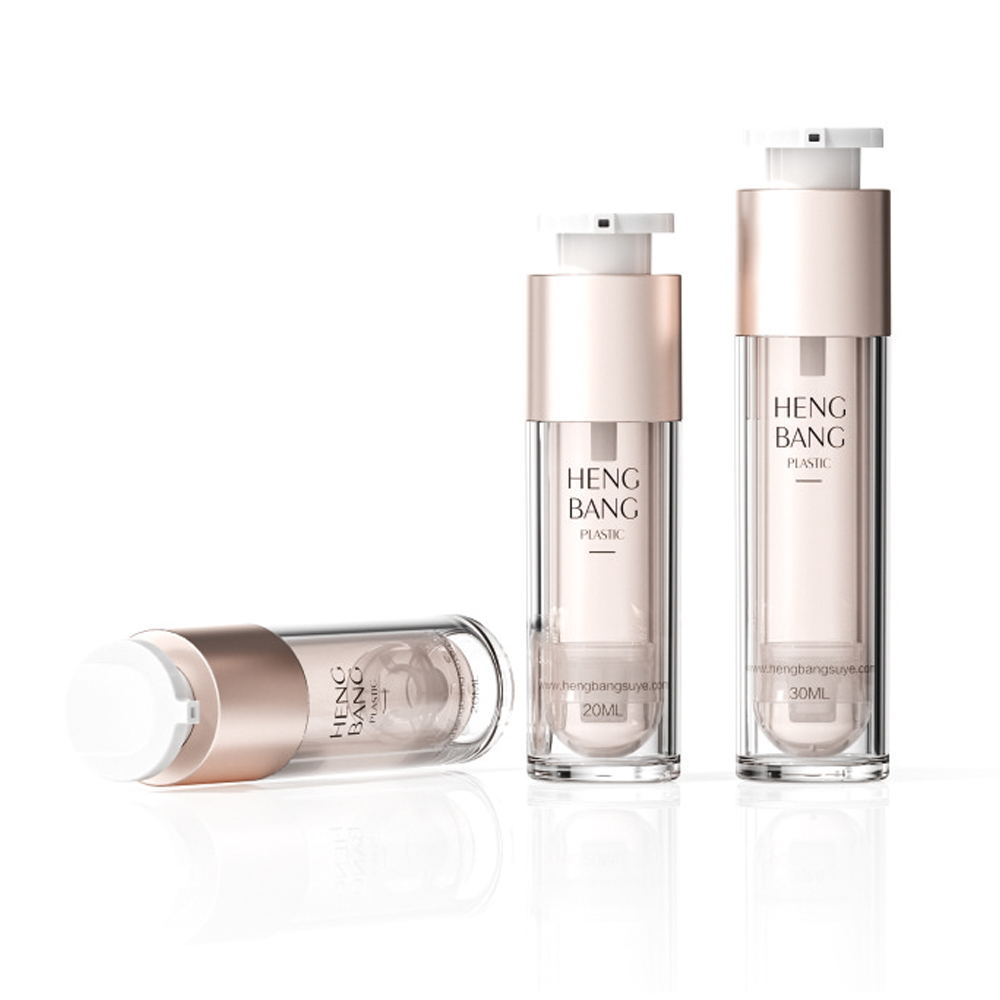
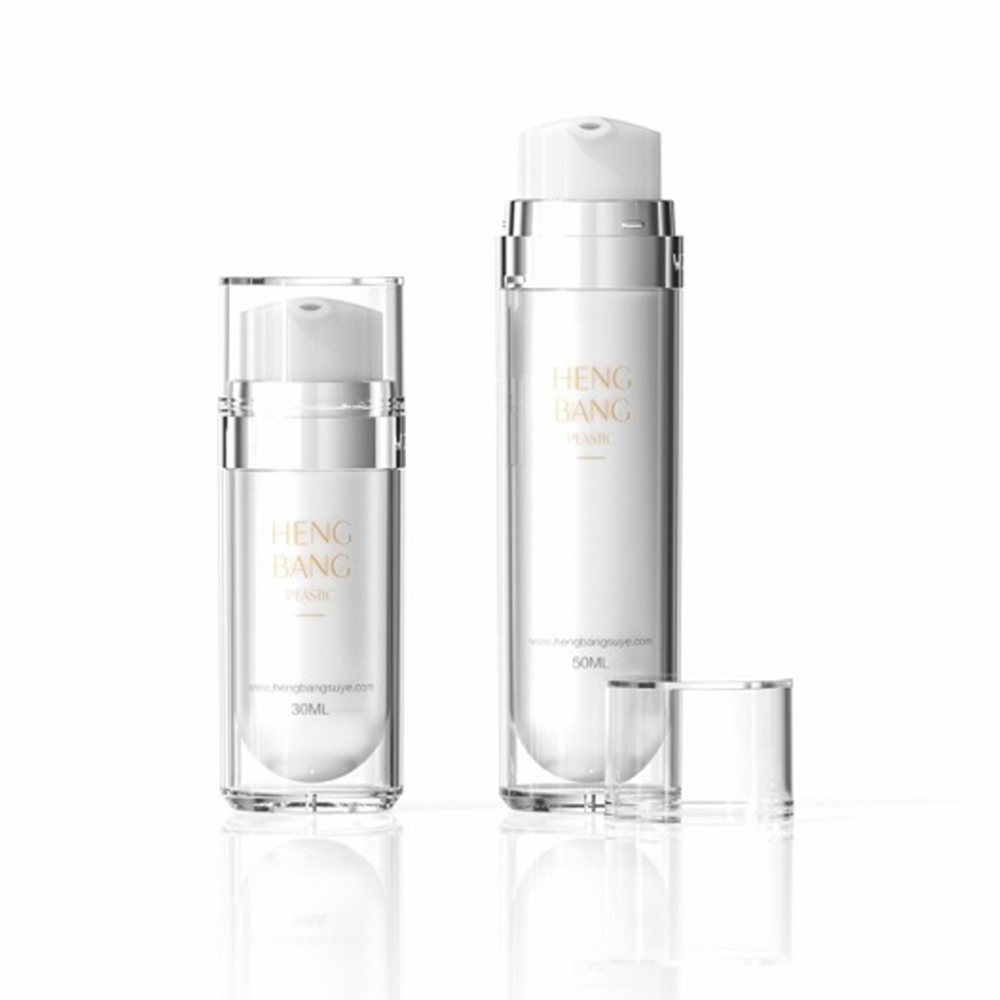
| 20 ml – 50 ml | Facial serum, foundation, BB cream | Cosmetics / Skincare |
| 50 ml – 100 ml | Moisturizer, sunscreen, prescription creams | Skincare / Pharma |
| 100 ml – 300 ml | Body lotion, hair treatment, topical drugs | Personal Care / Medical |
Plastic Airless Bottle vs. Standard Pump Bottle: A Direct Comparison
Many buyers wonder whether the premium cost of an airless bottle is justified. Here's a side-by-side comparison:
| Feature | Plastic Airless Bottle | Standard Pump Bottle |
|---|---|---|
| Air Contact | None | Every pump cycle |
| Product Recovery Rate | Up to 98% | 75–85% |
| Formula Preservation | Excellent | Moderate |
| Preservative Needs | Lower / Optional | Required |
| Unit Cost | Higher (~$0.80–$3.00+) | Lower (~$0.20–$0.80) |
| Recyclability | Moderate (multi-component) | Moderate (multi-component) |
| Ideal For | Actives-rich, sensitive formulas | Stable, preservative-heavy formulas |
Limitations to Be Aware Of
Plastic airless bottles are highly effective, but they're not a universal solution. Consider the following constraints before specifying them for your product:
- Not suitable for very thick or grainy textures — products with particle sizes above ~500 microns (e.g., physical scrubs) can clog or damage the piston seal.
- Higher upfront cost — tooling and unit costs are typically 2–4x higher than comparable standard pump bottles, which can be prohibitive for mass-market or entry-level SKUs.
- Refilling is generally not possible — the sealed piston system is designed for single-use filling, making refillable formats a challenge without specialized engineering.
- Recycling complexity — multi-material construction (PP piston, PET shell, stainless steel spring) can complicate end-of-life recycling unless the bottle is designed for disassembly.
Who Should Use Plastic Airless Bottles?
Plastic airless bottles deliver the greatest value when the formula or brand proposition demands it. They are best suited for:
- Premium skincare brands formulating with unstable actives like retinol, Vitamin C, niacinamide, or growth factors.
- Pharmaceutical and dermatology companies requiring sterile, contamination-free dispensing for topical treatments.
- Clean beauty brands that want to reduce or eliminate preservatives from their formulas.
- Brands targeting sustainability — the near-zero waste dispensing reduces product loss and can extend the intervals between repurchase.
For standard formulas with robust preservation systems and price-sensitive positioning, a conventional pump bottle remains a practical and cost-effective alternative.
QUICK
Product Categories
Contact
-
[email protected]

-
+ 86 - 18858081323

-
+ 86 - 574 - 62422802

-
+ 86 - 18858081323

-
No.7 Zhenbei Road, Mazhu Town, Yuyao City, Zhejiang Province, China.

Let’S Co-Create A High-Quality
Future For Cosmetics Packaging.
Copyright © Yuyao Hengbang Plastic Co., Ltd.
All Rights Reserved.
 Wholesale Plastic Cosmetic Packaging Manufacturers