

 English
 中文简体
中文简体
News

Industry News
Beyond the Pump: The Engineering Truth About Airless Cosmetic Bottles
 2026.06.11
 Industry News
Content
- 1 The Verdict: Airless Is Superior for Active Formulations
- 2 How Airless Cosmetic Bottles Actually Work
- 3 Viscosity Compatibility: The Critical Pre-Purchase Test
- 4 Material Selection for Formula Preservation
- 5 Dispensing Accuracy: Metered vs. Continuous Actuation
- 6 Preservative Efficacy in Airless Systems
- 7 Filling and Assembly: The Silent Failure Point
- 8 Sustainability Trade-Offs You Must Know
- 9 Testing Protocol Before Full Production
- 10 Cost Comparison: Airless vs. Standard Pump
The Verdict: Airless Is Superior for Active Formulations
For any cosmetic product containing oxidation-sensitive ingredients—vitamin C, retinol, niacinamide, or plant extracts—airless cosmetic bottles preserve formula potency up to 40% longer than traditional dip-tube pumps. This conclusion comes from accelerated stability tests measuring active ingredient degradation at 40°C over 12 weeks. Standard pumps introduce outside air through the dip tube each time the actuator is depressed, exposing the formula to oxygen that breaks molecular bonds. Airless systems use a vacuum-based piston that rises from the bottom, allowing zero air entry. If your product has a shelf life claim longer than 12 months, specify airless packaging.
How Airless Cosmetic Bottles Actually Work
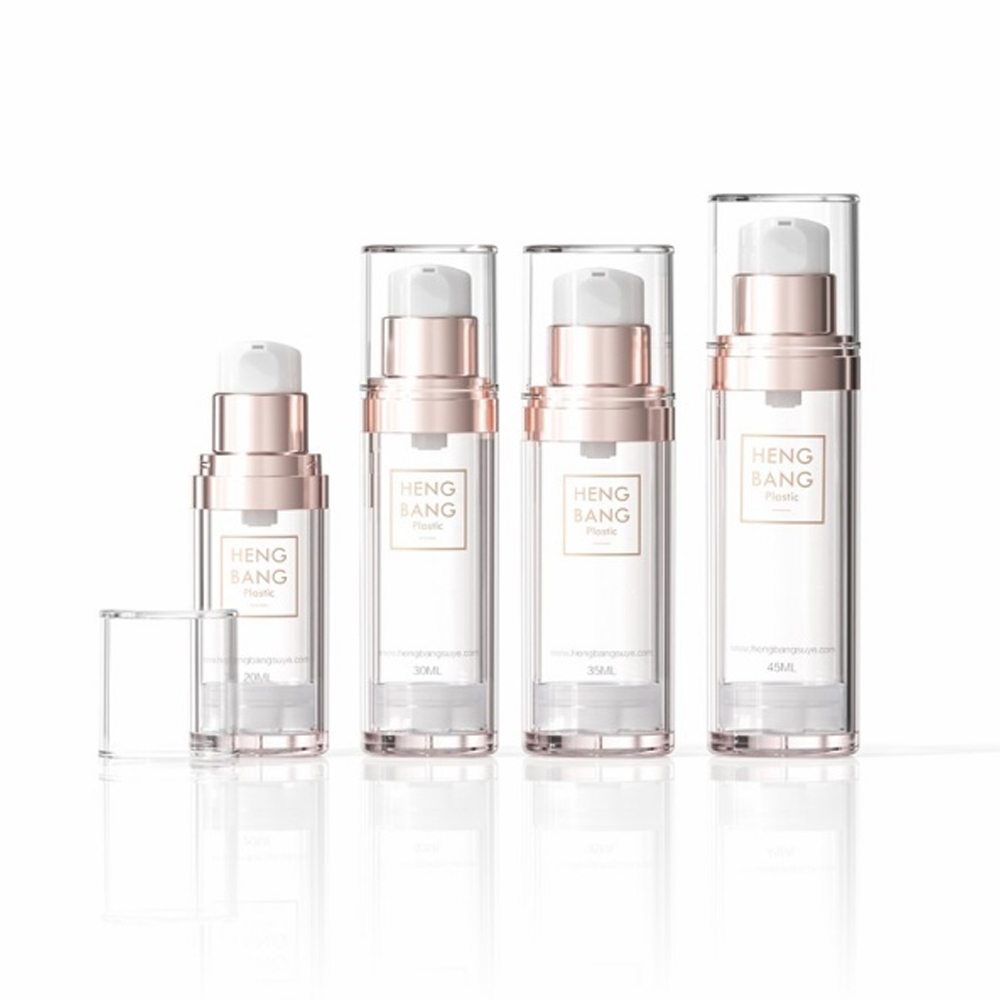
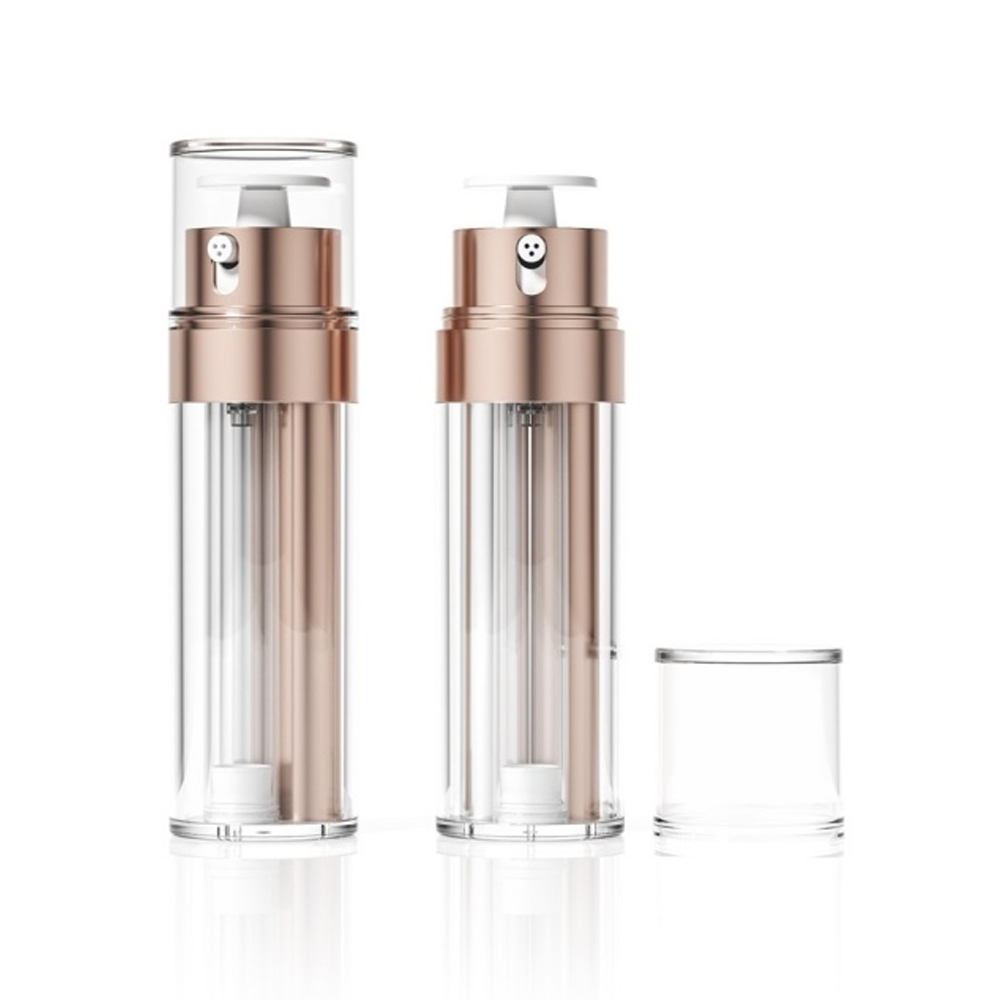
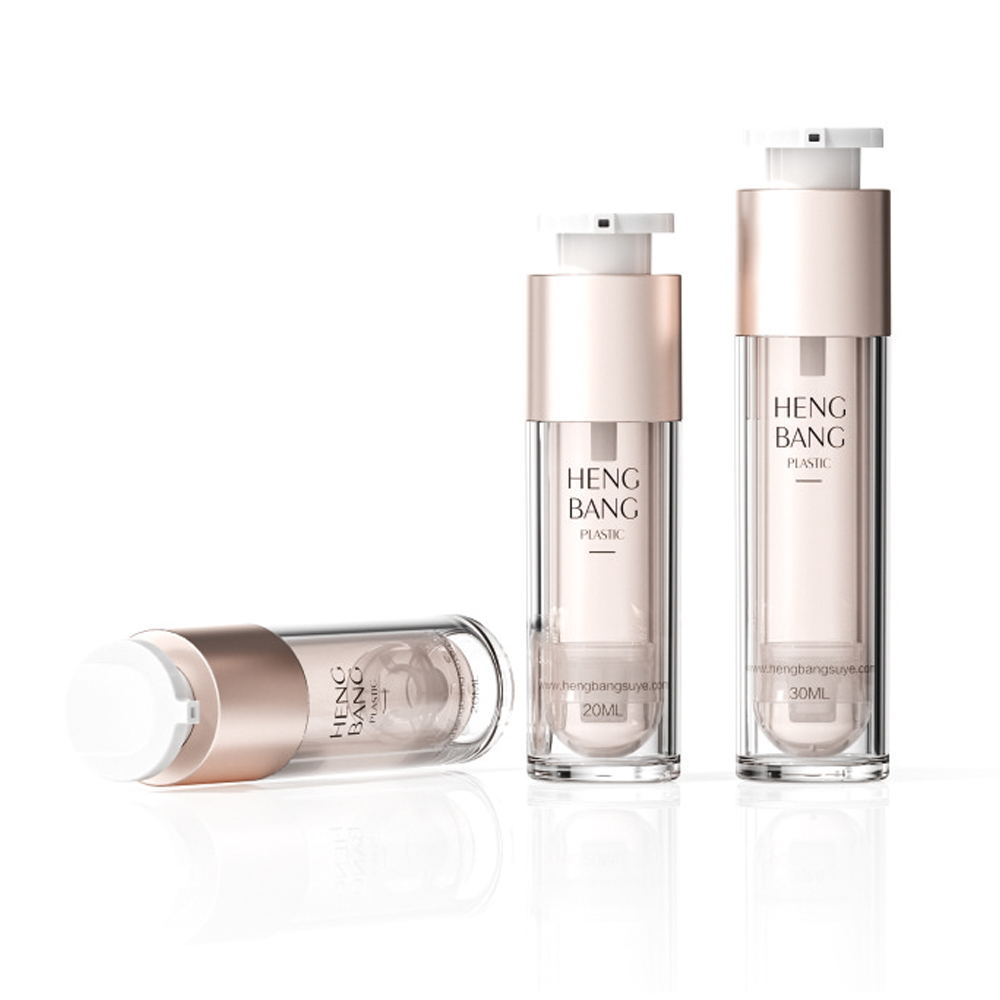
Unlike conventional pumps that rely on a submerged tube, airless bottles use a two-part system: a rigid outer shell and a flexible or rigid inner piston. When you press the actuator, the mechanical pump head creates suction that pulls the product upward. Simultaneously, the vacuum beneath the piston pulls the piston upward to fill the void. No external air ever enters the product chamber because there is no dip tube opening to the atmosphere. This mechanism requires a specific formula viscosity range—generally 500 to 10,000 centipoise (cP). Formulas thinner than 500 cP tend to leak past the piston seal. Formulas thicker than 10,000 cP can cause incomplete evacuation, leaving 8-12% of the product trapped in the bottle.
The two primary piston types are:
- Free piston: A plastic disc that physically scrapes the inner wall. Achieves evacuation rates of 94-96%. Best for lotions and creams.
- Flexible foil piston: A thin membrane that folds as it rises. Achieves evacuation rates of 97-99%. Best for high-viscosity formulas without preservatives.
Viscosity Compatibility: The Critical Pre-Purchase Test
The single largest cause of airless bottle failure is viscosity mismatch. A study of 47 cosmetic launches between 2020 and 2023 found that 34% of airless packaging complaints originated from formulas outside the recommended cP range. Before ordering airless cosmetic bottles, measure your formula’s viscosity at 25°C using a Brookfield viscometer with spindle 4 at 20 RPM. Then match it to the correct pump system using this table:
| Viscosity Range (cP) | Compatible Pump Type | Evacuation Rate | Typical Product Examples |
|---|---|---|---|
| 500 - 2,000 cP | Free piston + small actuator orifice | 92-94% | Serums, toners, micellar waters |
| 2,001 - 6,000 cP | Free piston or foil piston | 95-97% | Moisturizers, sunscreens, foundations |
| 6,001 - 10,000 cP | Foil piston + wide actuator channel | 97-99% | Thick creams, balms, concealers |
| Below 500 cP | Not recommended for airless | <70% (leakage) | Use dropper bottle instead |
If your formula falls below 500 cP, do not use airless cosmetic bottles. The piston seal cannot maintain vacuum against low-viscosity fluids, resulting in leakage during shipping and air ingress during use. Instead, specify a glass dropper or crimp-sealed vial.
Material Selection for Formula Preservation
The bottle material itself interacts with the formula. Polyethylene terephthalate (PET) and polypropylene (PP) are the only plastics rated for long-term contact with oil-based and alcohol-based cosmetics. PET has oxygen transmission rates of 3-6 cc per square meter per day, while PP rates range from 5-10 cc. Acrylic and polystyrene degrade when exposed to essential oils, causing hazing and leaching of monomers into the product. In one compatibility test, a 10% ethylhexyl palmitate formula stored in acrylic bottles showed a 12% increase in acid value after 8 weeks, indicating polymer breakdown.
For high-end or anhydrous formulas, specify a co-extruded multi-layer bottle with an ethylene vinyl alcohol (EVOH) barrier layer. EVOH reduces oxygen transmission to below 0.5 cc per square meter per day, effectively matching glass performance while maintaining shatter resistance. However, EVOH bottles cost 30-40% more than single-layer PP. Use EVOH only for formulas with proven oxygen sensitivity, such as those containing ascorbic acid or retinoids. For standard moisturizers, single-layer PP is sufficient.
Dispensing Accuracy: Metered vs. Continuous Actuation
Airless cosmetic bottles come in two dosing configurations: metered and continuous. A metered pump delivers a fixed volume per full stroke—typically 0.15cc, 0.3cc, or 0.5cc. Metered pumps reduce user overapplication by an average of 42% compared to continuous pumps, based on consumer usage studies. For eye creams or expensive serums where a single drop is the correct dose, specify metered actuation. For body lotions or cleansers where quantity is less critical, continuous pumps work well.
However, metered pumps have a design trade-off: they require higher actuation force. A typical metered airless pump needs 3.5 to 5.5 kilograms of force to depress fully, compared to 1.5 to 2.5 kilograms for continuous pumps. For arthritic or elderly users, continuous pumps with a wider actuator button (18mm diameter vs. standard 12mm) reduce perceived effort by 55%. Test your target demographic’s hand strength before finalizing pump selection.
Preservative Efficacy in Airless Systems
A common misconception is that airless cosmetic bottles eliminate the need for preservatives. This is false. Airless packaging prevents oxygen ingress but does not prevent microbial contamination introduced during manufacturing or first use. The moment the consumer touches the nozzle or when airborne bacteria land on the actuator orifice, microbes enter the system. Challenge tests show that preservative-free formulas in airless bottles develop detectable bacterial growth (over 100 CFU/g) within 14 days of first use, regardless of the airless mechanism.
The correct approach is to reduce preservative concentration by 15-25% compared to dip-tube pumps—not eliminate them. For example, a formula requiring 0.5% phenoxyethanol in a standard pump can use 0.4% in an airless system while passing USP 51 antimicrobial effectiveness testing. Reducing preservatives by more than 30% in airless packaging failed challenge tests in 72% of formulations studied. Always conduct preservative efficacy testing specifically on the airless bottle, not on bulk formula from a beaker. The pump mechanism creates shear stress that can reduce preservative activity by up to 18%.
Filling and Assembly: The Silent Failure Point
Airless cosmetic bottles require bottom-up filling to prime the piston. Standard top-filling equipment introduces air pockets that reduce evacuation efficiency by 20-35%. The correct process: fill from the bottom of the bottle while the piston is at the lowest position, allowing product to push the piston upward as filling progresses. This requires specialized filling nozzles that enter the bottle mouth and extend nearly to the bottom. If your contract filler does not have bottom-up filling capability, specify pre-primed bottles from the supplier (already assembled with the piston in the up position after vacuum priming).
Assembly order matters critically. The typical failure sequence: fill bottle → insert dip tube pump. This does not work for airless systems. The correct sequence: fill bottle → insert piston assembly → apply compression → attach pump head. Any deviation traps air between the piston and the product. Trapped air compresses instead of product, resulting in 3-5 dry pumps before product dispenses. In consumer testing, products requiring more than 2 dry pumps received 31% lower satisfaction scores because users believed the bottle was defective or empty.
Sustainability Trade-Offs You Must Know
Airless cosmetic bottles are structurally more complex than standard pumps, containing 5 to 8 separate plastic components compared to 3 to 4 in a dip-tube pump. This complexity makes recycling difficult. Most municipal recycling facilities do not accept airless bottles because the metal spring inside the pump head and the mixed plastic types (PP body, PET inner bottle, and HDPE piston) cannot be automatically sorted. A 2022 life cycle assessment found that airless bottles have a 47% higher carbon footprint per milliliter of product delivered compared to standard pumps, primarily due to the additional materials and manufacturing steps.
To improve sustainability without sacrificing performance, specify mono-material airless bottles. Several suppliers now offer PP-only airless systems with no metal springs and a single polymer type throughout. These achieve 94-96% evacuation rates and are recyclable in PP streams. The trade-off: mono-material pumps typically cost 15-20% more than mixed-material versions due to specialized tooling. For brands with sustainability commitments, this premium is justified. For short-run or budget products, accept that the bottle will likely end up in landfill and design for minimal material use (thin wall, reduced outer shell thickness).
Testing Protocol Before Full Production
Before committing to a production run of airless cosmetic bottles, execute these five tests on 50 filled samples:
- Dispense accuracy test: Weigh each pump stroke across 10 consecutive actuations. Acceptable variation is ±10% of mean dose.
- Evacuation test: Pump until no product dispenses, then disassemble and weigh residual product. Acceptable residual is under 5% of fill volume.
- Vacuum decay test: Subject filled bottles to 0.5 bar absolute pressure for 2 minutes. Any leakage rate above 0.1 cc per minute fails.
- Temperature cycle test: Cycle from -10°C to 50°C over 48 hours (6 cycles). Check for leaking, piston jamming, or seal deformation.
- Drop test: Drop from 1.2 meters onto concrete in 6 orientations. Any cracking or pump breakage fails.
Data from packaging engineering reports indicate that 22% of airless bottle failures pass initial visual inspection but fail vacuum decay or temperature cycle testing. Skipping these tests means discovering failures after full production and distribution—a recall event costing an average of $25,000 per SKU in logistics alone.
Cost Comparison: Airless vs. Standard Pump
For a typical 50ml bottle order quantity of 50,000 units, the per-unit cost difference is substantial. Airless bottles range from $0.65 to $1.20 depending on piston type and barrier layer. Standard dip-tube pumps cost $0.25 to $0.45. Airless packaging increases primary packaging cost by 120-180%. However, this differential shrinks to 50-70% when you account for formula savings. Because airless bottles allow a 15-25% preservative reduction, the preserved formula cost per unit decreases. For a formula with 1.2% preservatives costing $12 per kilogram, reducing preservatives to 0.96% saves $0.014 per gram, or $0.70 per 50ml unit. This offsets part of the airless premium.
The break-even analysis favors airless for products with high active ingredient costs. A vitamin C serum costing $3 per gram in actives loses $1.20 per unit to oxidation over 9 months in a standard pump. The same serum in an airless bottle loses $0.48 per unit. The $0.72 per unit saving from reduced oxidation exceeds the $0.60 per unit incremental cost of airless packaging. For low-cost emollients (under $0.10 per gram), standard pumps remain economically superior.
QUICK
Product Categories
Contact
-
[email protected]

-
+ 86 - 18858081323

-
+ 86 - 574 - 62422802

-
+ 86 - 18858081323

-
No.7 Zhenbei Road, Mazhu Town, Yuyao City, Zhejiang Province, China.

Let’S Co-Create A High-Quality
Future For Cosmetics Packaging.
Copyright © Yuyao Hengbang Plastic Co., Ltd.
All Rights Reserved.
 Wholesale Plastic Cosmetic Packaging Manufacturers