

 English
 中文简体
中文简体
News

Industry News
Why Plastic Beats Glass for Modern Packaging
 2026.05.21
 Industry News
Content
- 1 The Case for Choosing a Plastic Airless Bottle
- 2 How the Airless Mechanism Actually Works
- 3 Plastic Material Options and Their Performance Trade-Offs
- 4 Which Formulations Genuinely Benefit from Airless Packaging
- 5 Volume Ranges and Dosage Precision
- 6 Filling and Compatibility Testing: What Brands Often Overlook
- 7 Decoration, Branding, and Finish Options
- 8 Sustainability Considerations in Plastic Airless Bottle Design
- 9 Common Quality Issues and How to Evaluate a Supplier
The Case for Choosing a Plastic Airless Bottle
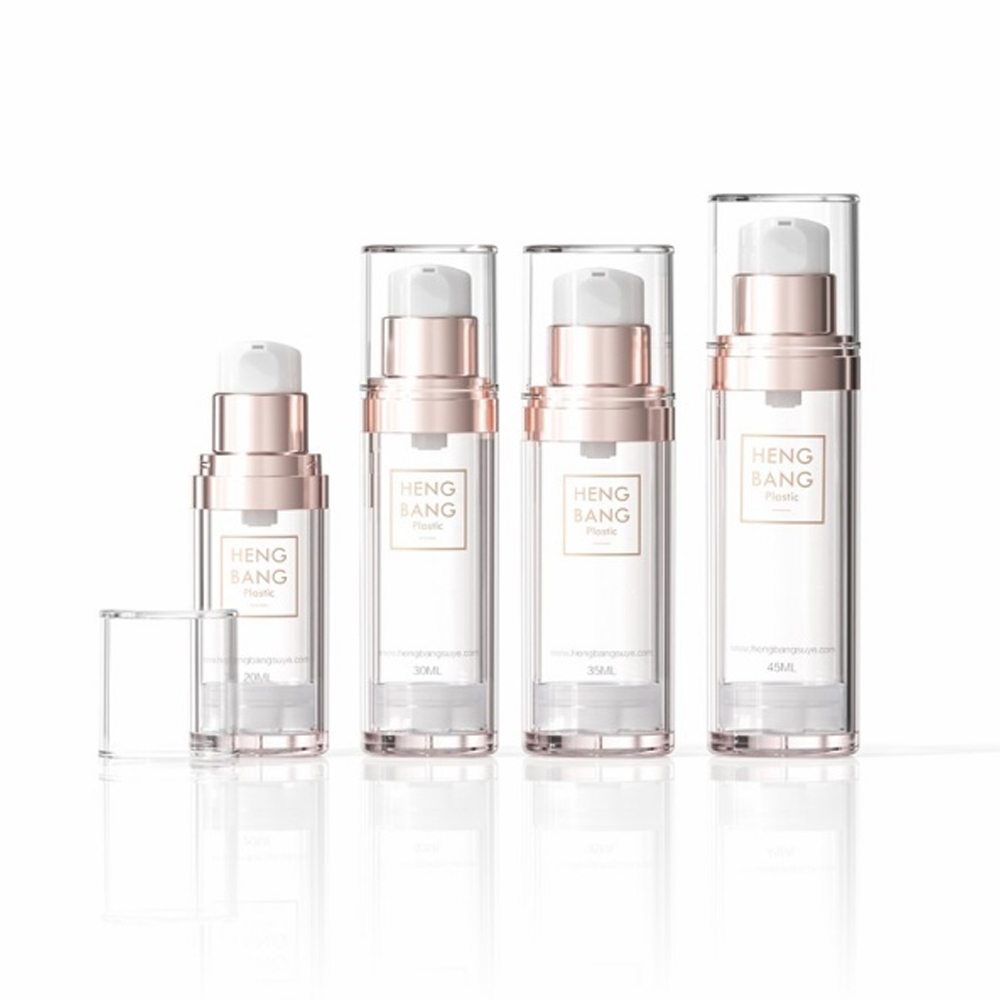
A plastic airless bottle is the most practical choice for packaging formulations that are sensitive to air, light, or contamination. Unlike conventional pump bottles that draw air back into the container after each use, an airless design uses a vacuum-driven piston mechanism that pushes product upward without any air entering the reservoir. The result is a hermetically stable environment that can extend active ingredient shelf life by 15–25% compared to standard dispensing formats — a figure well-documented in cosmetic preservation studies.
The choice of plastic over glass for airless packaging is increasingly deliberate. Plastic airless bottles are lighter, shatter-resistant, easier to manufacture at scale, and compatible with a wider range of piston and pump mechanisms. For formulators, brand managers, and packaging engineers alike, understanding how these bottles work — and which plastic material fits which application — makes the difference between a product that performs on shelf and one that degrades before the customer finishes it.
How the Airless Mechanism Actually Works
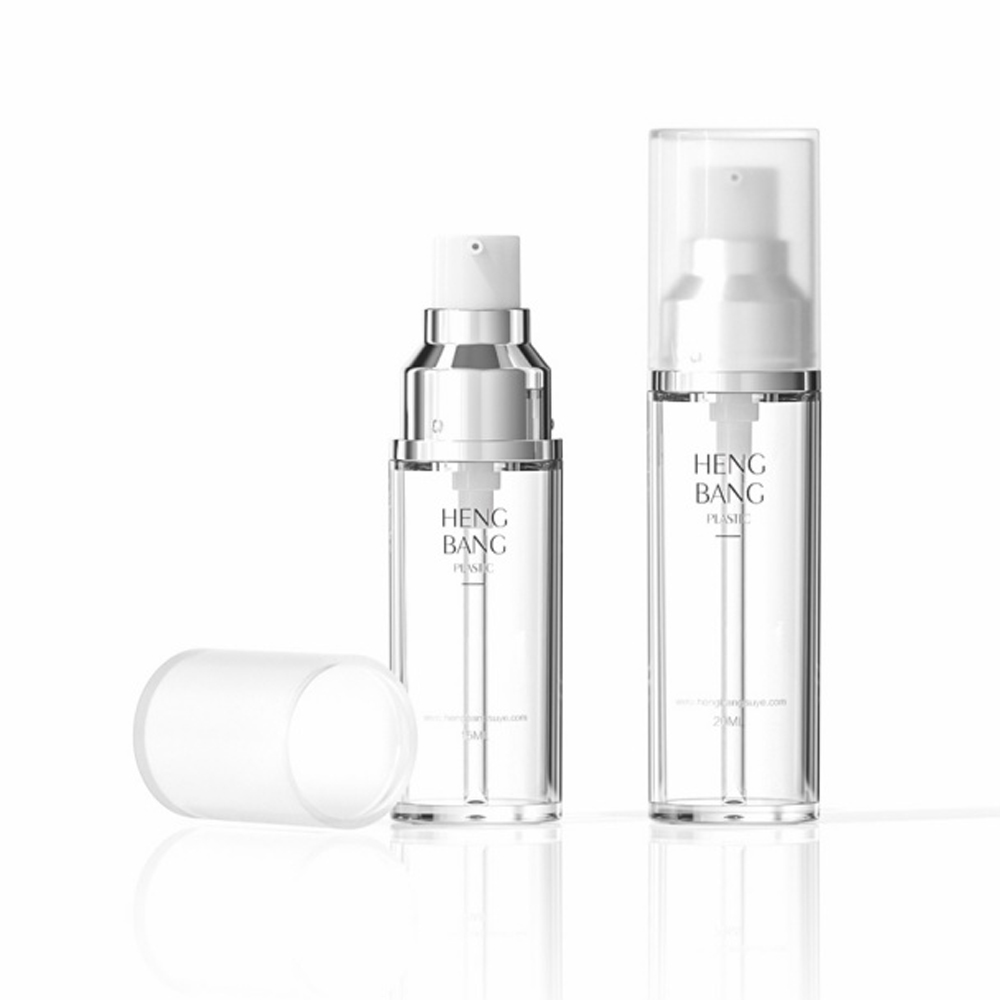
The core of every plastic airless bottle is a movable disc or piston seated at the bottom of the container. When the pump head is pressed, negative pressure created inside the chamber pulls the piston upward, advancing the product toward the dispensing nozzle. Because air never re-enters the bottle through the pump, oxidation and microbial contamination from the dispense cycle are effectively eliminated.
There are two primary structural configurations used in the industry:
- Single-wall airless bottles: The piston travels inside the outer shell of the bottle itself. These are compact, cost-effective, and widely used for serums and eye creams in the 15–50 ml range.
- Double-wall airless bottles: An inner liner collapses as product is dispensed, surrounded by a rigid decorative outer shell. This format allows more freedom in bottle shape and is preferred for premium positioning where aesthetics matter as much as function.
Both formats share one critical advantage: product evacuation rates above 90%, compared to 70–75% for conventional pump bottles. This directly reduces waste — a meaningful consideration when the formulation contains expensive active ingredients like retinol, hyaluronic acid, or peptides.
Plastic Material Options and Their Performance Trade-Offs
Not all plastic airless bottles are made from the same material, and the choice of resin has direct consequences for barrier performance, chemical compatibility, and recyclability. The four most commonly used plastics in airless bottle production are:
PP (Polypropylene)
Polypropylene is the workhorse of airless packaging. It offers excellent chemical resistance, is compatible with most cosmetic formulations including those with alcohols and surfactants, and tolerates temperatures up to approximately 130°C — making it suitable for hot-fill processes. PP is also widely accepted in municipal recycling streams, which supports brands with sustainability commitments. Its main limitation is modest oxygen barrier performance, which is acceptable for most topical products but insufficient for food or pharmaceutical applications requiring a true oxygen barrier.
PETG (Polyethylene Terephthalate Glycol)
PETG is chosen primarily for its optical clarity and glass-like appearance. For brands that want the transparent look of glass without the weight or fragility, PETG airless bottles are the natural solution. The material has good rigidity, prints and decorates well, and provides slightly better oxygen barrier properties than PP. However, PETG is more expensive to process and has limited compatibility with formulations containing strong solvents or high concentrations of essential oils.
ABS (Acrylonitrile Butadiene Styrene)
ABS is common in the outer shells of double-wall airless bottles, where its rigidity and excellent surface finish quality make it ideal for metallization, UV coating, and other premium decoration techniques. It is rarely used for the inner product-contact components due to lower chemical resistance, but as a structural outer layer it enables the sophisticated aesthetics seen in luxury skincare lines.
PCR Plastics (Post-Consumer Recycled)
PCR-grade PP and PETG are increasingly used in plastic airless bottle production in response to brand sustainability targets. Leading packaging manufacturers now offer airless bottles with 30–50% PCR content without meaningful degradation in mechanical or barrier performance. The visual difference — a slightly less pristine surface appearance — is the primary trade-off, though decorative techniques like frosting or heavy-pigment coatings effectively mask this.
| Material | Clarity | Chemical Resistance | Recyclability | Typical Use |
|---|---|---|---|---|
| PP | Opaque / Frosted | High | Widely recyclable | Serums, lotions, SPF |
| PETG | Crystal clear | Moderate | Recyclable (check locally) | Transparent premium formats |
| ABS | Opaque | Low–Moderate | Limited | Outer shell / decoration layer |
| PCR PP / PETG | Variable | High (matches virgin) | Widely recyclable | Sustainability-focused lines |
Which Formulations Genuinely Benefit from Airless Packaging
Not every product needs an airless format. The cost premium — typically 20–40% over standard pump bottles at comparable volumes — is only justified when the formulation contains ingredients that degrade in the presence of air, light, or repeated microbial exposure. The strongest candidates include:
- Vitamin C formulations (ascorbic acid): L-ascorbic acid oxidizes rapidly when exposed to air, turning products yellow and reducing efficacy. A plastic airless bottle can extend functional stability from weeks to several months under the same storage conditions.
- Retinol and retinoid serums: Retinol degrades under both UV exposure and oxidation. The opaque PP airless format, which blocks light and air simultaneously, is widely considered the gold standard container for this ingredient class.
- Preservative-free or low-preservative formulas: Natural and clean-beauty formulations that minimize synthetic preservatives rely more heavily on packaging integrity to maintain microbial safety. Airless dispensing removes one of the primary contamination pathways — the user's finger or a dirty applicator touching the product reservoir.
- Peptide and growth factor serums: These high-value actives are sensitive to enzymatic degradation accelerated by air exposure. Packaging them in an airless format also reinforces the premium price positioning these products typically carry.
- SPF and physical sunscreens: Mineral sunscreen formulas with high zinc oxide or titanium dioxide concentrations are dense and prone to settling. The piston mechanism in a plastic airless bottle provides consistent, clog-resistant dispensing and maintains homogeneity across the product's use life.
By contrast, rinse-off products like cleansers and shampoos, thick body creams dispensed in large volumes, and alcohol-heavy toners rarely justify the cost of airless packaging — the formulation chemistry and usage patterns do not create meaningful risk from air exposure during normal use.
Volume Ranges and Dosage Precision
Plastic airless bottles are manufactured across a broad size range, but the format is most effective — and most commonly specified — in smaller volumes. The majority of commercial offerings fall between 15 ml and 100 ml, with the 30 ml and 50 ml sizes accounting for the bulk of facial serum and moisturizer SKUs globally.
Dosage precision is one of the underappreciated advantages of a well-designed airless pump. Quality airless pumps dispense between 0.15 ml and 0.5 ml per actuation, with output consistency tightly controlled by the pump orifice and spring mechanism. This consistency matters for products dosed by application rather than volume — a retinol serum where the recommended dose is "one pump" needs that pump to deliver the same amount every time, both for efficacy and to manage consumer expectations on how long the product lasts.
| Volume Range | Typical Application | Notes |
|---|---|---|
| 5–15 ml | Travel size, sample kits | TSA-compliant; high per-unit cost |
| 20–30 ml | Eye creams, targeted serums | Most common for prestige eye care |
| 30–50 ml | Face serums, foundations | Dominant SKU size globally |
| 50–100 ml | Moisturizers, SPF, BB creams | Piston load increases; pump torque critical |
| 100–200 ml | Body treatments, professional use | Less common; cost efficiency drops |
Filling and Compatibility Testing: What Brands Often Overlook
Selecting the right plastic airless bottle is only part of the equation. The filling process introduces variables that can compromise the packaging system if not accounted for in advance. Airless bottles are typically filled from the bottom — the piston is set at the base, product is injected through the bottom aperture, and then the base cap is sealed. This bottom-fill method requires specialized filling equipment and is not compatible with standard open-top filling lines.
Key questions to resolve with your packaging supplier before committing to a plastic airless bottle specification:
- Does your contract manufacturer have bottom-fill capability, or will tooling investment be required?
- Has the specific plastic resin been tested for compatibility with your formulation — especially for products containing high concentrations of ethanol, propylene glycol, or botanical extracts that may stress certain polymers?
- What is the minimum and maximum fill viscosity the chosen pump mechanism can handle? Airless pumps perform poorly with extremely thin liquids (below 1,000 cP) and can seize with very thick formulas (above 100,000 cP) unless specifically engineered for high-viscosity applications.
- Have you conducted a freeze-thaw stability test with the filled bottle? Piston seals can deform or leak if the product expands during freezing and the packaging geometry is not designed to accommodate volume changes.
Compatibility testing typically requires a minimum of 12 weeks of accelerated stability data (40°C / 75% RH conditions) before commercial launch. Skipping this step is the single most common cause of in-market product failures involving airless packaging — particularly seal degradation and piston discoloration from reactive formulation components.
Decoration, Branding, and Finish Options
The plastic airless bottle has evolved well beyond its utilitarian origins. Today, it serves as a primary brand communication vehicle in the prestige skincare space, where packaging perception directly influences purchase decisions. The most widely used decoration techniques include:
- Screen printing: Cost-effective for two- to four-color graphics directly on the bottle surface. Durable and suitable for most opaque PP and ABS formats. Minimum order quantities typically start at 3,000–5,000 units.
- Hot stamping and foiling: Creates metallic accents on opaque surfaces. Widely used on double-wall ABS outer shells to achieve a premium, jewelry-like quality.
- UV coating: Applied over printed graphics to add gloss, matte, or soft-touch textures. Soft-touch UV coatings have become a signature tactile cue for prestige skincare in the past five years.
- IML (In-Mold Labeling): A label is bonded during the molding process, creating a seamless, permanent decoration that cannot peel or shift. Preferred for moisture-heavy environments like bathrooms.
- Metallization: A vacuum-deposited metallic layer applied to the outer surface for a full chrome or brushed-metal appearance. Achieves a look indistinguishable from metal at a fraction of the weight and cost.
For brands choosing PETG for its transparency, the decoration approach shifts. Clear PETG bottles are often left undecorated or minimally decorated to showcase the formulation color — a technique particularly effective for tinted serums and color-correcting primers where the product itself is part of the visual identity.
Sustainability Considerations in Plastic Airless Bottle Design
The environmental profile of a plastic airless bottle is more complex than a simple "plastic = bad" framing suggests. The multi-component construction — outer shell, inner piston, pump mechanism, and often a separate actuator cap — creates recycling challenges even when individual components are made from recyclable resins. Dissimilar plastics bonded together cannot be recycled as a single material stream.
Several design-for-sustainability approaches are now commercially available:
- Mono-material construction: Bottles where every component — body, piston, and pump — is manufactured from the same resin (typically PP). This allows the entire unit to enter the PP recycling stream without disassembly, though mechanical complexity constrains design options.
- Refillable systems: A durable outer shell paired with a disposable inner cartridge. The outer shell — often made from premium-grade ABS or aluminum-effect plastic — is kept by the consumer, while only the lightweight inner cartridge is replaced. This model can reduce total packaging waste by 60–70% over the product's lifecycle.
- PCR content integration: As noted earlier, 30–50% post-consumer recycled content in the bottle body is now achievable without performance compromise, and several certification bodies can verify and label this claim for consumer-facing communication.
The refillable model in particular has gained significant traction in European markets, driven by extended producer responsibility (EPR) regulations that assign financial responsibility to brands for end-of-life packaging. In France, the 2023 AGEC law requirements have pushed multiple prestige brands to introduce refill-compatible plastic airless bottle systems ahead of broader regulatory deadlines across the EU.
Common Quality Issues and How to Evaluate a Supplier
The airless bottle market includes manufacturers operating at vastly different quality levels, and the consequences of choosing a low-quality supplier are not always visible until the product is in the consumer's hands. The most frequently reported quality failures in plastic airless bottle production include:
- Piston creep: The piston moves upward during storage without being actuated, causing the product to prematurely reach the pump and potentially leak. This is caused by inadequate piston seal tension or insufficient vacuum at filling.
- Pump lock failure: The travel-lock mechanism — designed to prevent accidental actuation during shipping — disengages prematurely, leading to product dispensing inside retail packaging or transit boxes.
- Inconsistent dose output: Variation above ±10% per actuation is considered unacceptable for most cosmetic applications and often indicates manufacturing tolerance issues in the pump orifice or spring rate.
- Discoloration of piston material: Certain formulation components — particularly botanical extracts rich in tannins or oxidizable polyphenols — can stain or chemically attack piston materials over time, indicating an incompatibility that should have been caught in stability testing.
When evaluating a supplier, request third-party lab reports for leak testing (typically conducted at 15 psi for 24 hours), pump actuation cycle testing (a quality pump should perform consistently for a minimum of 500 actuation cycles), and resin certification documents confirming material grade and the absence of restricted substances under regulations such as EU Cosmetics Regulation 1223/2009 or US FDA 21 CFR guidelines for indirect food contact if applicable.
QUICK
Product Categories
Contact
-
[email protected]

-
+ 86 - 18858081323

-
+ 86 - 574 - 62422802

-
+ 86 - 18858081323

-
No.7 Zhenbei Road, Mazhu Town, Yuyao City, Zhejiang Province, China.

Let’S Co-Create A High-Quality
Future For Cosmetics Packaging.
Copyright © Yuyao Hengbang Plastic Co., Ltd.
All Rights Reserved.
 Wholesale Plastic Cosmetic Packaging Manufacturers